

4. The Gut Microbiome and Short-Chain Fatty Acids
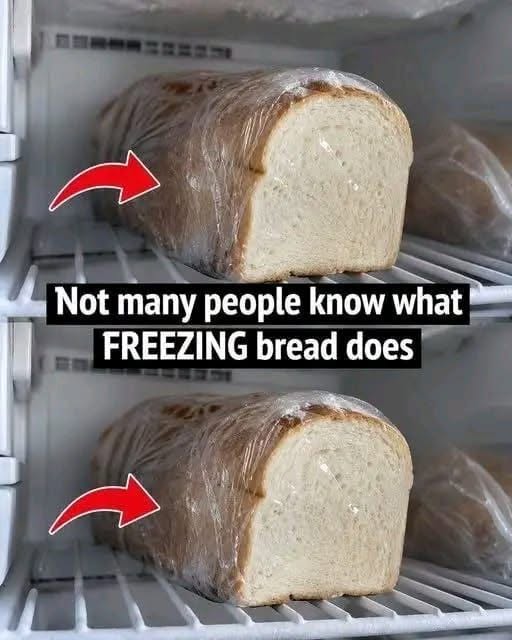
The metabolic advantages of freezing bread do not end with stabilized blood sugar. The resistant starch created during freezing serves as a high-potency prebiotic fuel source for the human gut microbiome.
When resistant starch reaches the cecum and colon intact:
-
Fermentation: Beneficial anaerobic commensal bacteria (such as Bifidobacterium, Faecalibacterium prausnitzii, and Roseburia) ferment the unabsorbed starch.
-
Production of SCFAs: This fermentation process generates vital Short-Chain Fatty Acids, primarily acetate, propionate, and butyrate.
-
Colonic Health: Butyrate serves as the primary metabolic energy substrate for colonocytes (the epithelial cells lining the colon). It strengthens the mucosal epithelial barrier, reduces systemic gut permeability (often referred to as "leaky gut"), and downregulates inflammatory cytokine production in the lower gastrointestinal tract.
-
Satiety Signaling: Fermentation of resistant starch stimulates colonic L-cells to release GLP-1 (Glucagon-Like Peptide-1) and PYY (Peptide YY)—gut hormones that travel to the brain to signal fullness and satiety, helping regulate overall appetite naturally.
5. Freezing vs. Refrigerating: The Staling Paradox
A common mistake among consumers is assuming that if the freezer is good for bread, the refrigerator must be just as beneficial. In reality, the refrigerator is the worst place in the kitchen to store bread.
| Storage Condition | Typical Temperature | Effect on Bread Matrix | Recommended Use |
| Room Temperature (Breadbox) | $20^\circ\text{C}$ to $22^\circ\text{C}$ ($68^\circ\text{F}$ to $72^\circ\text{F}$) | Slow retrogradation; susceptible to mold after 4–7 days. | Short-term consumption within a few days. |
| Refrigerator | $3^\circ\text{C}$ to $5^\circ\text{C}$ ($37^\circ\text{F}$ to $41^\circ\text{F}$) | Maximum staling velocity. Amylose retrogrades without freezing moisture, expelling water and turning crumb dry and chalky. | Never recommended for bread preservation. |
| Deep Freezer | $-18^\circ\text{C}$ ($0^\circ\text{F}$) or below | Moisture flash-freezes into micro-crystals; staling halts completely; resistant starch forms and stabilizes. |
Ideal for long-term storage and metabolic optimization. |
Starch retrogradation peaks at temperatures between $0^\circ\text{C}$ and $8^\circ\text{C}$—precisely the operating temperature of a household refrigerator. In a fridge, the bread turns stale, dry, and crumbly up to six times faster than at room temperature, while offering none of the moisture-locking benefits of deep freezing.
In the freezer, ambient moisture freezes into place before it can migrate away from the starch polymers, preserving the bread's structural integrity while locking in the resistant starch benefit.
