

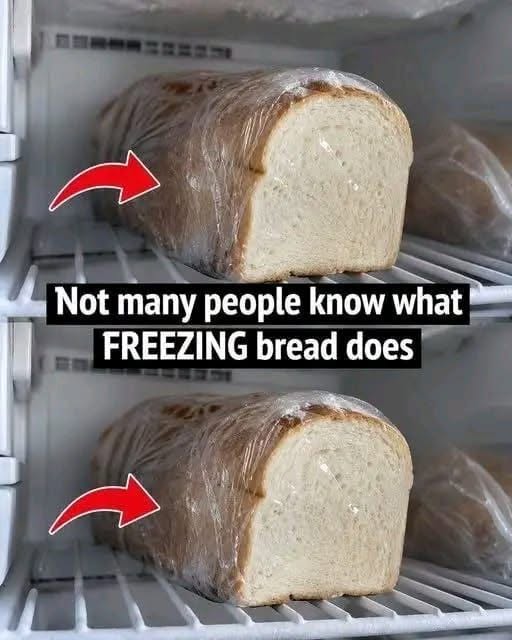
6. How to Freeze and Reheat Bread for Peak Quality and Nutrition
To maximize both culinary freshness and nutritional value, follow these practical steps:
Pre-Slice Before Freezing
Never freeze an entire whole loaf solid unless you plan to thaw and serve the entire loaf at once. A solid frozen loaf takes hours to thaw, and refreezing a thawed loaf degrades crumb texture. Slicing the loaf first allows you to extract single slices as needed without thawing the rest.
Eliminate Trapped Air
Wrap the bread securely in parchment paper followed by an airtight freezer-safe bag or cling wrap (as pictured in the viral image). Removing trapped air prevents freezer burn—a process where ice sublimates directly from the bread's surface into vapor, leaving dry, oxidized patches on the crust.
Toast Directly from Frozen
Do not let the slice sit on the counter to thaw if you intend to eat it warm. Drop the frozen slice directly into the toaster or toaster oven. The rapid heat differential produces crisp surface gelatinization on the crust while retaining the newly formed resistant starch core within the crumb, yielding the greatest measured reduction in blood glucose impact.
The Takeaway
That simple plastic-wrapped loaf in the freezer is far more than an anti-waste grocery hack. Through starch retrogradation, cold storage re-engineers basic carbohydrates into gut-friendly resistant starch, blunts glycemic spikes, and supports long-term metabolic health. When paired with healthy fats or proteins, freezing your bread transforms a humble kitchen staple into an optimized, functional food.
