

What Is Resistant Starch?
Resistant starch behaves biologically more like dietary soluble fiber than a conventional carbohydrate:
-
Conventional Starch: Rapidly digested in the mouth, stomach, and upper small intestine, where it converts directly into circulating blood glucose.
-
Resistant Starch (RS): Because of its tightly locked, recrystallized crystalline matrix, digestive enzymes cannot easily dock onto the starch molecules. It resists hydrolysis in the small intestine and passes intact into the large intestine (colon).
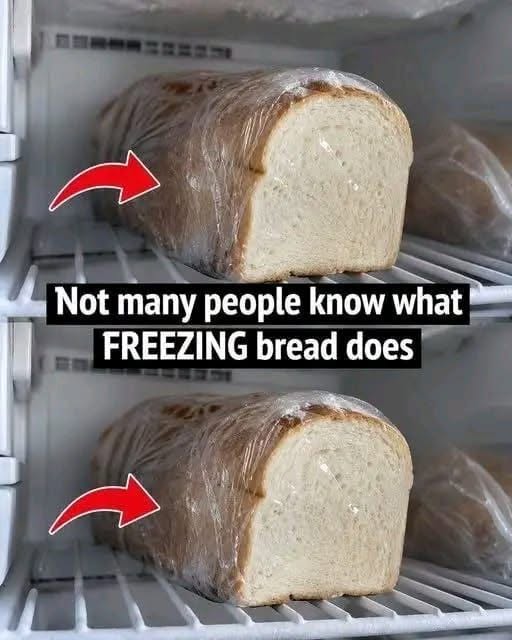
Freezing changes the physical shape of the starch so thoroughly that digestive enzymes simply slide past it without converting it into sugar.
3. The Metabolic Impact: What the Research Shows
The metabolic consequences of freezing bread are well documented in clinical nutritional science rather than just internet folklore.
The Landmark Oxford Brookes Study
In a widely cited human clinical trial published in the European Journal of Clinical Nutrition, researchers tested the glycemic and insulin responses of healthy human subjects across four different bread preparations using identical standard white bread:
-
Fresh, untreated white bread.
-
Fresh white bread that was toasted.
-
White bread that was frozen and then defrosted.
-
White bread that was frozen, defrosted, and then toasted.
The researchers continuously tracked the subjects' blood glucose levels over a two-hour post-meal window. The findings were striking:
-
Defrosting Frozen Bread: Freezing the bread and allowing it to thaw at room temperature reduced the peak blood glucose response by approximately 31% compared to fresh bread.
-
Toasting from Frozen: Freezing the bread and then toasting it straight from the freezer produced the most pronounced effect, reducing the overall glycemic response by roughly 39% to 40%.
The combination of freezing (which induces recrystallization and forms RS3) followed by dry toasting heat (which dehydrates and sets the outer crust into a complex carbohydrate lattice) creates a compound barrier to rapid enzymatic breakdown.
The Follow-Up Findings
More recent trials evaluating white bread frozen across 3, 5, and 7-day intervals confirmed that the structural shift happens rapidly:
-
The majority of resistant starch formation occurs within the first 24 to 48 hours of cold storage.
-
Storing bread frozen for longer periods preserves this resistant starch level without substantial degradation.
-
When consumed, the slower rate of glucose entry prevents the dramatic post-meal blood sugar peak and the subsequent "reactive hypoglycemia" crash—the sudden drop that triggers fatigue, brain fog, and intense sugar cravings 90 to 120 minutes after eating refined carbs.
