

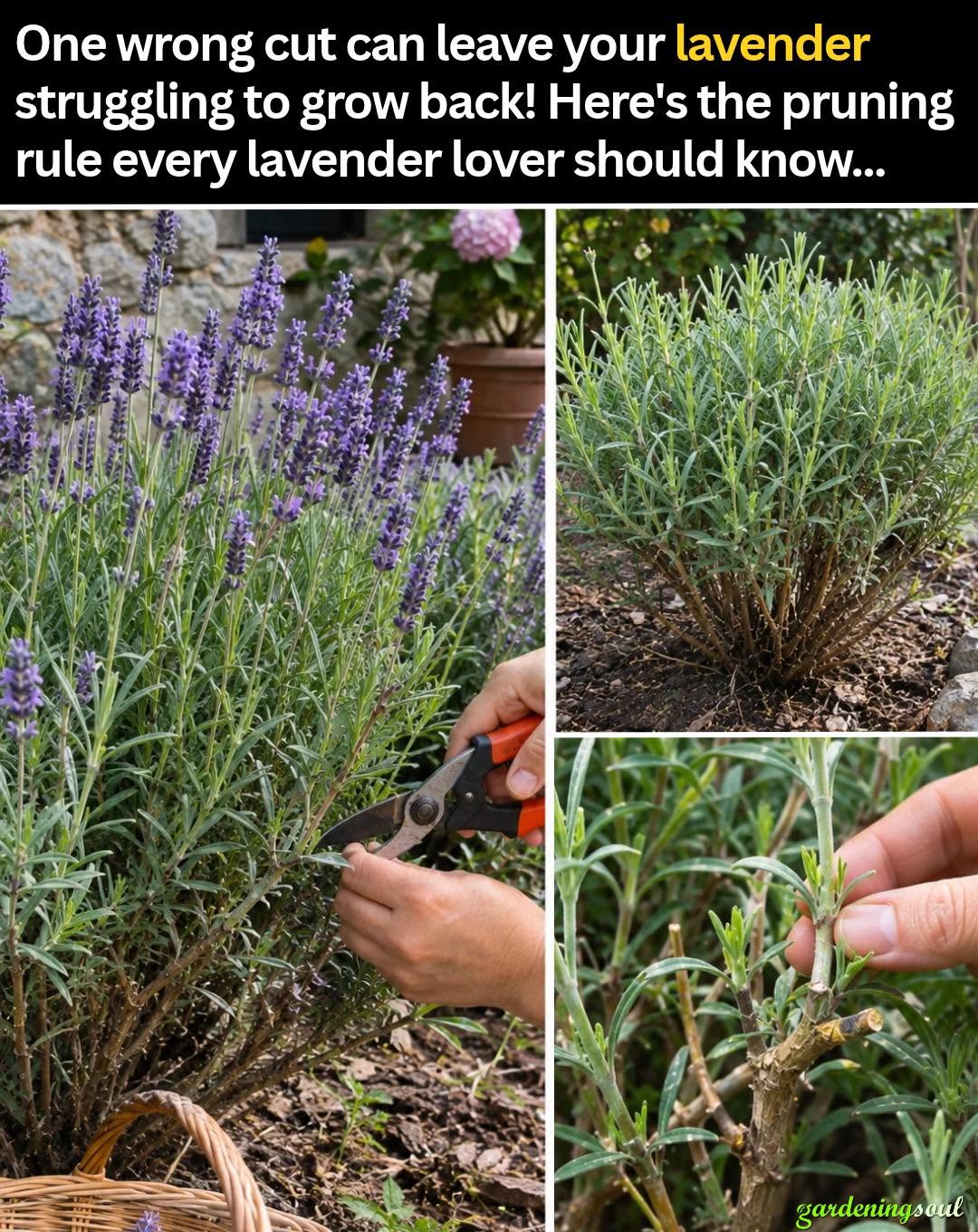
Step 4: Create a Rounded Shape
Lavender naturally looks best as a compact mound.
As you prune, shape the plant into a rounded dome rather than creating a flat top.
Keep the center slightly higher and gradually shorten stems toward the edges.
This shape isn’t just decorative. It can help prevent long outer stems from flopping onto the ground as they become heavy with flowers.
Step 5: Remove Dead Growth
Completely dead stems can be removed.
To determine whether a questionable stem is alive, look for green leaves or buds. You can also gently scratch a tiny section of the outer bark. Living tissue may appear green underneath, while completely dead stems tend to be dry and brittle.
Don’t confuse naturally woody stems with dead stems. Lavender develops brown woody bases as it ages, and these may still support healthy green growth farther up.
The Most Important Rule: Don’t Cut Deeply Into Old Wood
This is where many lavender pruning mistakes happen.
A neglected lavender plant may tempt you to cut it almost to the ground and start again.
Unfortunately, lavender doesn’t reliably regenerate from old bare wood.
If you cut below all visible green growth, some branches may never produce new shoots.
Before making each major cut, ask:
Are there healthy leaves below where I’m cutting?
If yes, the cut is generally safer.
If you’re looking at a completely bare woody stem with no visible green shoots, be cautious.
This is especially important with older English lavender plants that have developed thick woody bases.
Pruning English Lavender
English lavender (Lavandula angustifolia) is one of the most popular garden lavenders and among the more cold-hardy types.
It generally responds well to annual pruning.
After the main flowering period, remove the spent flower stems and shorten the leafy growth while maintaining a rounded shape.
English lavender may become woody surprisingly quickly when left unpruned, so annual maintenance is worthwhile.
Best approach:
Spring: Remove winter-damaged stems and lightly tidy.
After flowering: Perform the main shaping prune.
Late season: Avoid severe pruning if freezing weather is approaching.
Pruning French and Spanish Lavender
French and Spanish lavenders can behave somewhat differently from English lavender, particularly in warm climates where their flowering seasons may be longer.
Spanish lavender (Lavandula stoechas), recognizable by the distinctive petal-like bracts above its flower heads, can benefit from regular deadheading.
Remove fading flower stems to keep the plant tidy and encourage continued flowering where conditions allow.
A more substantial shaping prune can be performed after a major flowering period, but again, avoid cutting deeply into bare wood.
French and Spanish lavenders are generally less cold hardy than many English varieties, so late pruning can be particularly risky in colder regions.
