

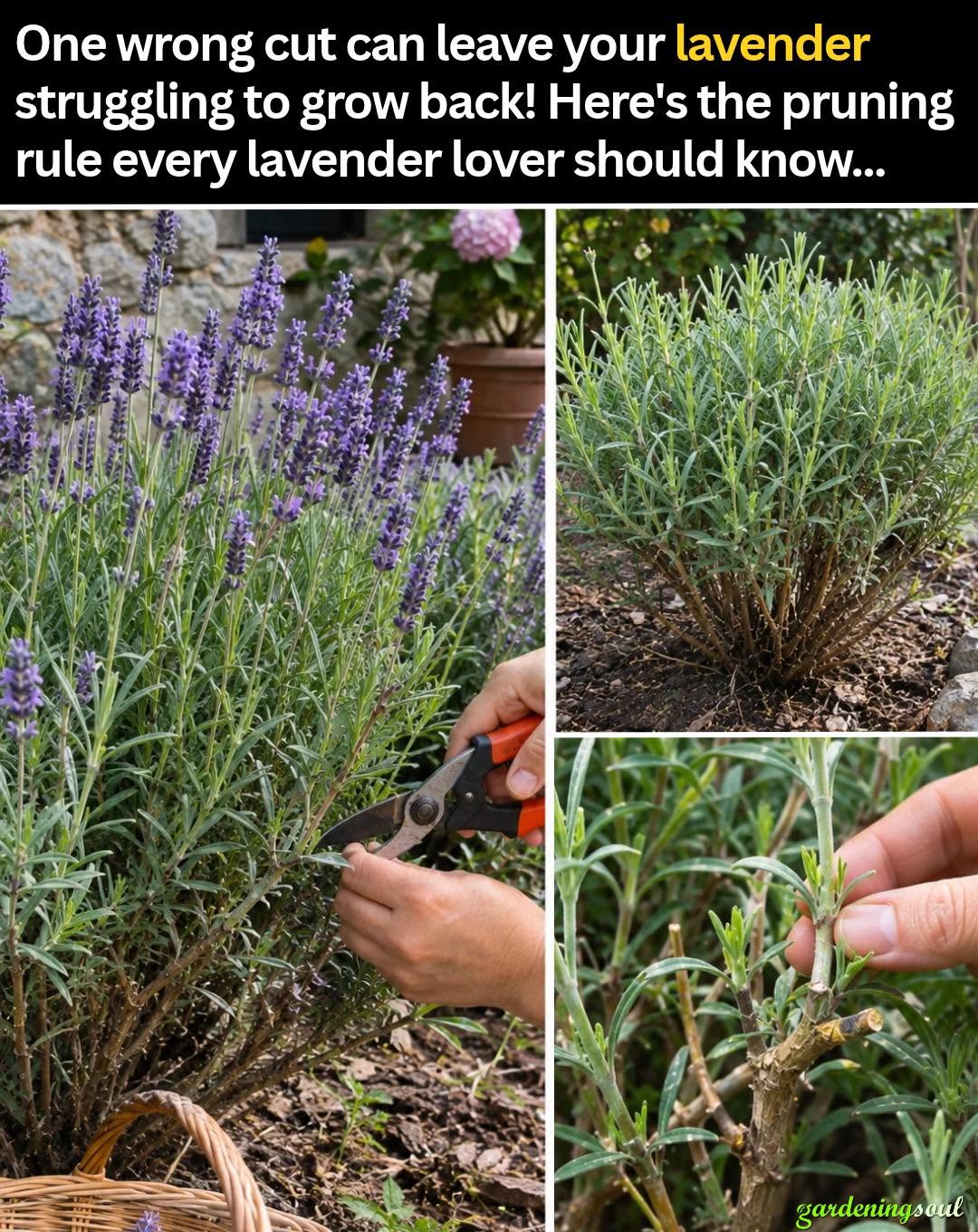
Lavender is often described as a low-maintenance plant, and for the most part, it is. Give it plenty of sunshine, well-drained soil, and avoid excessive watering, and an established lavender plant can remain beautiful for years.
But there is one job you shouldn’t ignore: pruning.
Without regular pruning, lavender gradually becomes woody, open, and leggy. The center may begin to separate, stems can flop outward, and flowers may appear mostly at the ends of long branches.
Eventually, what was once a compact mound can become a collection of woody stems with relatively little fresh growth.
Correct pruning helps prevent this.
The good news is that lavender doesn’t need complicated pruning. The most important things are knowing when to prune, how much to remove, and where to stop cutting.
Here’s how to prune lavender correctly so your plants remain compact, healthy, and covered with flowers for as long as possible.
Why Lavender Needs Regular Pruning
Lavender gradually develops woody stems as it matures. This is completely natural, but unlike many shrubs, old lavender wood doesn’t always produce new shoots reliably after being cut hard.
That’s why regular light-to-moderate pruning is much better than allowing a plant to become enormous and then attempting to cut it back severely.
Annual pruning encourages fresh leafy growth while maintaining the plant’s rounded shape.
Regular pruning can help:
- Keep plants compact and bushy
- Reduce long, floppy stems
- Encourage branching
- Remove spent flower stalks
- Maintain better airflow
- Slow the development of excessive woody growth
- Prepare the plant for another flowering season
Think of pruning as preventive maintenance. It’s much easier to maintain a young, compact lavender than to rescue a plant that has been neglected for many years.
When Is the Best Time to Prune Lavender?
The ideal pruning schedule depends somewhat on the type of lavender and your climate, but there are generally two useful pruning periods.
1. Spring Pruning
Spring is an excellent time to inspect lavender and remove winter-damaged growth.
Wait until you can see signs of fresh green growth. This helps you distinguish living stems from branches that were damaged during winter.
Remove dead or obviously damaged stems and lightly shape the plant if necessary.
In colder climates, avoid aggressive pruning too early in spring. Lavender may still be vulnerable to cold weather, and cutting too soon can expose tender new growth to frost.
Spring pruning is mainly for:
- Removing winter damage
- Cleaning up dead stems
- Correcting the shape
- Encouraging healthy new growth
Spring pruning should generally happen before the plant puts too much energy into producing flower stems.
