

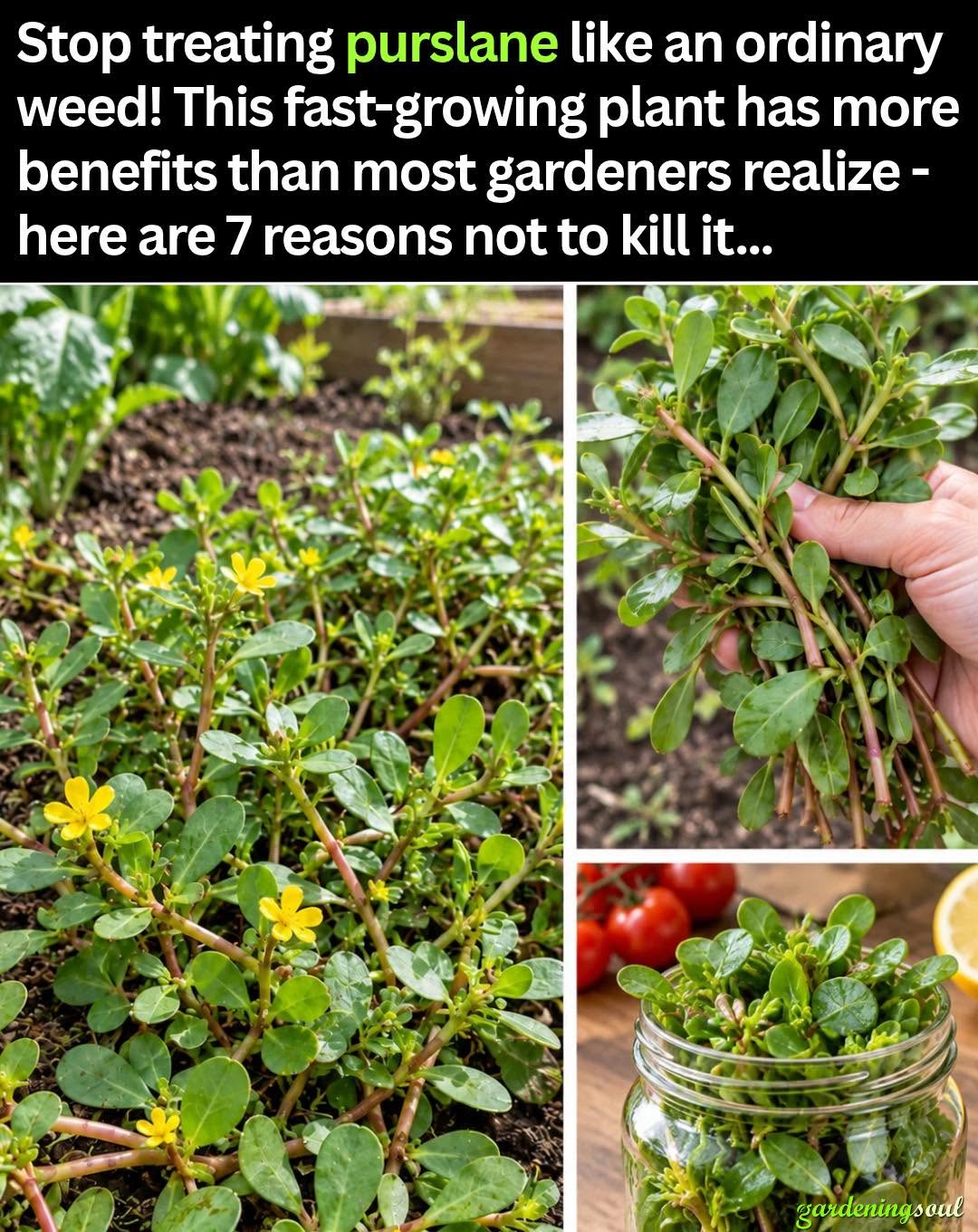
To many gardeners, the sight of purslane sprawling across a flower bed or vegetable patch signals an uninvited guest.
With its succulent leaves and rapid growth, purslane (Portulaca oleracea) is often pulled out and discarded as a weed.
But here’s the truth: purslane is not only edible – it’s incredibly nutritious, beneficial for your soil, and one of the most underrated plants in the garden.
Before you yank out another cluster of this resilient green, consider this: what if you could turn a so-called weed into a superfood, a soil enhancer, a pollinator magnet, and a natural mulch – all without any planting, fertilizing, or maintenance?
In this article, we’ll reveal 7 compelling reasons why you shouldn’t kill purslane in your garden and instead embrace its powerful benefits for both health and horticulture.
What Is Purslane?
Purslane (Portulaca oleracea) is a succulent annual plant that grows close to the ground, forming thick mats with small, fleshy, oval-shaped leaves and tiny yellow flowers.
It thrives in poor soils, sunny spots, and dry conditions – often popping up uninvited in gardens, pathways, or even cracks in concrete.
Native to Persia and India, purslane has been used as both food and medicine for thousands of years. It appears in Greek, Roman, Chinese, and Middle Eastern texts as a culinary herb and traditional remedy.
Yet today, it’s often misunderstood and underappreciated in modern gardens.
1. Purslane Is a Nutritional Powerhouse
If there were a prize for the healthiest weed, purslane would win it.
According to the USDA and numerous nutrition studies, purslane is richer in certain nutrients than most cultivated vegetables. It’s especially prized for its omega-3 fatty acid content – rare for a land plant.
Key Nutritional Highlights:
| Nutrient | Amount (per 100g raw) |
|---|---|
| Omega-3 ALA | 350–400 mg |
| Vitamin A | 1320 IU (more than spinach) |
| Vitamin C | 21 mg |
| Magnesium | 68 mg |
| Potassium | 494 mg |
| Iron | 1.99 mg |
| Calcium | 65 mg |
It’s also high in:
-
Glutathione and Melatonin (powerful antioxidants)
-
Beta-carotene
-
Flavonoids and polyphenols
Purslane contains up to 7x more alpha-linolenic acid (ALA) than spinach, making it one of the best plant-based sources of omega-3s.
