

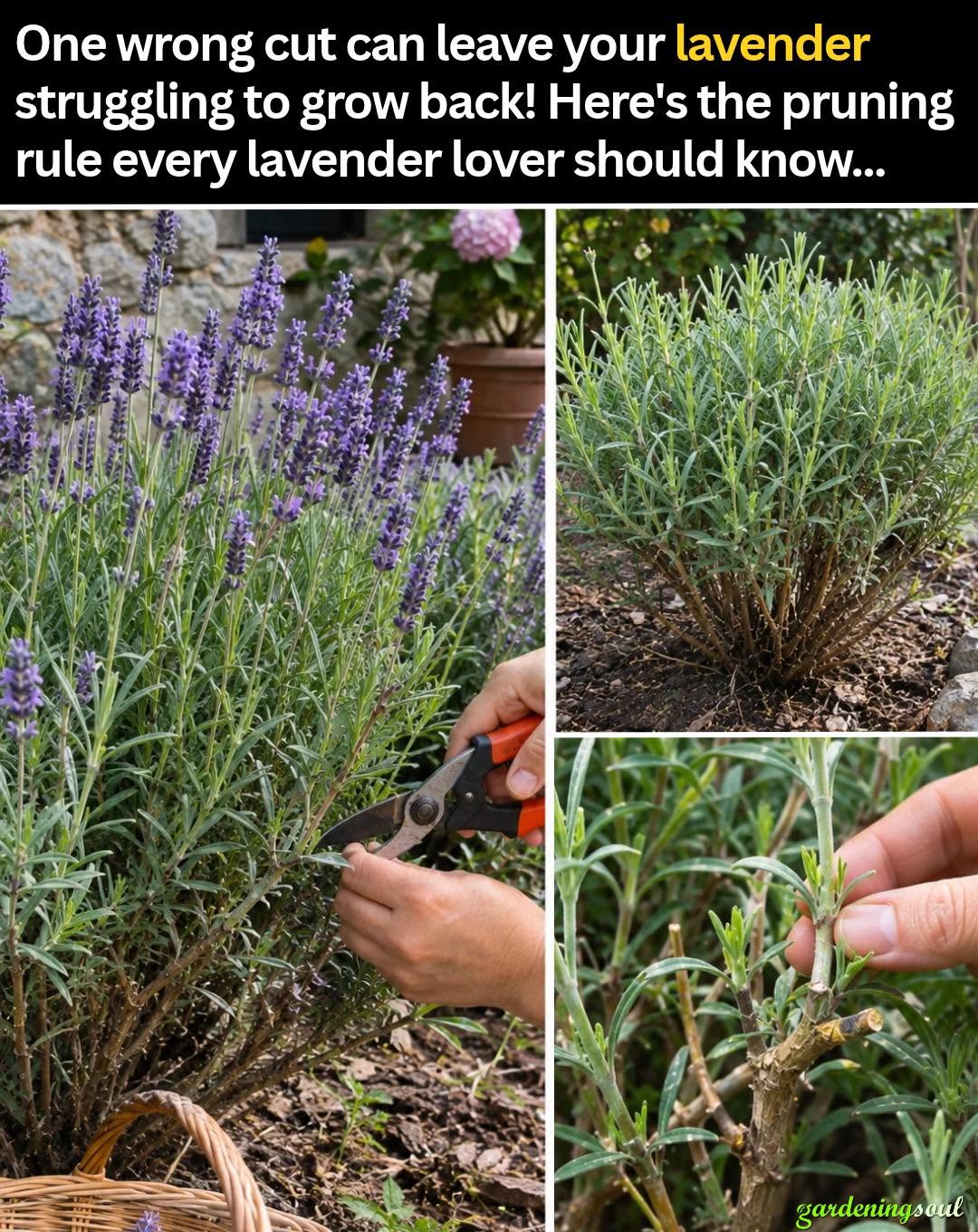
2. After Flowering
The main annual pruning is often performed after the first major flush of flowers has faded.
Depending on your climate and lavender variety, this may occur from mid- to late summer.
Cutting away spent flower stalks and shortening the fresh green growth can keep the plant compact.
Some varieties may also produce another smaller flush of flowers after deadheading or light pruning.
After flowering:
Remove the old flower stems and trim back part of the current season’s leafy growth.
The important word is leafy.
You want to leave plenty of green growth on the plant rather than cutting down into old bare wood.
How Much Lavender Should You Cut Back?
A common guideline is to remove roughly one-third of the leafy growth during the main annual pruning.
The exact amount isn’t as important as observing the stems.
Look at a branch closely.
You’ll usually see:
Flowers at the top → green leafy growth → older woody growth toward the bottom.
Your cut should remain within the section that still has healthy leaves.
A simple rule:
Cut the green growth, but don’t cut deeply into bare brown wood.
Leaving some green foliage below every cut gives the plant a much better opportunity to produce healthy new shoots.
How to Prune Lavender Step by Step
Pruning doesn’t require special equipment. For a small plant, ordinary clean pruning shears are usually enough. Larger lavender hedges may be easier to shape with garden shears.
Step 1: Check the Plant
Before cutting anything, look at the entire plant.
Identify:
- Spent flowers
- Fresh green growth
- Dead stems
- Woody lower growth
- Areas that have become unusually long or floppy
This will help you decide how much shaping is necessary.
Step 2: Remove Spent Flower Stalks
Cut off faded flower stalks.
You can harvest lavender flowers earlier if you want them for drying, crafts, or other uses. Otherwise, remove the spent stalks once flowering declines.
Don’t stop there, though.
Simply cutting the flowers off at the very top doesn’t do much to maintain the plant’s shape.
Step 3: Shorten the Leafy Stems
After removing the flowers, shorten some of the green leafy growth.
For established plants, trimming approximately one-third of the leafy portion is often sufficient.
Remember:
- Keep green leaves below your cuts.
- Don’t cut every stem down to bare wood.
- Remove less if you’re uncertain.
- You can always make another small cut; you can’t put a branch back.
