

😬 What About Tooth Sensitivity?
Another possible problem is sensitivity.
If enamel becomes thinner or the underlying dentin becomes more exposed, teeth can become more sensitive to cold, heat, sweets, or acidic foods.
Someone might initially think:
“My teeth look whiter!”
But if the improvement came partly from aggressive removal of the tooth surface, that’s not a result worth chasing.
Dental professionals generally focus on whitening methods that improve tooth color while minimizing unnecessary damage to enamel.
🖤 Does Charcoal Actually “Bleach” Teeth?
No—not in the same sense as peroxide-based whitening treatments.
Bleaching agents such as hydrogen peroxide or carbamide peroxide work through chemical processes that can lighten certain intrinsic tooth discoloration.
Charcoal doesn’t work that way.
Instead, charcoal products are primarily associated with physical removal of surface stains through their abrasive action. Evidence does not show that charcoal powder provides effective dental bleaching.
That’s a very important distinction.
Surface stain removal ≠ true whitening
A tooth can appear cleaner because surface discoloration has been removed without its underlying natural color actually changing.
🦷 What Does the Research Say?
The evidence isn’t particularly encouraging for DIY charcoal whitening.
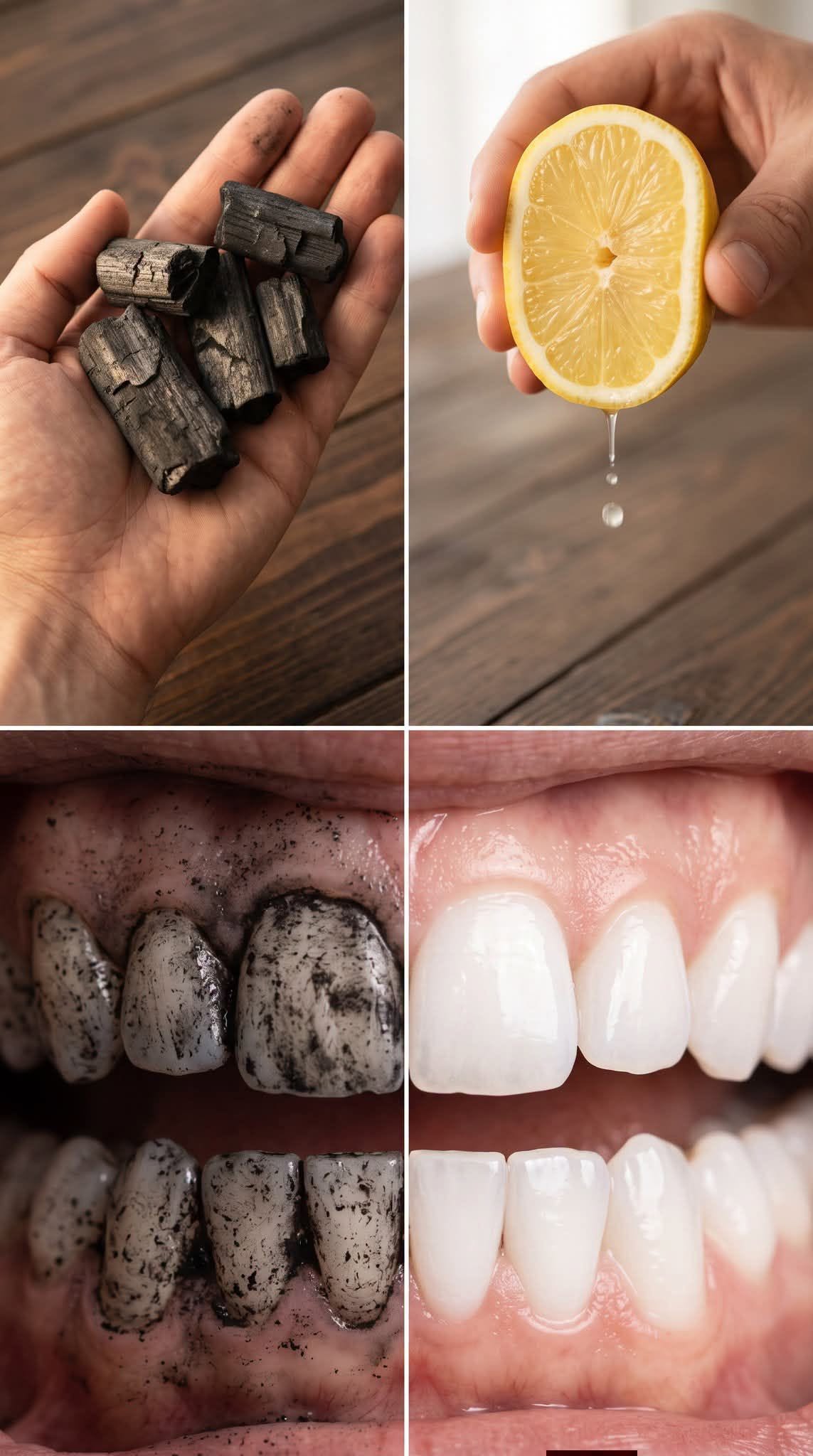
A study examining charcoal-based whitening toothpastes found that after 12 weeks, the charcoal products did not demonstrate clinically acceptable whitening compared with a regular fluoridated toothpaste, while surface roughness increased in several groups.
Another study comparing charcoal and sea-salt/lemon-based whitening toothpastes found that none of the tested products produced effective whitening back to the original tooth color, and all increased surface roughness.
More recent research has likewise found that charcoal products did not provide superior stain-minimizing results compared with conventional toothpaste and that charcoal powder could increase superficial enamel alterations.
So the science doesn’t support the idea that charcoal + lemon is a miracle whitening treatment.
