

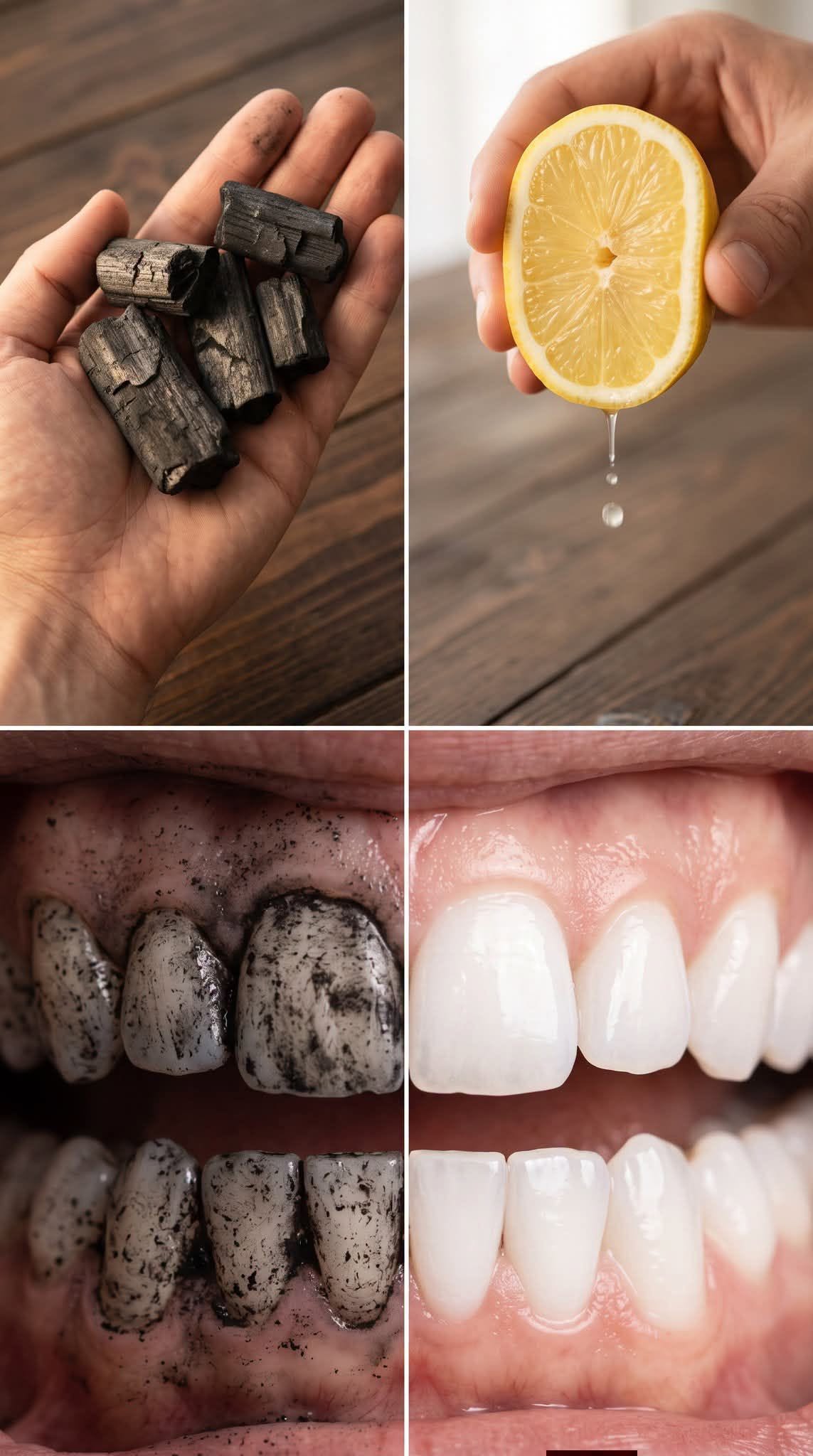
⚠️ The Problem With Abrasion
Your enamel is the hard outer layer protecting your teeth.
Once enamel is lost, your body can’t simply grow a new layer of it.
That’s why repeatedly scrubbing teeth with highly abrasive materials isn’t a harmless way to chase a whiter smile.
Some research has found increased enamel surface roughness with charcoal-containing products, while other studies have found that certain charcoal products can have considerable abrasive effects.
And here’s an unfortunate twist:
Wearing away enamel can eventually make teeth look more yellow, not less.
Underneath enamel is dentin, which naturally has a more yellowish color. Excessive enamel wear can make that underlying color more noticeable. The ADA has specifically discussed this concern with overly abrasive DIY whitening methods.
🍋 Why Lemon Makes the Combination More Concerning
Lemon juice is acidic.
Repeated exposure to acidic foods and drinks can soften and erode tooth surfaces. Brushing immediately after an acidic exposure can potentially increase mechanical wear on a softened surface.
So combining an acidic ingredient with an abrasive substance and then vigorously brushing your teeth isn’t a particularly gentle approach to your enamel.
That’s why “natural” doesn’t automatically mean “safe.”
Lemon is natural.
Charcoal is natural.
But that doesn’t mean the combination is appropriate for repeatedly applying to your teeth.
