

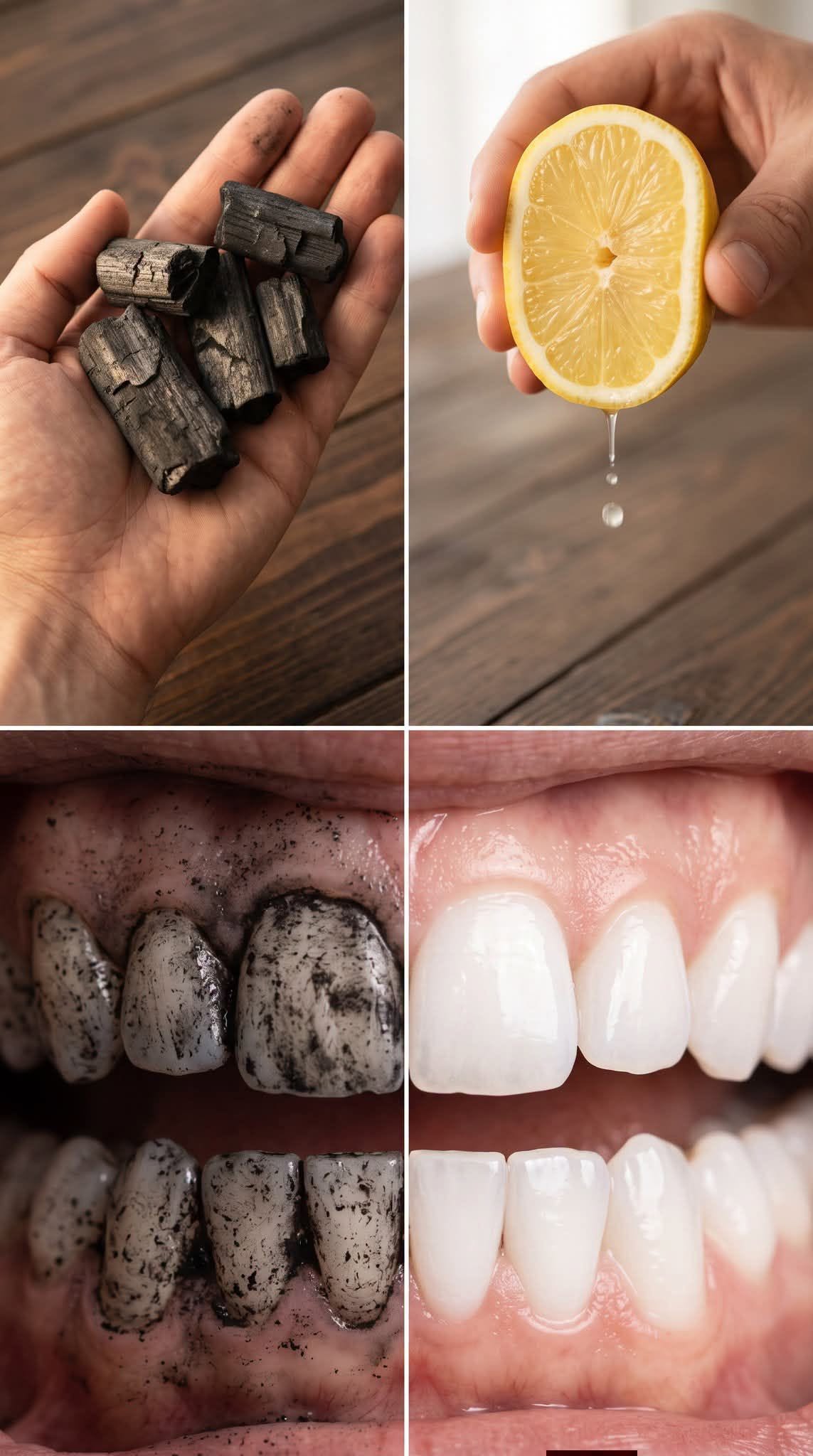
You’ve probably seen it on social media: a little activated charcoal mixed with lemon juice, brushed onto the teeth, followed by dramatic before-and-after photos showing a supposedly brighter smile.
It looks simple, inexpensive, and “natural.”
But here’s the important question:
Does charcoal and lemon actually whiten your teeth—or could this DIY trick be doing more harm than good?
The short answer is: there isn’t good evidence that the combination safely whitens teeth, and there are legitimate reasons to be cautious.
Activated charcoal may help remove some surface staining because it is abrasive, but research does not show that charcoal provides reliable bleaching of the natural color inside teeth. The American Dental Association also says there isn’t sufficient evidence that charcoal-based whitening methods provide a measurable whitening benefit with adequate safety and effectiveness. (Ada)
And adding lemon doesn’t make the method safer.
🖤 Why Did Charcoal Become So Popular?
Activated charcoal has developed a reputation as a powerful “detox” and cleaning ingredient.
It’s a very fine, porous material that can adsorb certain substances. That led to the idea that charcoal could somehow “pull” stains and discoloration away from teeth.
Social media made the idea even more appealing.
The dramatic contrast of black charcoal against white teeth makes for a very convincing video. People brush with a dark paste, rinse, and then show a brighter-looking smile.
But an impressive social-media transformation isn’t the same thing as evidence that enamel has actually been whitened.
🍋 And Then Came the Lemon
Lemon juice seems like an obvious addition because lemons contain citric acid.
The theory behind the DIY combination is usually something like this:
Charcoal removes the stains + lemon’s acidity helps break them down = whiter teeth.
Unfortunately, that’s not how safe teeth whitening works.
The acidity of lemon juice can contribute to dental erosion, which is the loss of tooth structure caused by acids. The American Dental Association specifically warns against DIY whitening trends involving acidic fruits and has advised people to avoid lemon-juice whitening.
So while the combination may sound powerful, “more aggressive” doesn’t mean “better whitening.”
🦷 Can Charcoal Remove Surface Stains?
This is where there is a little truth behind the viral trend.
Charcoal-containing products can be abrasive, and that abrasiveness may help physically remove some extrinsic stains—the discoloration sitting on the outside of the tooth.
For example, surface stains can develop from things such as coffee, tea, tobacco, or certain foods.
But removing some surface discoloration is not the same as actually bleaching the tooth.
Research has found that charcoal products don’t consistently outperform conventional toothpaste for whitening, and some studies have raised concerns about increased surface roughness and enamel wear.
