

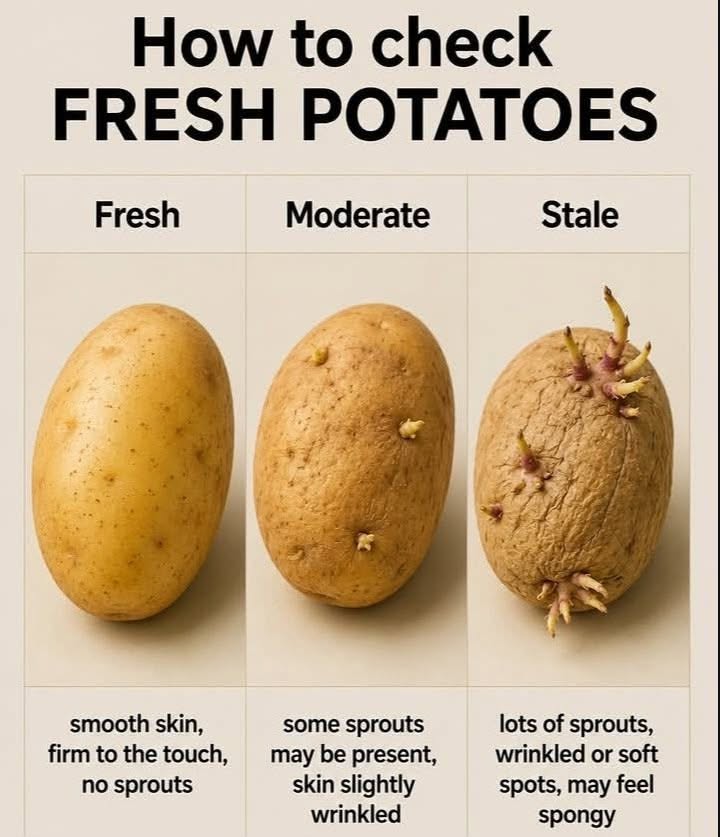
Potatoes are one of those kitchen staples that seem to last forever—until you open the pantry and discover a few with tiny eyes, long sprouts, or a slightly wrinkled appearance. 🥔👀
So when should you actually use them, trim them, or throw them away?
The answer isn’t always as simple as seeing a sprout.
🥔 What Do Potato Sprouts Mean?
Those little bumps and shoots are called eyes, and they are the points from which a potato can grow a new plant.
When potatoes are stored for a long time, especially in warm or light conditions, the eyes can begin producing sprouts.
A potato with a couple of small, short sprouts isn’t automatically spoiled.
If the potato is still firm and otherwise looks normal, you can generally cut away the sprouts and the surrounding eyes before cooking.
But there’s an important distinction between a potato that’s simply beginning to sprout and one that’s showing multiple signs of deterioration.
🌱 What About Potatoes With Long Sprouts?
The potatoes in the picture provide a perfect example of how sprouting can progress.
You can see a gradual change from potatoes with barely visible eyes to potatoes covered with increasingly long shoots.
As sprouting progresses, the potato may become:
- Soft or noticeably limp
- Wrinkled
- Shriveled
- Green
- Bitter-tasting
- Covered with extensive sprouts
At that point, it’s better to discard it rather than trying to rescue every last bit.
