

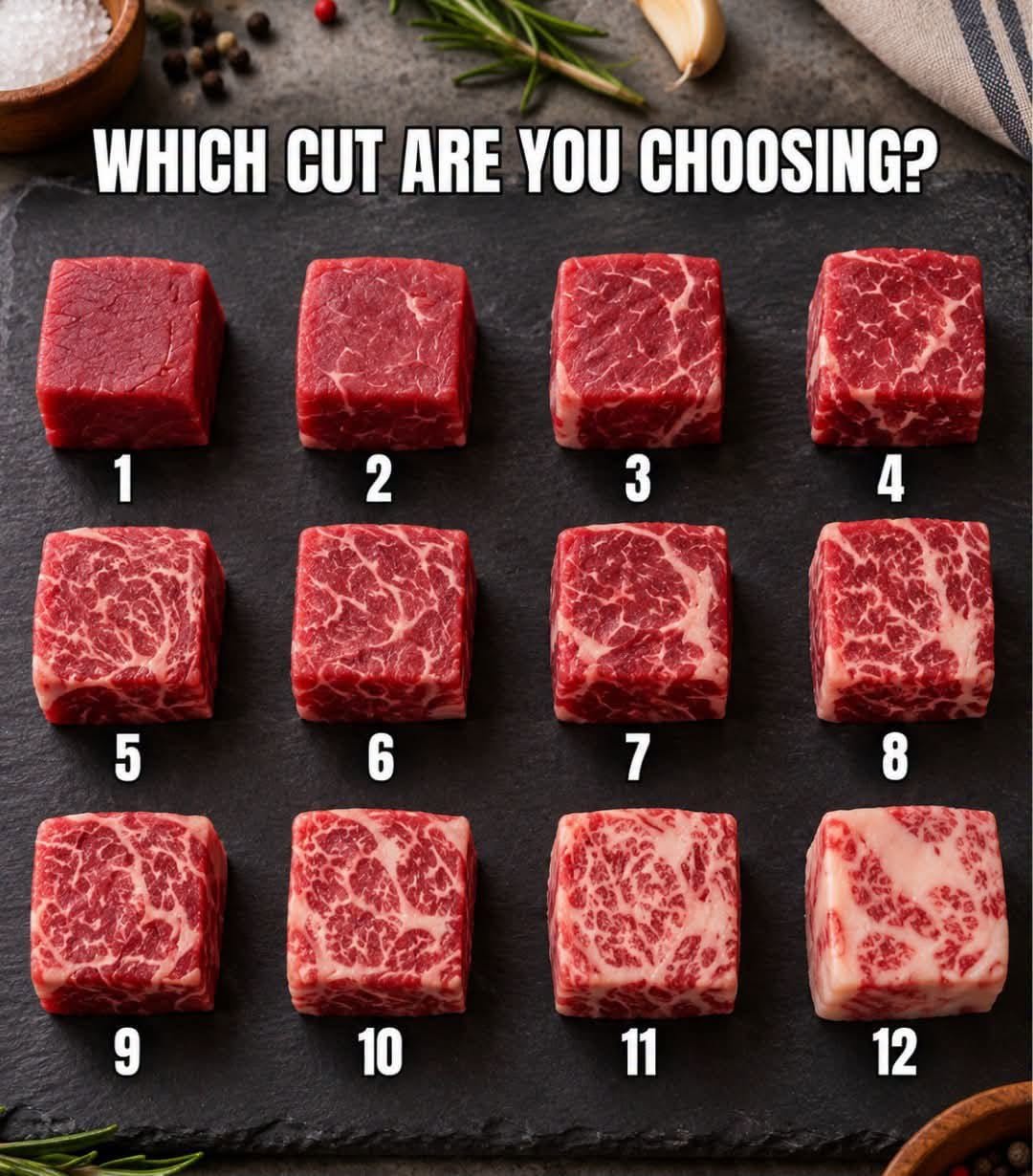
There are steak lovers who look at a piece of beef and think:
“That’s way too much fat.”
And then there are people who see the same steak and think:
“PERFECT. 🤤🥩”
The image above puts that debate on display, with 12 pieces of beef showing progressively heavier levels of visible marbling.
But how much marbling is actually ideal?
Is more always better?
And when does a beautifully marbled steak cross the line from juicy and luxurious to way too fatty?
Let’s get into it.
🥩 First Things First: What Is Marbling?
Marbling is the small streaks and flecks of fat distributed throughout the lean muscle of meat.
It’s called intramuscular fat because it sits within the muscle rather than simply forming a thick layer around the outside.
And that little detail matters.
When a well-marbled steak is cooked, some of that fat melts and contributes to the steak’s richness, juiciness and flavor. USDA’s current beef-grading guidance specifically describes marbling as fine threads of fat within the meat and links greater marbling with more flavor, moisture and tenderness. (AMS)
So those little white lines aren’t necessarily something you should be trying to remove.
For many steak lovers…
They’re the good stuff. 🔥
👀 Looking at the 12 Levels
The image is essentially a visual marbling challenge.
At the beginning, the beef is relatively lean.
As you move toward 12, the amount of visible white fat increases dramatically.
🥩 1–2: Very Lean-Looking
These pieces have relatively little visible marbling.
If you prefer beef that looks predominantly red with only small amounts of intramuscular fat, this is your territory.
The potential advantage?
A leaner eating experience.
The trade-off is that you don’t have as much intramuscular fat available to contribute richness and juiciness.
