

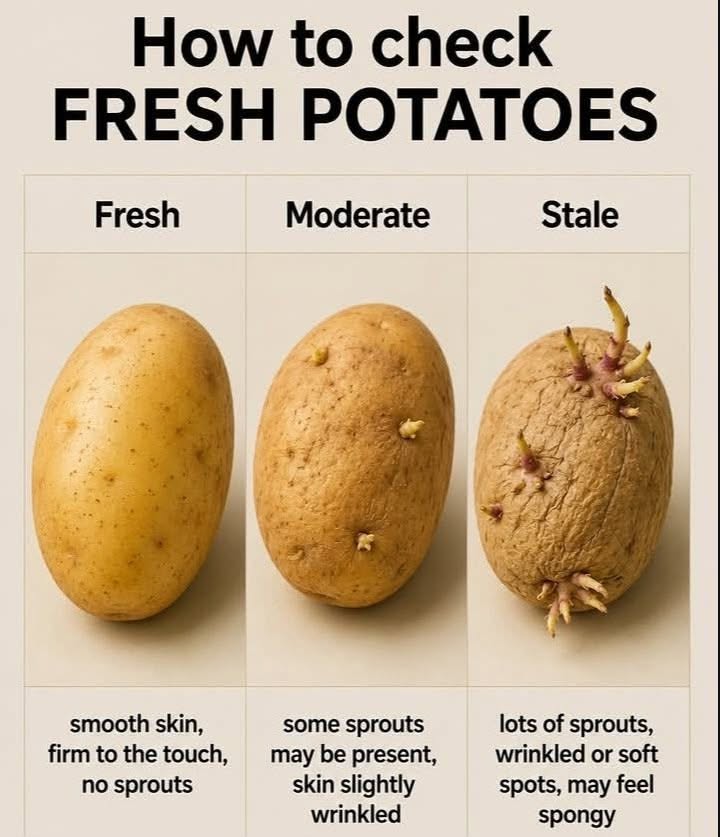
💚 What If the Potato Is Green?
Green coloration deserves special attention.
Potatoes can develop green areas when exposed to light. The green color comes from chlorophyll, but green potatoes can also have increased levels of glycoalkaloids such as solanine and chaconine.
These compounds can cause illness when consumed in sufficiently high amounts.
A small green area on an otherwise firm potato can sometimes be removed generously, but if a potato is extensively green, very bitter, heavily sprouted, or otherwise deteriorated, discarding it is the safer choice.
And don’t taste a questionable potato to decide whether it’s safe.
👀 What About Those Tiny Eyes?
A few small eyes don’t necessarily mean your potato belongs in the trash.
If the potato is:
✅ Firm
✅ Not green
✅ Free of significant mold or decay
✅ Not leaking
✅ Not unusually soft or shriveled
you can remove the eyes and sprouts generously and prepare the potato normally.
The important thing is to inspect the whole potato, not just the sprout.
🚨 When Should You Definitely Throw It Out?
It’s time to let the potato go when you notice significant deterioration.
Throw it away if it is:
Very soft or mushy
A little loss of firmness can happen during storage, but a potato that feels mushy or badly decomposed shouldn’t be used.
Moldy or rotting
Visible mold, wet decay, leaking, or an unpleasant smell are good reasons to discard it.
Heavily green
Especially when the green coloration is extensive.
Extremely shriveled
A severely dehydrated potato with a poor texture isn’t worth trying to salvage.
Covered in extensive sprouts
A heavily sprouted, deteriorating potato is better discarded.
