

Where Are These Bugs Found?

Triatomine bugs are native to the Americas and occur in parts of the United States, Mexico, Central America, and South America.
In the United States, they are particularly associated with warmer regions, including parts of the southern states.
They can live in a variety of environments, including areas around homes, woodpiles, animal shelters, gardens, and other places where suitable hosts are available.
Some species are attracted to lights at night and may occasionally enter buildings.
Their presence can therefore be more noticeable during warm-weather months.
What Do They Look Like?
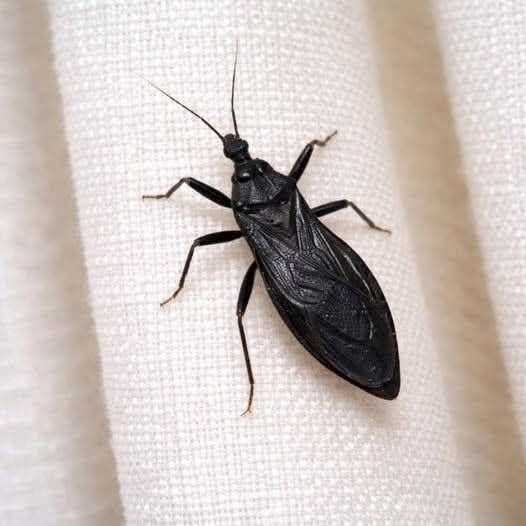
Triatomine bugs can vary considerably in appearance depending on the species.
Many have a relatively elongated body with a cone-shaped head and distinctive patterns along the edges of their abdomen.
However, appearance alone isn’t always enough to identify one confidently.
Many harmless insects can look surprisingly similar.
If you find an unfamiliar insect that you believe could be a kissing bug, avoid handling it with your bare hands. If possible, take a clear photograph or safely capture the specimen for identification.
A local extension service, pest professional, or appropriate public-health resource may be able to help identify it.
What Happens When They Bite?
A bite from a triatomine bug may be painless or relatively mild at first, which is one reason people may not realize they’ve been bitten.
Some people develop localized irritation, redness, or swelling.
However, a bite itself does not tell you whether the insect was infected with T. cruzi.
You also cannot diagnose Chagas disease simply by looking at the bite.
If you believe you have been bitten by a suspected kissing bug, especially if you live in or have recently traveled through an area where Chagas disease occurs, contacting a healthcare professional is a sensible precaution.
What Are the Symptoms of Chagas Disease?

