

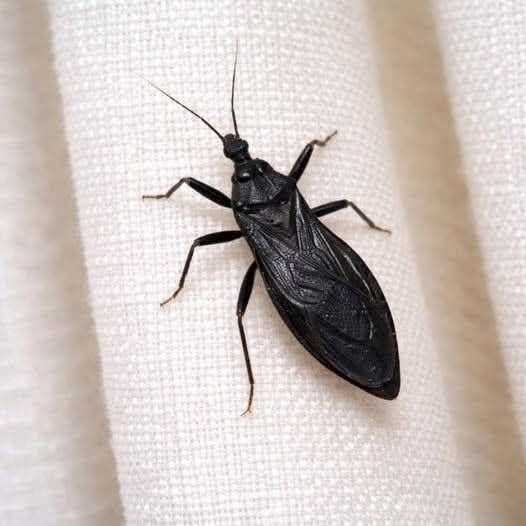
Why Are They Called “Kissing Bugs”?
The nickname “kissing bug” comes from where some triatomine bugs have historically been known to bite humans: around the face, particularly near the lips.
These insects are generally nocturnal and may become active at night when people are sleeping.
They can feed on humans and other mammals, but simply being bitten does not automatically mean someone has contracted Chagas disease.
The disease is caused by a parasite called Trypanosoma cruzi, and transmission has specific requirements.

The Connection to Chagas Disease
Chagas disease is a parasitic infection caused by Trypanosoma cruzi.
Certain triatomine bugs can carry the parasite. The important part of transmission is that the parasite is generally found in the insect’s feces rather than directly in its saliva.
After feeding, an infected bug may defecate near the bite. If contaminated material gets into the bite wound or comes into contact with the eyes, mouth, or another opening, the parasite can potentially enter the body.
This is why scratching or rubbing the area can increase the opportunity for contaminated material to enter the wound.
Chagas disease is a genuine medical condition, but online descriptions sometimes make it sound as though every assassin bug bite automatically causes the disease. That is not the case.
