

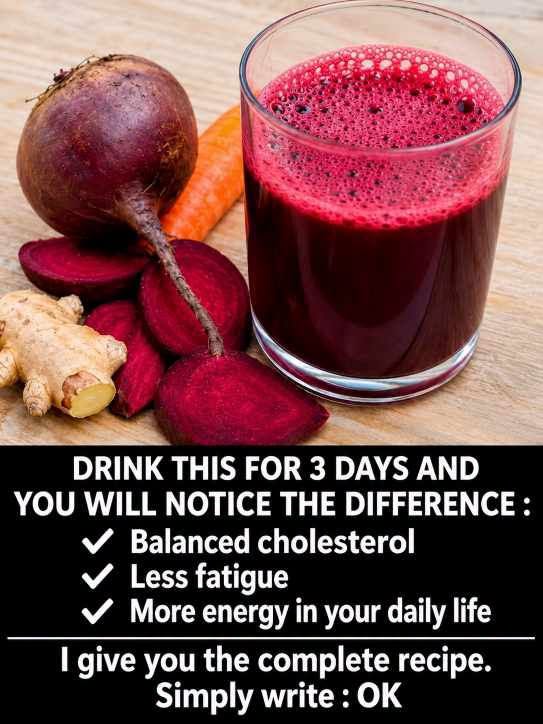
Scroll through any major social media platform, and within minutes you are bound to encounter high-contrast graphics displaying a glass of deep ruby-red vegetable juice nestled beside raw beets, carrots, and knobs of fresh ginger. Above the imagery, bold text makes staggering promises: drink this specific elixir for three days, and you will wipe out chronic fatigue, eliminate arthritis pain, and reset your cholesterol to zero. Below, an invitation instructs users to comment with a single word to receive the recipe, generating tens of thousands of automated shares, interactions, and enthusiastic testimonials.
The allure of these viral health posts is easy to understand. Millions of adults contend daily with sluggish energy, aching joints, and abnormal lipid panels—conditions that often require persistent lifestyle adjustments, medication, and gradual dietary changes. The idea that a simple kitchen remedy composed of everyday root vegetables could completely dismantle complex chronic conditions in seventy-two hours taps into a universal human wish for rapid, painless transformation.
However, human physiology does not operate on a three-day timetable, nor can any single dietary tonic eradicate chronic systemic disease overnight. At the same time, dismissing these beverages entirely as pure snake oil throws out the genuine, peer-reviewed nutritional value that root vegetables offer. Examining the biological reality of this popular beet, carrot, and ginger blend reveals what the human body actually does with these potent phytochemicals, where the viral claims stray into dangerous medical misinformation, and how to harness their true benefits safely.
The Anatomy of the Viral Formula: Beet, Carrot, and Ginger
The beverage featured in these viral posts is built around a classic cold-pressed juice trio: red beetroot (Beta vulgaris), sweet carrot (Daucus carota), and fresh ginger root (Zingiber officinale). While the internet often cloaks this combination in pseudo-mystical language, each ingredient possesses a dense matrix of bioactive compounds whose physiological mechanisms are well-documented in biochemical literature.
Red Beetroot: The Nitrate and Betalain Powerhouse
Beetroot is unique in the plant kingdom due to two primary nutrient classes: inorganic dietary nitrates and betalain pigments.
When you drink fresh beet juice, the salivary glands and oral bacteria along the posterior surface of your tongue reduce dietary inorganic nitrate ($NO_3^-$) into nitrite ($NO_2^-$). Once swallowed, the acidic environment of the stomach and the vascular endothelium convert this nitrite into nitric oxide ($NO$). Nitric oxide is a critical gaseous signaling molecule that diffuses into vascular smooth muscle cells, activating the enzyme soluble guanylyl cyclase. This process increases intracellular cyclic guanosine monophosphate (cGMP), prompting blood vessels to relax and dilate—a mechanism known as endothelium-dependent vasodilation.
Simultaneously, the deep magenta color of beet juice is produced by betalains, specifically betacyanins and betaxanthins. Unlike anthocyanins found in blueberries, betalains are nitrogenous water-soluble pigments that serve as formidable free-radical scavengers. They inhibit lipid peroxidation in cell membranes and suppress inflammatory signaling cascades, particularly the nuclear factor kappa B (NF-kB) pathway.
