

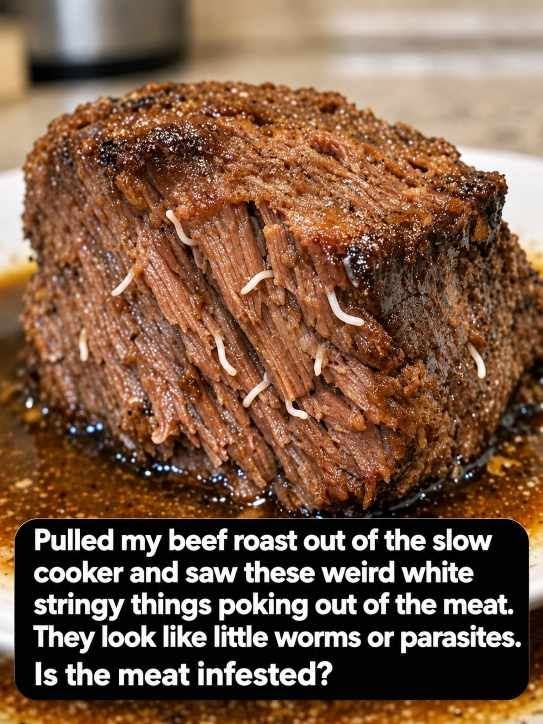
Culinary Handling: Are They Safe to Eat?
Because these strands are simply blood vessels and connective tissues that were an integral part of the steer's own body, they are 100 percent sterile, safe, and edible.
Having simmered in a slow cooker for hours at temperatures well in excess of the USDA food-safe pasteurization threshold of 145 to 160 degrees Fahrenheit (63 to 71 degrees Celsius), any living organism would have been completely destroyed regardless. There is zero toxicological or microbial risk associated with these strands.
Should You Eat Them or Remove Them?
While entirely safe, elastin-rich blood vessels are not particularly pleasant to chew. Because elastin does not dissolve, these strands remain chewy, rubbery, and somewhat gristly—much like the tough edge of a ribeye tendon.
When shredding your pot roast for serving:
-
Use two forks to pull the beef into bite-sized chunks along its natural grain.
-
If you spot these white vascular strings, simply pluck them out with your fingers or the tip of a fork and discard them onto a plate.
-
If any small fragments remain in the meat or braising sauce, they will not harm anyone who accidentally consumes them.
Transforming Panic into Culinary Confidence
Finding strange white strands poking out of a long-awaited dinner is understandably jarring. Our evolutionary disgust response is designed to protect us from contaminated food, and seeing pale, worm-shaped structures in cooked meat triggers every biological alarm bell we possess.
However, in this case, nature has simply played an optical trick on our instincts. The mysterious white tendrils in your slow cooker are not parasites, nor do they represent poor animal hygiene or meat spoilage. They are the natural, durable plumbing of the steer—tough elastin blood vessels that held their shape while the tender muscle fibers shrank and receded around them.
So instead of throwing out a delicious, costly meal, take a deep breath, pluck away the chewy vascular threads, stir that gelatin-rich gravy back into the beef, and enjoy your pot roast with complete confidence.
