

-
The Problem: Baking sheets, cooling racks, pizza stones, muffin tins, and oversized wooden carving boards are wide, flat, and awkward to store in standard lower drawers, where they stack into heavy, clattering piles.
-
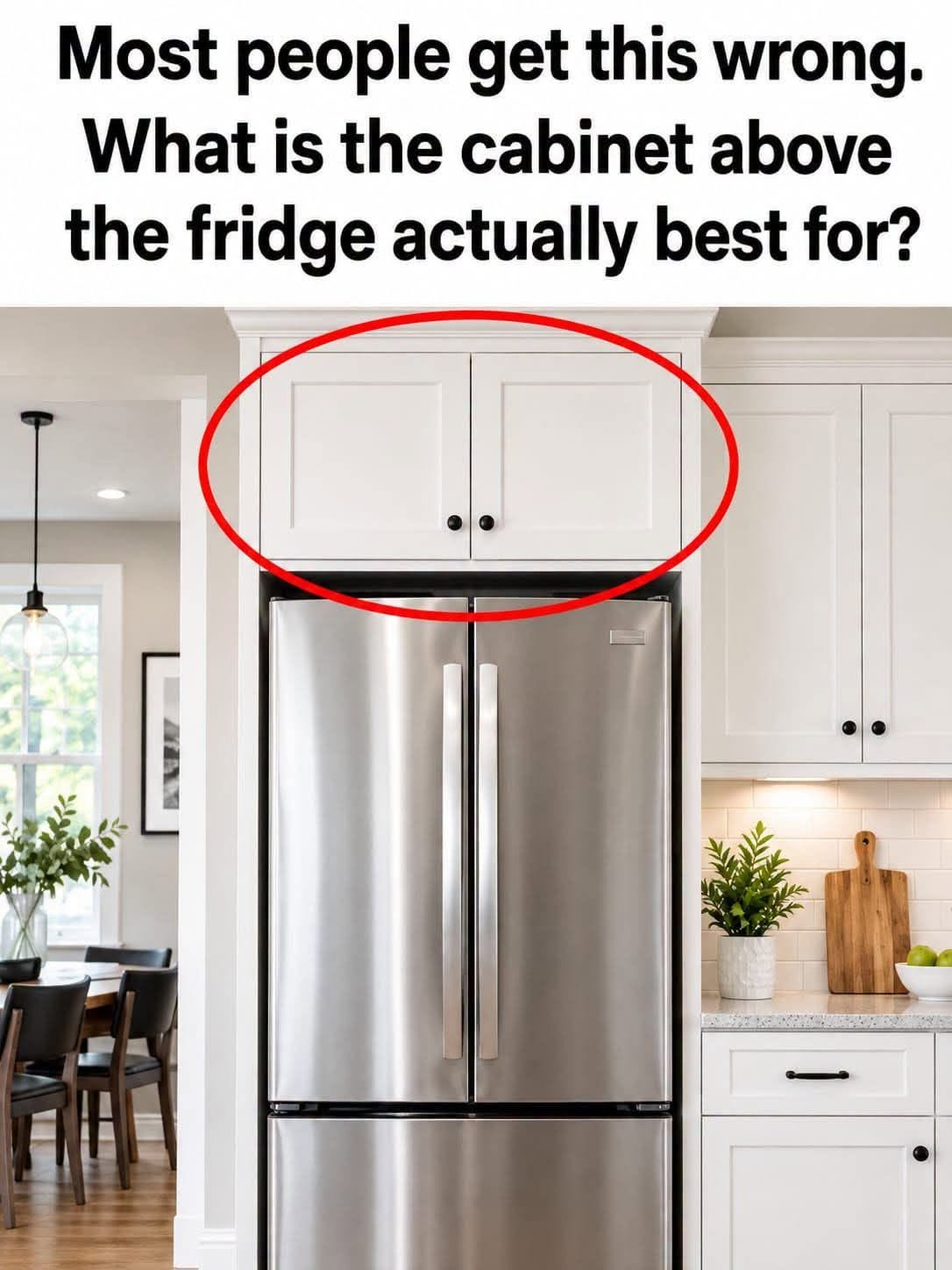
The Solution: The cabinet above the fridge is unusually deep—typically 24 inches deep, matching the refrigerator enclosure, compared to standard 12-inch upper wall cabinets. Installing vertical plywood or wire dividers turns that deep volume into a clean library filing system. You can slide tall baking sheets and heavy boards in on their sides and retrieve them by their edge with a quick reach, without moving a single other pan. Furthermore, metal pans and wooden cutting boards are completely impervious to rising appliance heat.
2. Large, Infrequently Used Small Appliances
Most kitchens suffer from cluttered countertops crowded with small appliances that are only used a few times per year:
-
Electric turkey roasters
-
Food dehydrators
-
Ice cream makers
-
Fondue pots
-
Pasta rollers and extruders
-
Large multi-tier food steamers
These appliances take up immense surface area in prime kitchen workspaces. Because they are mechanical tools composed of steel, heavy plastics, and motors, the slight warmth of the cabinet will not damage them. Placing them in the over-fridge cabinet keeps them dust-free and out of sight until their specific season or culinary project arrives.
3. Bulky, Lightweight Serving Ware and Entertaining Pieces
Holiday hosting often calls for specialized platters, punch bowls, salad bowls, chip-and-dip sets, and tiered cake stands that sit idle for months.
-
Prioritize Lightweight Materials: Storing heavy, brittle cast iron or stacks of porcelain high above your head can be hazardous. When reaching up on tiptoes or a step stool, lightweight items are much safer to maneuver.
-
Ideal Candidates: Wooden salad bowls, woven bread baskets, melamine picnic platters, acrylic drink dispensers, and seasonal plastic party trays. They fill large volumes of cabinet space without creating dangerous downward weight when you pull them down.
4. Paper Goods, Picnics, and Disposable Party Supplies
Extra paper towels, paper plates, disposable napkins, picnic coolers, and thermal lunch totes require dry storage and take up substantial shelf space. They are entirely unaffected by refrigerator heat, making them practical candidates for the upper cabinet.
4. Comparing Cabinet Uses: Good vs. Bad
| Item Category | Safe Above Fridge? | Primary Risk or Benefit |
| Wine & Spirits | ❌ Unsafe | Thermal degradation, oxidization, premature aging, cork failure. |
| Cooking Oils | ❌ Unsafe | Accelerated lipid peroxidation and rancidity. |
| Spices & Herbs | ❌ Unsafe | Loss of volatile essential oils and flavor potency. |
| Medications | ❌ Unsafe | Chemical destabilization and premature loss of drug efficacy. |
| Vertical Baking Sheets | Ideal |
Perfect depth, easy slide-out access, zero heat risk. |
| Occasional Appliances | Ideal |
Frees valuable counter space; completely heat-resistant. |
| Serving Platters | Ideal | Keeps oversized holiday pieces stored away until needed. |
| Paper Entertaining Goods | Ideal | Dry, clean, lightweight, and completely unaffected by heat. |
