

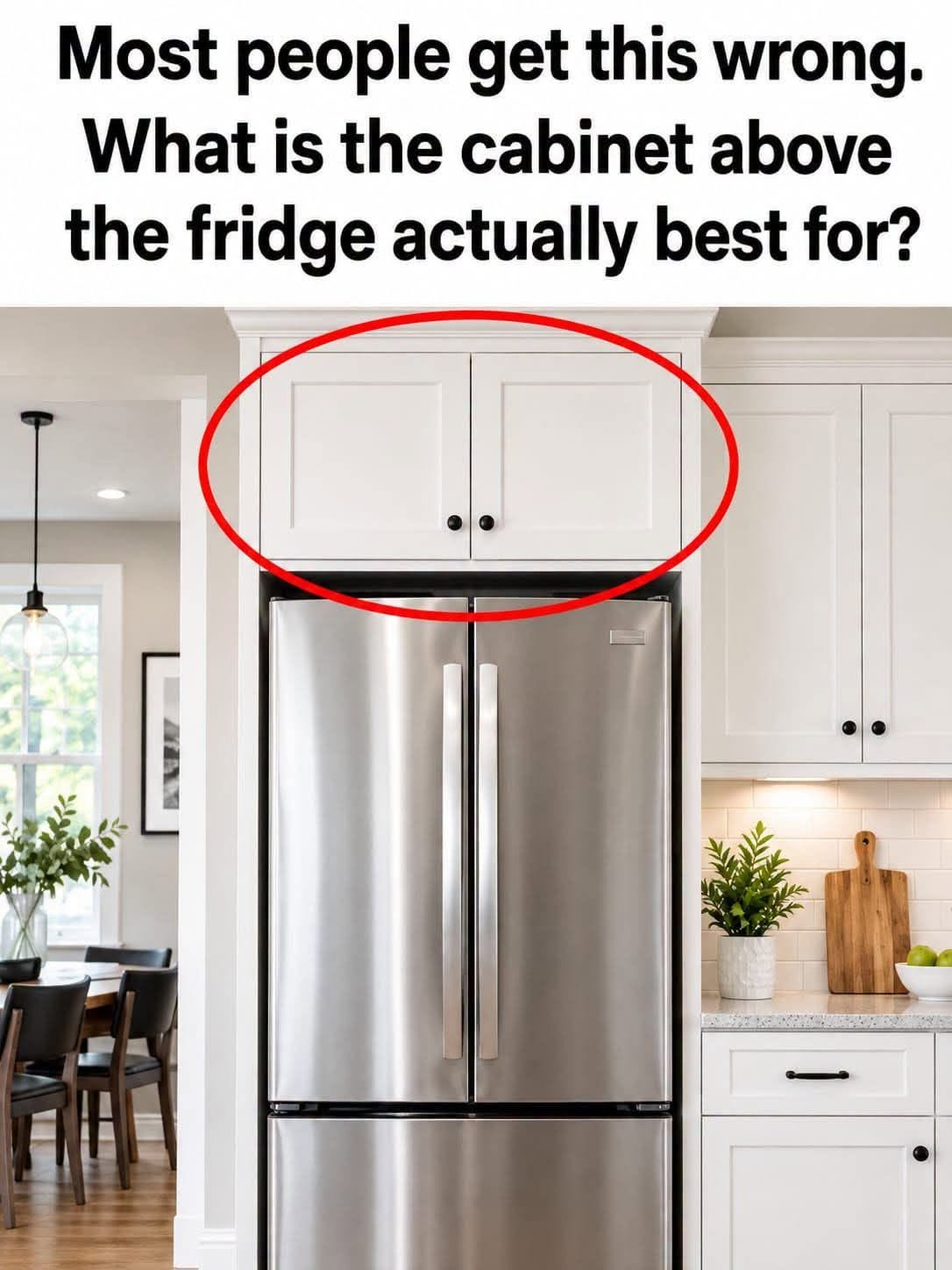
This combination of elevated heat, continuous low-level thermal cycling, and restricted air circulation creates an environment hostile to perishable, organic, and chemically sensitive goods.
2. What People Commonly Get Wrong: The "Do Not Store" List
Most people default to storing lightweight grocery surplus or tall pantry bottles in this cabinet simply because the space is empty. Here is why those common choices are problematic:
Wine and Alcoholic Spirits
Stashing bottles of wine in the above-fridge cabinet is one of the most common storage errors. Wine requires a stable, cool environment—ideally between $45^\circ\text{F}$ and $65^\circ\text{F}$ ($7^\circ\text{C}$ to $18^\circ\text{C}$)—with steady humidity. The steady ambient warmth rising from the refrigerator's condenser accelerates chemical oxidation and aging, effectively "cooking" the wine. It breaks down volatile aromatics, strips delicate fruit notes, and degrades the cork, causing it to shrink, dry out, and let in oxygen. High-proof spirits like whiskey and gin are more resilient to spoilage, but heat can expand the liquid, increase internal bottle pressure, and degrade flavor compounds over time.
Cooking Oils, Nuts, and Seeds
Extra virgin olive oil, sesame oil, walnut oil, and bulk nuts contain high concentrations of delicate unsaturated fatty acids. When exposed to chronic heat, these lipids undergo lipid peroxidation—a chemical reaction where oxygen molecules bond with fatty acid chains, producing free radicals and turning the oils rancid. Rancid oils not only develop an unpleasant, bitter, crayon-like taste, but they also lose their cardiovascular antioxidants (like polyphenols and vitamin E) and can cause digestive inflammation. Cooking oils should always be kept in a cool, dark, lower cupboard.
Spices and Dried Herbs
Ground spices, peppercorns, and dried herbs contain volatile essential oils that give them their distinctive aroma and flavor. Heat and rising humidity draw these volatile aromatic compounds out into the air prematurely, leaving spices dull, scentless, and flavorless within months. Storing paprika, cumin, or cinnamon in a warm cabinet drastically reduces their shelf life.
Baking Essentials (Flour, Baking Powder, Yeast)
Active dry yeast is a living organism that dies when exposed to prolonged temperatures above $100^\circ\text{F}$ ($38^\circ\text{C}$) or sustained warmth in storage, ruining dough rise. Chemical leaveners like baking powder and baking soda degrade quickly when warm, moist air penetrates their containers, neutralizing their leavening power. Whole-wheat and specialty flours also contain grain germ oils that quickly turn rancid in warm conditions.
Medications and Vitamins
Many households keep vitamin bottles or medicine boxes on high shelves out of reach of young children. However, pharmaceuticals and dietary supplements are engineered to remain stable at controlled room temperature ($68^\circ\text{F}$ to $77^\circ\text{F}$ / $20^\circ\text{C}$ to $25^\circ\text{C}$). Heat and humidity speed up molecular degradation, significantly weakening active ingredients in pain relievers, antibiotics, prescription pills, and probiotics before their stated expiration dates.
3. What the Cabinet Above the Fridge Is Actually Best For
Once temperature-sensitive consumables are ruled out, what should actually go into this high-volume space? The ideal contents are items that are heat-impervious, bulky, and used infrequently.
                     IDEAL STORAGE HIERARCHY
┌─────────────────────────────────────────────────────────────┐
│ 1. VERTICAL SHEET PAN & CUTTING BOARD STORAGE (Dividers)     │
│ 2. BULKY, LIGHTWEIGHT SERVING WARE (Melamine, Wood, Baskets)│
│ 3. INFREQUENTLY USED SMALL APPLIANCES (Roasters, Dehydrators)│
│ 4. SEASONAL ENTERTAINING PIECES (Holiday Platters, Punch Bowl)│
│ 5. PAPER & DISPOSABLE ENTERTAINING SUPPLIES                  │
└─────────────────────────────────────────────────────────────┘
1. Vertical Storage for Sheet Pans, Roasting Racks, and Cutting Boards
By far the single most ergonomic and space-efficient use of the over-fridge cabinet is converting it into a vertical tray divider system.
