

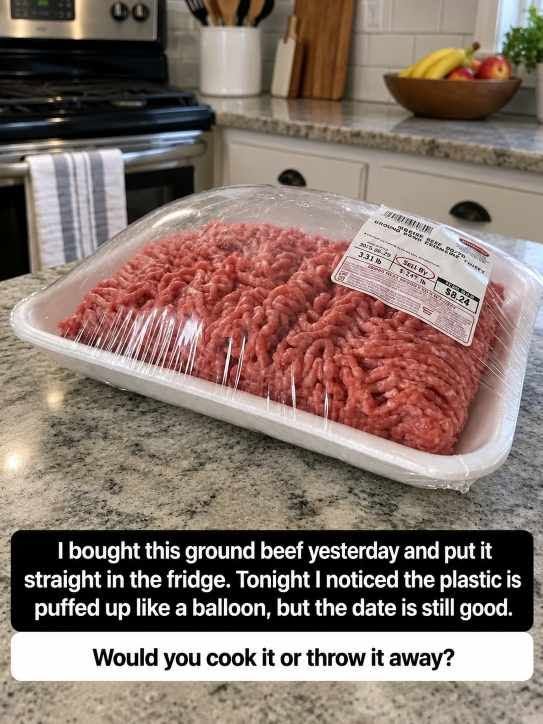
3. The Cold Chain Breakdown: Why Dates Can Lie
The central source of confusion for consumers is the intact date on the label. The package might say "Sell By May 29," and today is May 25. Why would a product spoil days ahead of its printed date?
The answer lies in temperature abuse along the cold chain.
Every expiration date, "sell-by" date, and shelf-life estimate established by food manufacturers and regulatory bodies (such as the USDA and FDA) is calculated under an explicit condition: unbroken refrigeration below $40^\circ\text{F}$ ($4^\circ\text{C}$).
THE CRITICAL TEMPERATURE RANGES
┌─────────────────────────────────────────────────────────────┐
│ Above 140°F (60°C)   → Heat Pasteurization Zone (Bacteria Die)│
├─────────────────────────────────────────────────────────────┤
│ 40°F to 140°F        → THE "DANGER ZONE"                    │
│ (4°C to 60°C)          Rapid bacterial replication occurs.  │
│                        Population doubles every 20 minutes. │
├─────────────────────────────────────────────────────────────┤
│ 32°F to 39°F         → Safe Refrigeration Zone              │
│ (0°C to 4°C)           Bacterial growth slowed significantly│
├─────────────────────────────────────────────────────────────┤
│ Below 32°F (0°C)     → Freezing Zone (Bacterial Growth Halts)│
└─────────────────────────────────────────────────────────────┘
If the meat experiences a temperature deviation anywhere along its logistical journey, that timeline collapses:
-
Wholesale Transit: Did the transport truck sit on a hot distribution dock before being unloaded?
-
Retail Display: Was the supermarket display cooler running at $48^\circ\text{F}$ instead of $36^\circ\text{F}$? Retail bunker coolers frequently experience warm dead spots near the top fill line or during defrost cycles.
-
The Shopping Trip: Did the meat sit in the shopper's cart for 45 minutes, followed by a 30-minute drive home in a warm trunk or car interior on a sunny afternoon?
-
Home Refrigerator Performance: Many domestic refrigerators, particularly when overloaded or poorly calibrated, operate at $42^\circ\text{F}$ to $46^\circ\text{F}$ rather than below $38^\circ\text{F}$.
If raw ground meat spends even two cumulative hours in the Danger Zone ($40^\circ\text{F}\text{--}140^\circ\text{F}$ / $4^\circ\text{C}\text{--}60^\circ\text{C}$), bacterial counts skyrocket from hundreds of cells per gram into the millions. Once that threshold is crossed, bacteria will continue to metabolize and produce gas even after being returned to a cold refrigerator, causing the film to balloon overnight.
4. The Dangerous Fallacy: "I'll Just Cook It Well-Done"
A widespread misconception among home cooks is that high cooking temperatures can fix any degree of meat spoilage. People assume that searing ground beef until it reaches an internal temperature of $160^\circ\text{F}$ ($71^\circ\text{C}$) or boiling it in a sauce will neutralize all potential health hazards.
This belief overlooks the fundamental difference between live bacteria and bacterial toxins.
Living Pathogens vs. Heat-Stable Enterotoxins
Cooking food thoroughly does kill vegetative bacterial cells. Heat denatures the structural proteins and enzymes of organisms like E. coli, Salmonella enterica, and Campylobacter.
However, several common foodborne bacteria produce chemical metabolic poisons known as enterotoxins while they feed and multiply. The critical danger of these toxins is that many are heat-stable:
-
Staphylococcus aureus Enterotoxin: S. aureus can multiply rapidly on protein foods left at improper temperatures. While the bacteria themselves are readily destroyed by heat, the staphylococcal enterotoxins they secrete can withstand boiling at $212^\circ\text{F}$ ($100^\circ\text{C}$) for more than 30 minutes without losing their toxicity.
-
Bacillus cereus Emetic Toxin: This toxin, which causes severe vomiting and gastrointestinal distress within hours of consumption, is similarly heat-resistant and survives conventional pan frying and baking.
When meat has deteriorated to the point where bacterial respiration physically balloons the plastic wrap, there is a high probability that large colonies of microbes have colonized the tissue. Cooking the meat may leave you with a sterile burger patty saturated with heat-stable toxins. Eating it can still result in severe acute food poisoning, dehydration, and hospitalization.
