

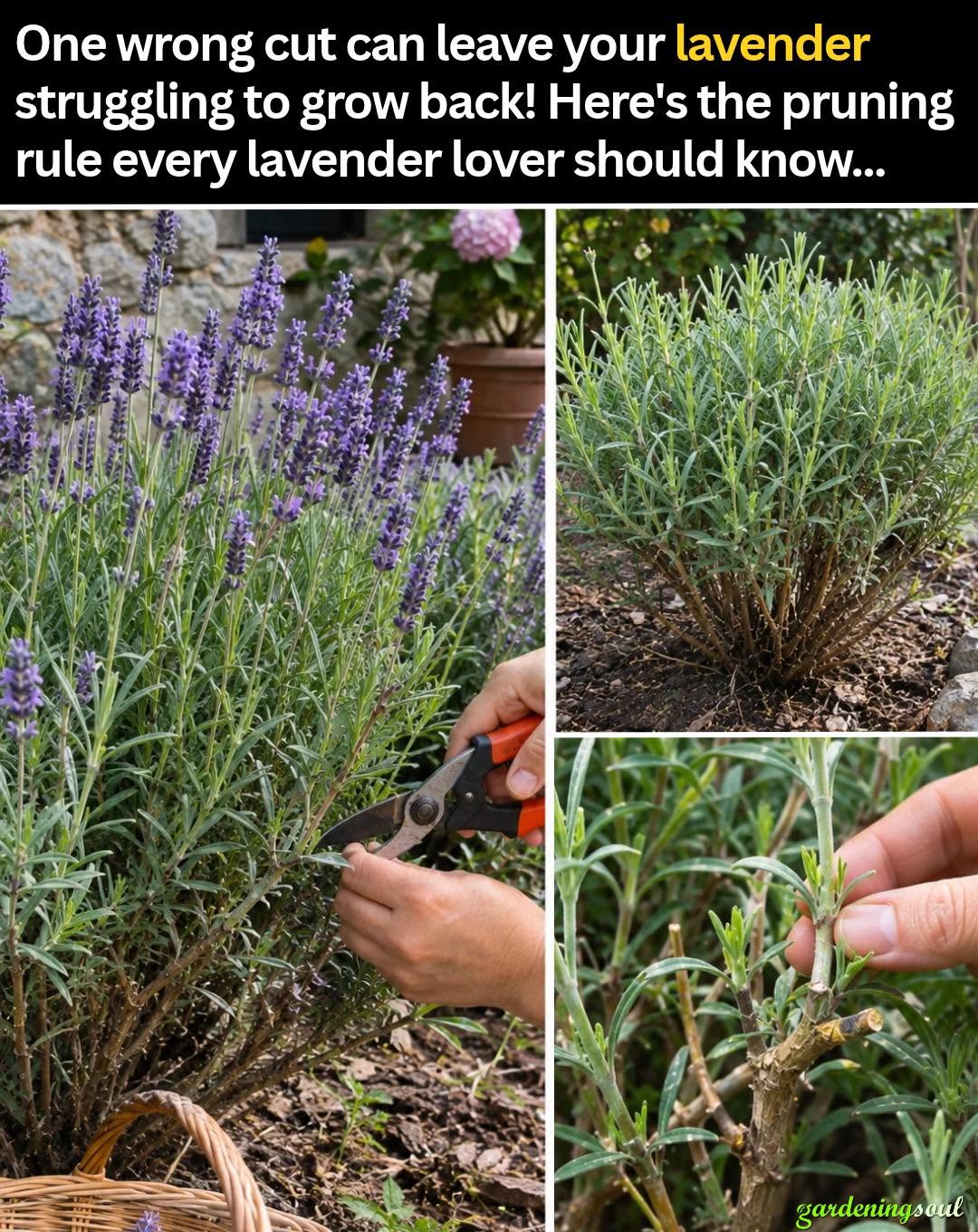
What to Do With the Lavender You Cut
Don’t automatically throw healthy lavender stems away.
If the flowers still have good fragrance and color, they can be dried.
Bundle small groups of stems together and hang them upside down somewhere dry, dark, and well ventilated.
Once dried, lavender can be used for decorative bouquets, sachets, wreaths, and other crafts.
Healthy green trimmings can generally be composted.
Save healthy cuttings for propagation
Pruning time can also be an opportunity to propagate lavender.
Select healthy, non-flowering shoots and take short cuttings. Remove the lower leaves and insert the stems into a light, well-draining propagation mix.
Not every cutting will root, so start several at once.
How to Prune an Old, Woody Lavender
Older lavender requires much more caution.
If a plant has developed a large woody center with green growth only at the ends of long branches, don’t suddenly cut the entire shrub down to a few inches.
Instead, work gradually.
Remove dead branches first. Then shorten living stems only as far as you can while still leaving healthy leafy growth.
Over time, careful shaping may improve the appearance.
However, extremely woody, open lavender cannot always be restored to the compact shape of a young plant.
Sometimes replacement is the most practical solution.
This is why annual pruning from the beginning is so important.
