

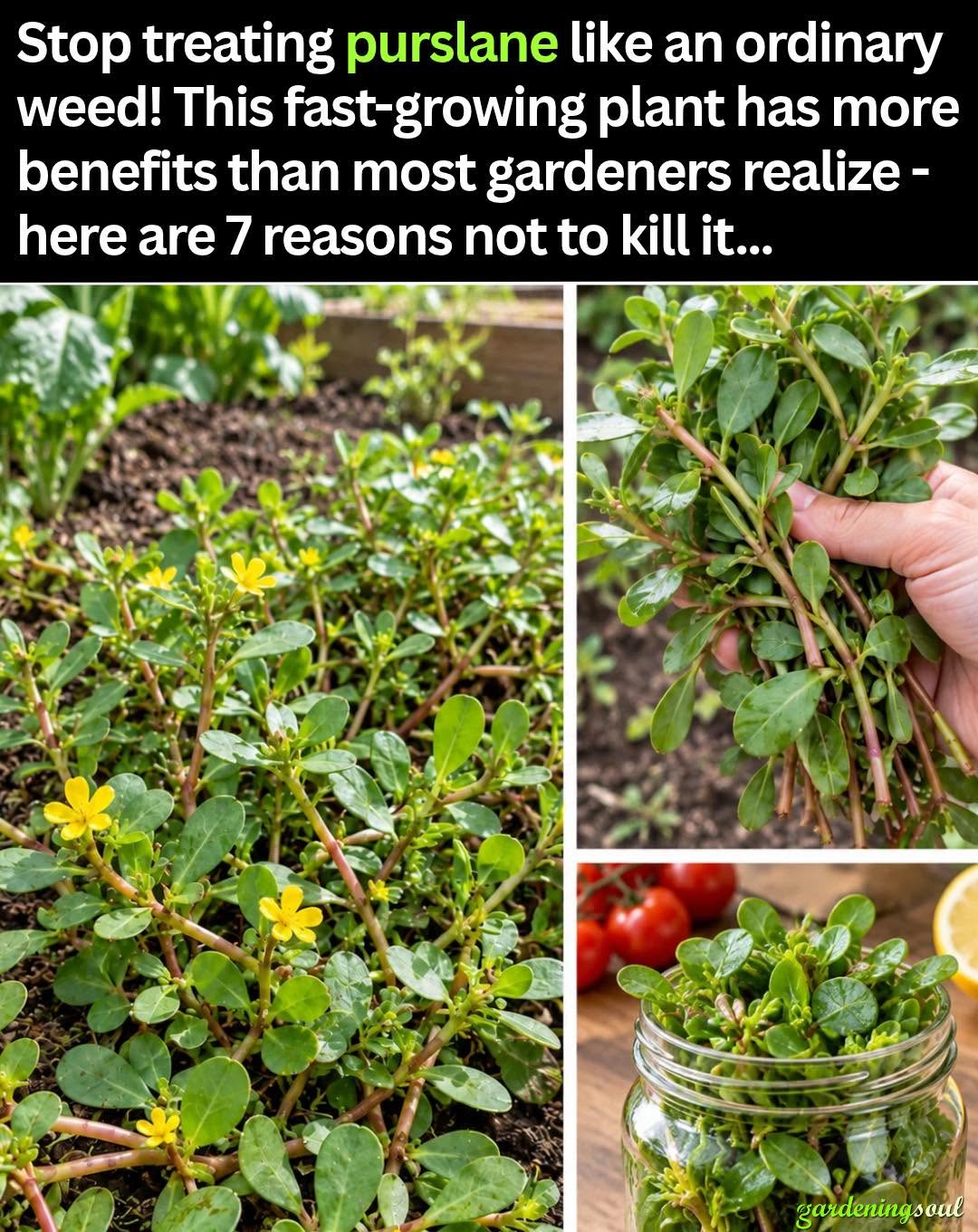
2. It’s 100% Edible – and Delicious
Purslane isn’t just edible – it’s delicious and versatile in the kitchen. Its mildly tangy, lemony flavor and crisp, juicy texture make it a favorite in traditional dishes around the world.
Culinary Uses:
- Salads: Use fresh leaves and stems raw in salads.
- Stir-fries: Add at the end of cooking for crunch.
- Soups and stews: Common in Middle Eastern and Mexican cuisine.
- Smoothies: Blend with fruits and greens.
- Pickled: Its tangy flavor pairs well with vinegar-based pickles.
- Egg dishes: Toss into omelets or frittatas.
The mucilaginous (slightly slimy) texture, similar to okra, makes it great for thickening soups and adding moisture to dishes.
Tip: Harvest young, tender stems and leaves in the morning for the best flavor and texture.
3. Purslane Improves Soil Health
Not only is purslane good for your body – it’s great for your soil.
This low-growing plant acts as a natural ground cover, preventing erosion, retaining moisture, and protecting the topsoil from drying out or washing away during heavy rain.
Soil Benefits:
- Reduces evaporation by shading bare soil
- Breaks up compacted earth with its shallow roots
- Brings up nutrients from deep soil layers to the surface
- Adds organic matter when chopped and dropped as green mulch
Its presence is a living indicator of fertile, well-drained soil – so if it’s thriving in your garden, your soil is probably healthier than you thought.
4. It Attracts Pollinators and Beneficial Insects
Those tiny yellow blooms on your purslane patch aren’t just cute – they’re powerful magnets for pollinators.
Though small, purslane flowers are open and accessible to: Bees, Hoverflies, Butterflies, Other beneficial insects.
In a time when pollinator populations are declining, offering even small food sources can make a difference.
Letting purslane grow in borders, under taller crops, or in unused corners of the garden helps support biodiversity and boosts pollination of nearby crops like tomatoes, cucumbers, and squash.
5. It’s a Drought-Resistant Superplant
Purslane is a CAM plant – it performs Crassulacean Acid Metabolism, a photosynthetic process that conserves water by opening its stomata at night. This makes it exceptionally drought-tolerant.
In dry regions or during water restrictions:
- Purslane continues to thrive
- Requires little to no irrigation
- Protects surrounding plants from excessive heat by shading the soil
This makes it a great companion plant or living mulch in drought-prone or arid climates.
In times of water scarcity, purslane can provide reliable green nutrition—even when your other greens wither.
6. It’s an All-Natural Living Mulch
Forget store-bought mulch – purslane is nature’s free ground cover.
As it grows, it forms a dense mat that:
- Suppresses weeds naturally
- Shades the soil
- Maintains moisture levels
- Regulates temperature
Even better, when purslane dies back or is trimmed, it decomposes quickly, feeding the soil with organic matter. This cycle improves your garden’s fertility and moisture-holding capacity over time.
Some gardeners even use purslane as a “green manure,” chopping it and turning it into the soil before planting new crops.
7. Purslane Is a Sustainable Survival Food
Purslane is more than just an occasional edible – it’s a climate-resilient, nutrient-dense survival food that can grow in tough conditions.
In permaculture, food security, and survival gardening circles, purslane is recognized as:
- A fast-growing wild vegetable
- Able to regrow rapidly after cutting
- Seed-dense and self-replicating
- Grown with no fertilizer, water, or human intervention
Its seeds can remain viable in the soil for decades, germinating when conditions are right. This makes it a reliable food source in emergencies, natural disasters, or times of supply chain disruption.
While others rely on delicate supermarket greens, you’ll have a nutritious backup growing in your yard – no planting required.
