

3. The Chemistry of Char: Acrylamide and Carcinogenic Smoke
When bread is toasted properly, high surface heat triggers the Maillard reaction—a complex chemical cascade between amino acids (specifically asparagine) and reducing sugars (such as glucose and fructose) that creates hundreds of delicious new aromatic compounds, giving toast its golden color, nutty fragrance, and crisp bite.
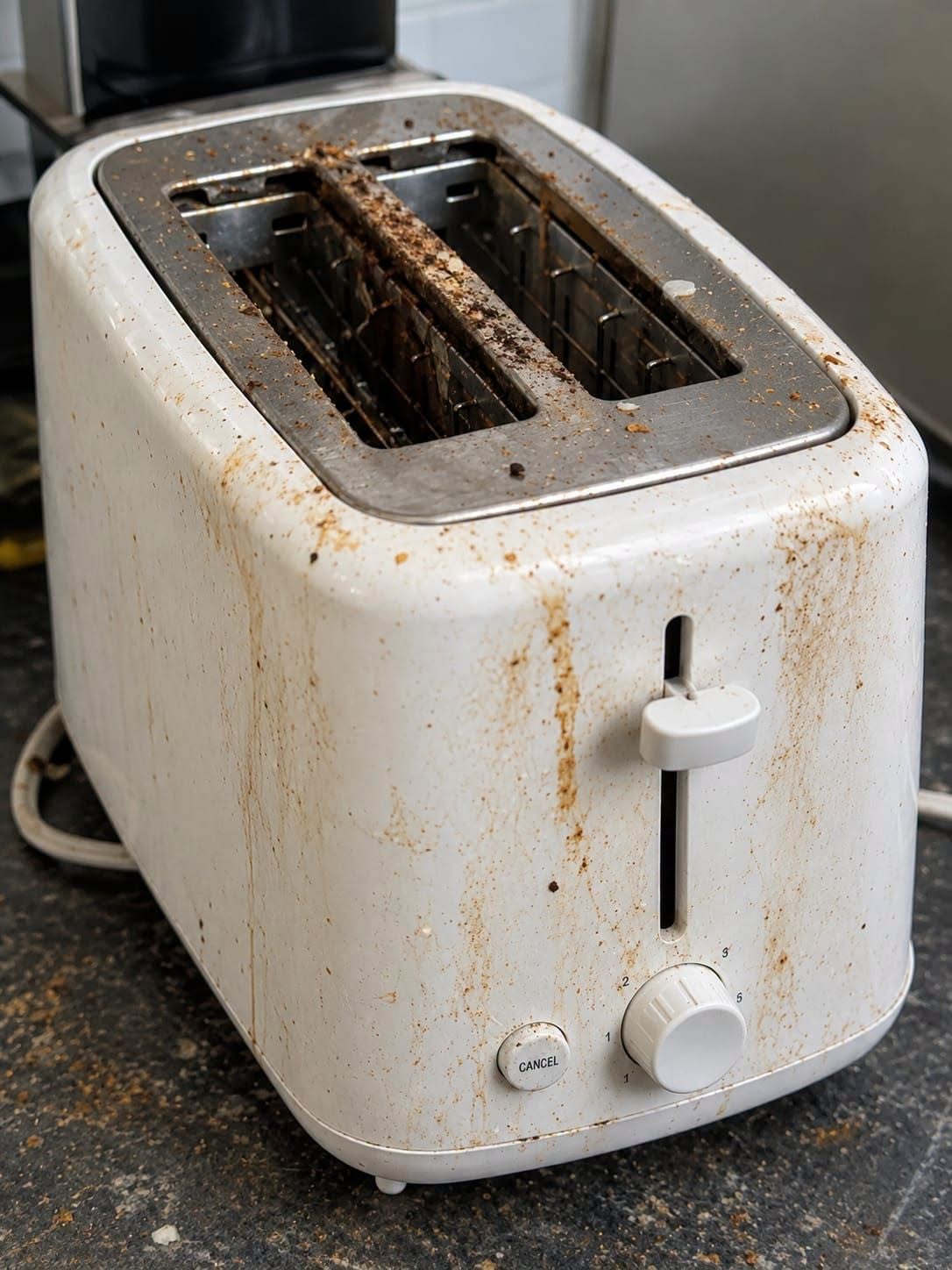
However, when crumbs and food residues remain trapped inside the toaster across dozens of heating cycles, a very different chemical process takes over: destructive carbonization.
The Dark Side of Repeatedly Burned Carbon
-
Acrylamide Accumulation: Acrylamide is a chemical compound formed naturally in starchy foods during high-temperature cooking (frying, baking, and toasting). The World Health Organization and the International Agency for Research on Cancer classify acrylamide as a probable human carcinogen. While a lightly golden slice of toast contains minimal acrylamide, blackened, repeatedly incinerated bread crumbs contain high concentrations.
-
Toxic Aerosols and Smoke: As old crumbs and dripped oils carbonize, they generate dense, acrid blue smoke containing volatile polycyclic aromatic hydrocarbons (PAHs) and heterocyclic amines (HCAs). As this smoke rises through the slots, it coats your fresh, clean slice of bread with bitter, burnt, chemical residues before you ever take a bite.
-
Degraded Flavor Profiles: If your morning toast consistently carries an acrid, smoky, or sour aftertaste despite pulling the bread out while it is still pale golden, the culprit is almost certainly the burning layer of debris smoldering at the bottom of the machine.
4. Kitchen Aerosols: The Grimy Exterior Reality
Looking at a neglected white or stainless steel toaster reveals an unappetizing surface landscape: sticky, amber-colored grease droplets, fingerprint smudges, and dust clinging to every crevice.
This greasy film is not caused by the toast itself; it is the product of aerosolized cooking oils.
Every time you sear a steak, fry eggs in butter, or sauté vegetables on your stovetop, microscopic droplets of fat evaporate and atomize into the surrounding air. These airborne grease particles drift across the kitchen and settle onto stationary countertop appliances. Because toasters are rarely washed with soap and water, this oil layer accumulates over time.
Once deposited on the plastic or metal casing of the toaster, the fat layer oxidizes and hardens through lipid polymerization, turning into a tacky, varnish-like coating that traps household dust, pet hair, and airborne mold spores. Touching the carriage lever or the dial transfers these oxidized grease deposits directly onto your hands while you prepare food.
5. How to Properly and Safely Deep-Clean Your Toaster
Cleaning a toaster does not require specialized industrial chemicals, but it does demand a strict, orderly protocol to ensure personal electrical safety and protect the internal heating ribbons from damage.
                     SAFE TOASTER CLEANING SEQUENCE
┌─────────────────────────────────────────────────────────────┐
│ 1. UNPLUG & COOL: Cut all electrical current; let cool fully│
│ 2. DUMP CRUMB TRAY: Slide out base tray; wash with warm soap│
│ 3. INVERT & SHAKE: Tap gently over a sink or trash can      │
│ 4. BRUSH THE ELEMENTS: Use a soft pastry brush (NO METAL!)  │
│ 5. DEGREASE EXTERIOR: Wipe casing with microfiber & vinegar │
│ 6. DRY THOROUGHLY: Ensure 100% dry before plugging back in  │
└─────────────────────────────────────────────────────────────┘
