

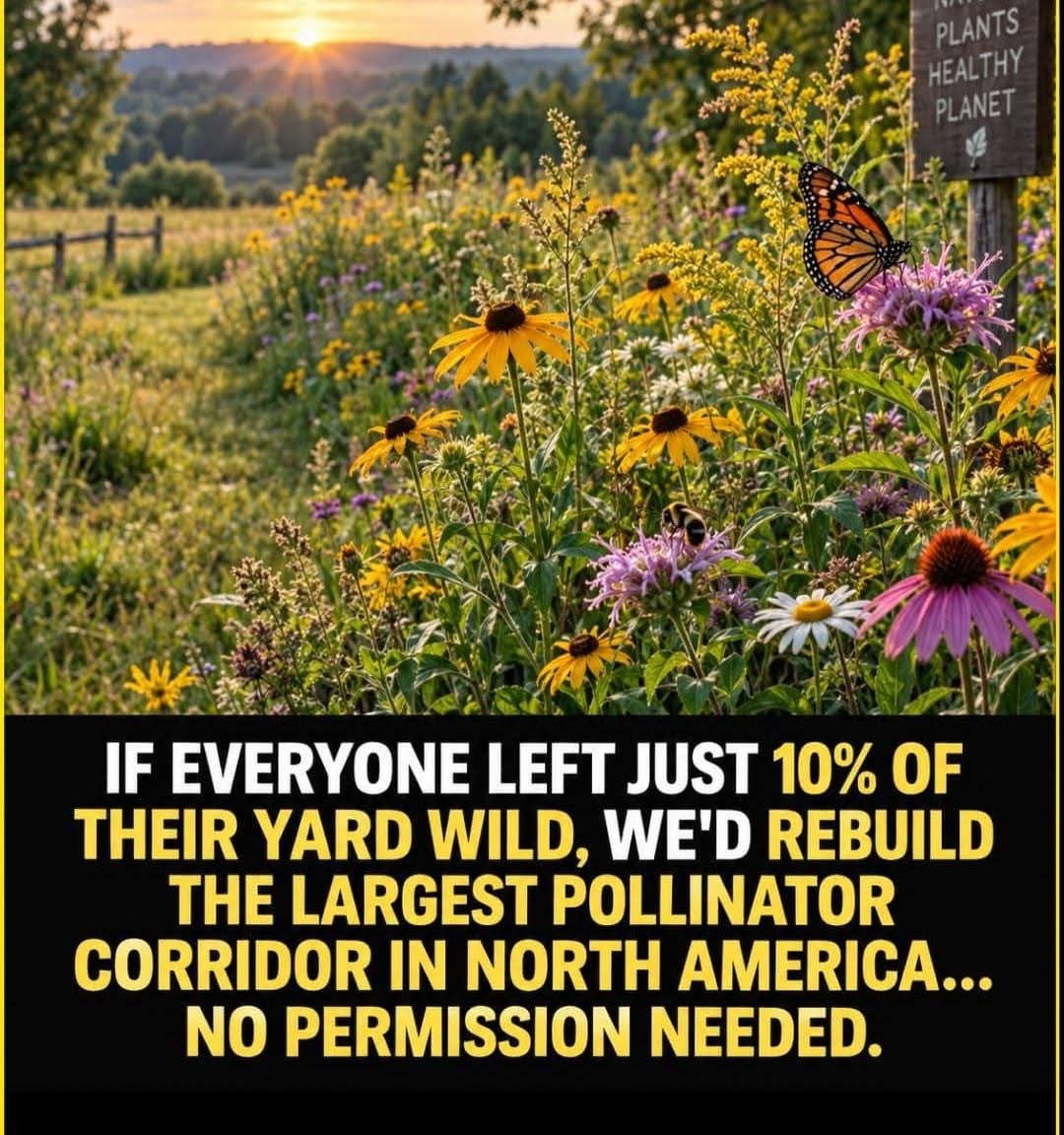
You don’t need acres of land, a sprawling garden, or a backyard full of flower beds to create a little more space for wildlife.
Sometimes, one small patch of flowers can make a difference. 🌱🐝🦋
A corner of your yard planted with native, pesticide-free flowers can provide valuable food, shelter, and nesting resources for bees, butterflies, moths, and other beneficial insects.
And when many people do the same thing, those small patches can become something much bigger.
🐝 Start With What You Have
One of the biggest misconceptions about wildlife gardening is that you need a large property.
You don’t.
A small garden bed, a strip along a fence, a few containers, or even a neglected corner of the yard can become a useful habitat.
The goal isn’t to create a perfect garden.
It’s to create resources for wildlife.
A few flowering plants can provide nectar and pollen. Taller vegetation can offer shelter. Leaves, stems, and natural debris can provide places for insects to rest or complete parts of their life cycles.
Even allowing a small section of the yard to grow a little more naturally can provide opportunities that a completely manicured lawn doesn’t.
🌻 Choose Native Plants Whenever Possible
When planning a pollinator garden, one of the most important things to consider is what grows naturally in your region.
Native plants have evolved alongside local wildlife and can be particularly valuable to native insects.
The best choices will vary depending on where you live, your soil, sunlight, rainfall, and climate.
Depending on your region, possibilities might include:
- Clover
- Goldenrod
- Milkweed
- Asters
- Native sunflowers
- Coneflowers
- Bee balm
- Black-eyed Susans
- Native mint
- Yarrow
- Native shrubs and flowering trees
Don’t simply choose plants because they’re labeled “pollinator-friendly.” Check whether they’re appropriate for your specific region.
A local native-plant society, botanical garden, university extension service, or conservation organization can often help you identify suitable species.
