

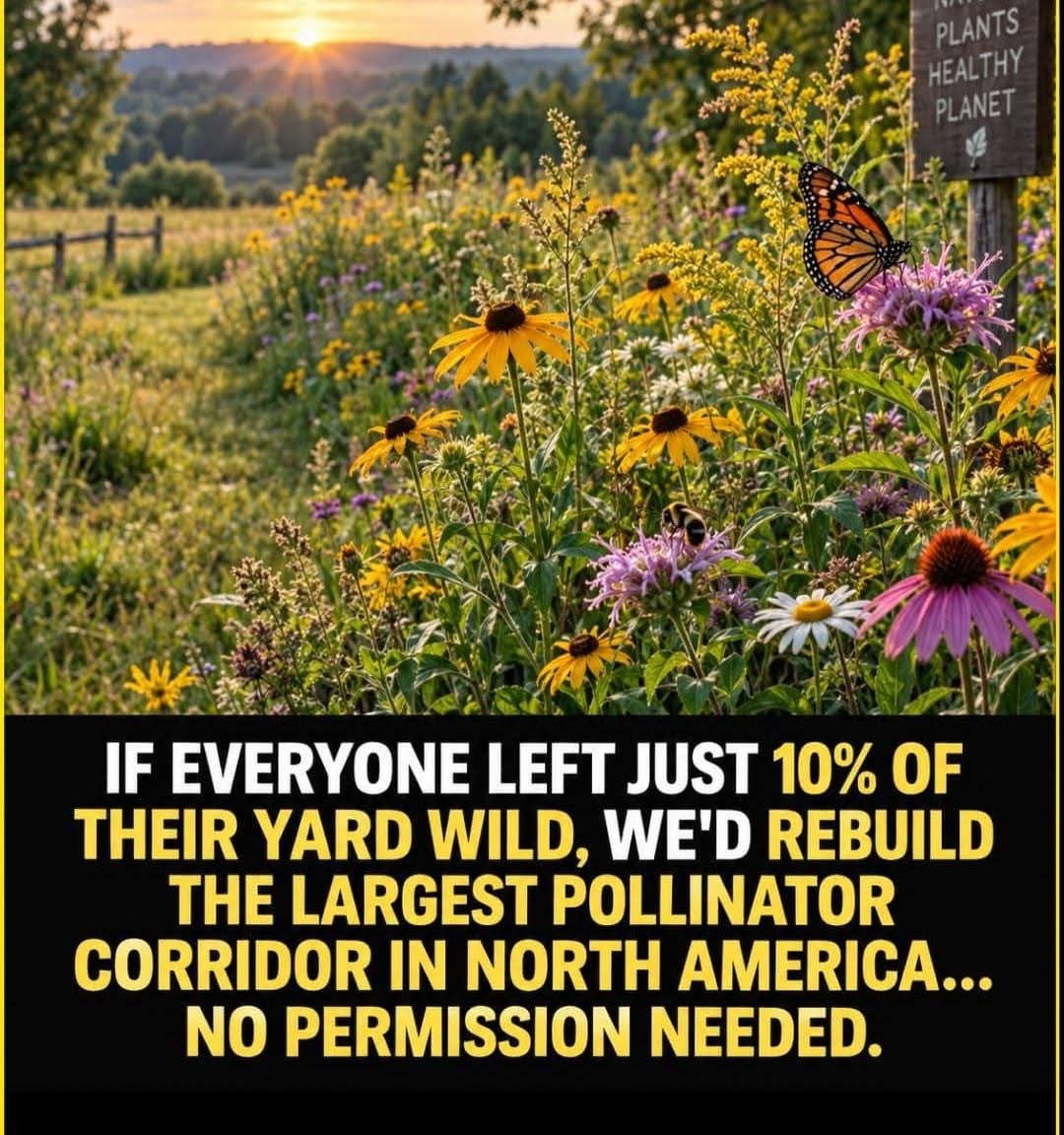
🦋 Think Beyond Bees
When people hear the phrase pollinator garden, they often picture honeybees.
But honeybees aren’t the only visitors.
A diverse garden can attract many different kinds of insects, including:
🦋 Butterflies
🐝 Native bees
🪰 Hoverflies and other beneficial flies
🦋 Moths
🪲 Beetles
🐛 Caterpillars and other insect larvae
Different insects have different needs.
Some feed on flower nectar.
Others require particular plants as food for their young.
Some need bare soil for nesting, while others use hollow stems, leaf litter, or natural cavities.
That’s why a diverse garden is often more useful than a garden containing only one or two types of flowers.
🌼 Plant for a Long Season of Flowers
If you have the space, try to choose plants that bloom at different times of the year.
Early-blooming plants can provide resources when winter is ending and relatively few flowers are available.
Summer flowers can provide abundant nectar and pollen during the warmer months.
Late-season flowers, including many native asters and goldenrods, can provide important resources when fewer plants are still blooming.
Instead of having one spectacular week of flowers, aim for a garden where something is blooming throughout the growing season.
🌿 You Don’t Have to Remove Your Entire Lawn
This is important.
Creating wildlife habitat doesn’t have to mean ripping out every blade of grass.
If you enjoy having a lawn, keep some.
Instead, consider converting just a small section.
You could create a flower bed along the fence, plant underneath suitable trees, replace an unused strip of grass, or create a small island of native plants.
Even a few square meters can become a little pocket of habitat.
And once you see butterflies, bees, and other insects visiting, you may find yourself wanting to add another small patch.
