

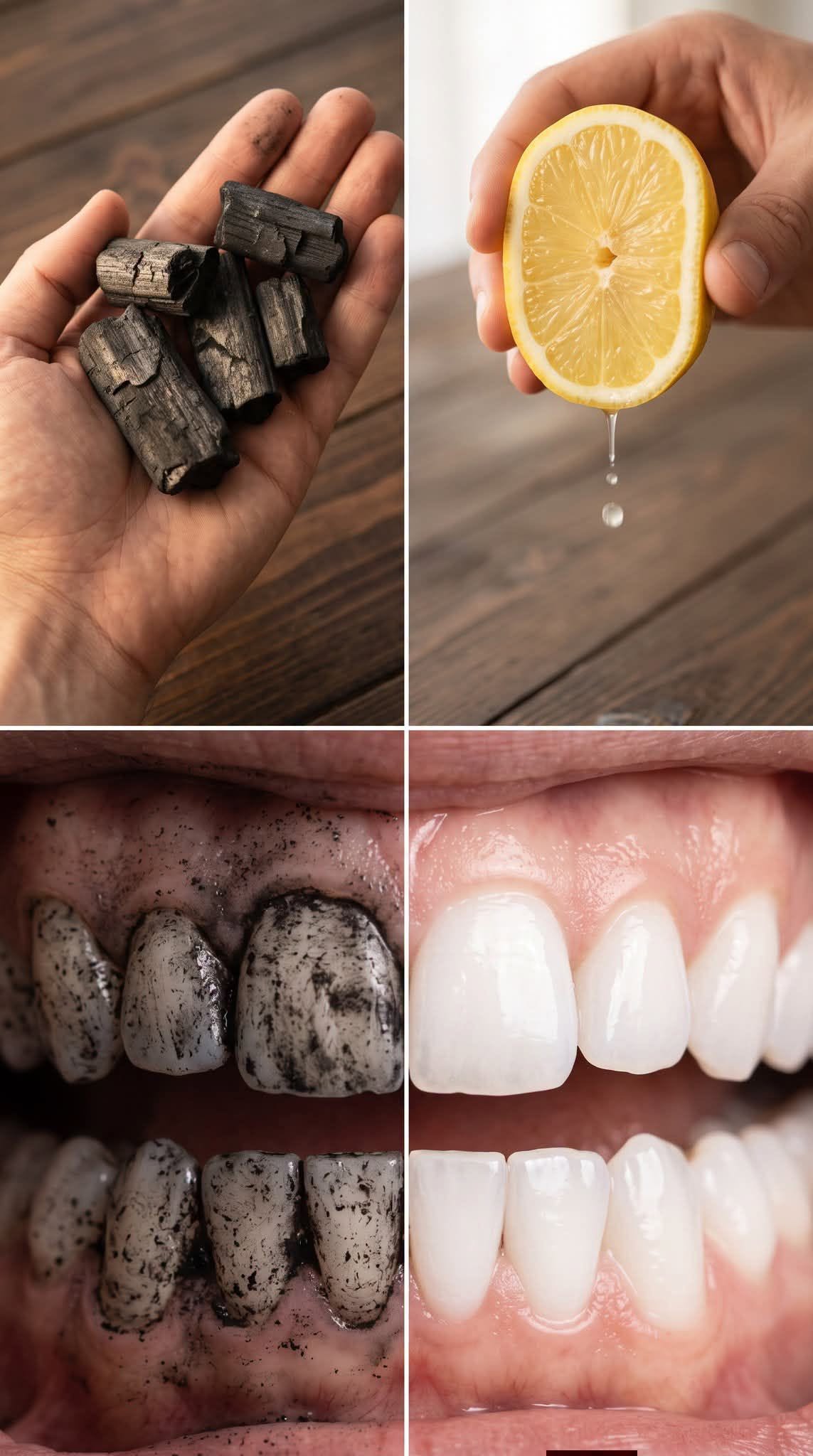
🖤🍋 The Viral Before-and-After Can Be Misleading
This is one of the biggest lessons from social-media beauty hacks.
A before-and-after photograph doesn’t tell you why the teeth look different.
Lighting can change.
Camera exposure can change.
The teeth may be wet in one picture and dry in another.
Surface stains may have been removed.
And the image doesn’t tell you whether the method caused microscopic changes to the enamel.
A whiter-looking photograph isn’t proof that a DIY treatment is safe.
⭐ So, Does Charcoal + Lemon Work?
Not as a proven, safe teeth-whitening treatment.
Charcoal’s abrasiveness may remove some surface stains, but scientific evidence does not show that charcoal powder is an effective dental bleaching agent.
Lemon adds acidity rather than providing a proven whitening benefit, and dental organizations warn against lemon-juice whitening because of the potential for acid-related tooth damage.
The combination therefore isn’t something I’d recommend as a routine DIY whitening treatment.
🦷 The Bottom Line
Charcoal + lemon may look impressive on social media, but your teeth aren’t a science experiment.
The temporary appearance of cleaner or brighter teeth isn’t worth repeatedly exposing enamel to unnecessary abrasion and acid.
If you want a whiter smile, choose a whitening method with evidence behind it—or talk with your dentist about what is appropriate for your teeth.
Because when it comes to your smile, whiter isn’t better if you’re sacrificing the enamel underneath. 🦷✨
Save this article and share it with someone who has been tempted to try the viral charcoal-and-lemon trick!
