

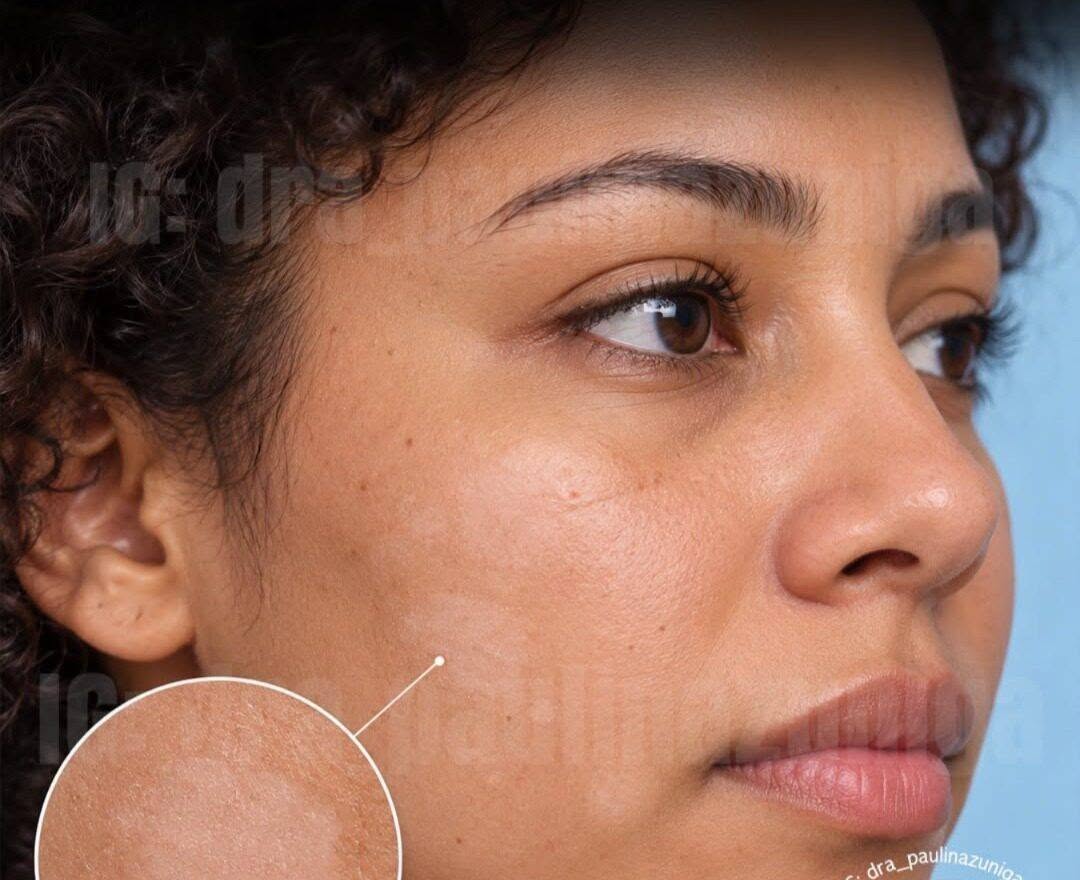
Have you ever noticed small, pale patches on a child’s cheeks, arms, or neck and wondered what they could be? These spots can sometimes worry parents, especially when they become more noticeable during the summer.
One possible explanation is a common skin condition called pityriasis alba, sometimes known by the Spanish popular name jiotes.
Although its appearance can be surprising, pityriasis alba is generally harmless. It is not contagious, does not usually cause significant discomfort, and often improves naturally over time.
But what causes these lighter patches? Why are they more noticeable after sun exposure? And does a child need treatment?
Let’s take a closer look at what dermatologists know about this condition.
1. What Exactly Is Pityriasis Alba?
Pityriasis alba is a common skin condition that mainly affects children and adolescents, although it can also occur in young adults.
It produces round or oval patches that are lighter than the surrounding skin. These areas often have slightly blurred or poorly defined edges and may initially appear dry or mildly scaly.
The condition is generally considered a mild form of skin inflammation, sometimes associated with eczema or dry, sensitive skin.
The exact cause is not fully understood. However, researchers believe that inflammation affects the normal production or distribution of pigment in the skin.
The result is an area that looks paler than the skin around it.
2. Who Is Most Likely to Develop These Spots?
Pityriasis alba is especially common in children and teenagers.
It is often noticed in children with dry or sensitive skin and may occur alongside a history of eczema or other atopic conditions.
