

Lessons in Reading Comprehension and Logical Reasoning
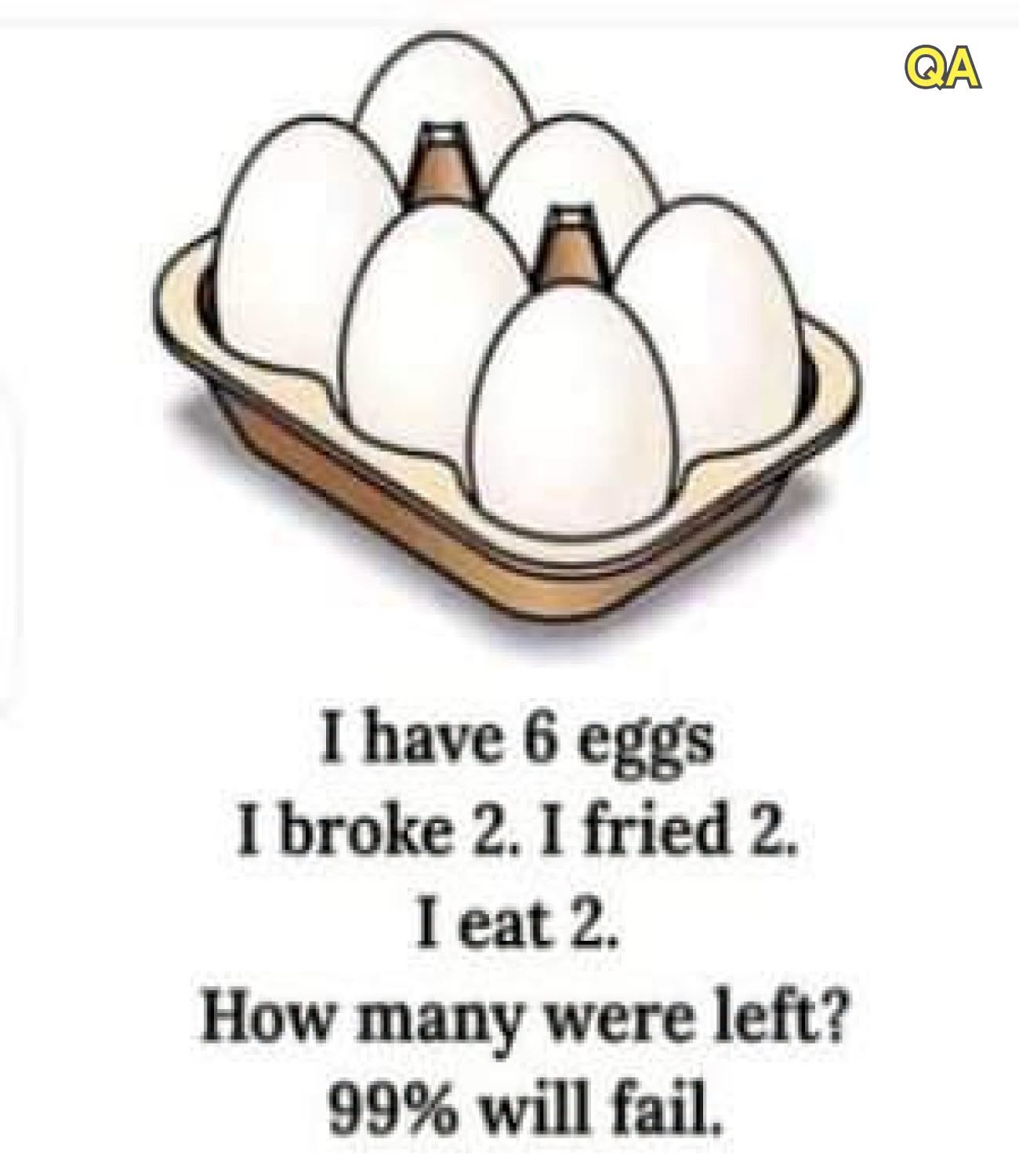
Although the six-egg question is simple, it demonstrates useful reasoning skills. It shows why readers should separate actions that alter an object from actions that remove it. It also encourages people to follow the order of events rather than treating every phrase as an independent subtraction problem.
These skills apply beyond riddles. In school mathematics, students often need to identify whether information describes a quantity, a change in condition, or an actual increase or decrease. In daily life, people use similar reasoning when following recipes, managing inventory, tracking household supplies, or interpreting instructions.
For example, if a recipe says to wash three potatoes, peel three potatoes, and boil three potatoes, it does not call for nine potatoes. It describes three potatoes passing through three preparation stages. Likewise, the egg puzzle describes two eggs passing through the stages of breaking, frying, and eating.
How to Solve Similar Word Puzzles
A helpful approach to word puzzles is to identify the starting quantity first. Next, determine which actions genuinely remove objects from the group. Finally, check whether later actions likely refer to the same objects mentioned earlier.
For this puzzle, the starting quantity is six. Breaking and frying are changes of state, while eating is the action that removes eggs from the available supply. Since only two eggs are eaten, the remaining quantity is four.
It can also help to create a simple mental table:
- Starting eggs: 6
- Eggs broken: 2, but still present
- Eggs fried: 2, but still present
- Eggs eaten: 2, removed from the total
- Eggs left: 4
This method prevents double-counting. It also makes clear why the answer is not zero, two, or six. The eggs are counted as removed only when they are eaten.
Final Answer
If you began with six eggs, broke two, fried those two, and ate those same two eggs, you have 4 eggs left.
The puzzle’s central idea is that breaking and frying do not subtract additional eggs. They are simply steps in preparing the same two eggs that are ultimately eaten.
