

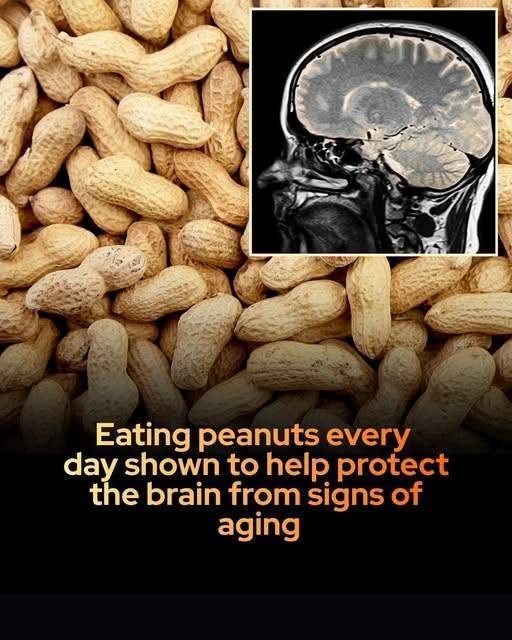
- Brain blood flow increased by 3.6%. Researchers observed an improvement in global cerebral blood flow compared with the control period.
- Verbal memory improved by 5.8%. Participants performed better on a delayed verbal recall measure.
- Systolic blood pressure decreased by approximately 5 mmHg.
- Pulse pressure decreased by approximately 4 mmHg.
However, not every cognitive measure improved. The researchers did not find significant benefits in executive function or psychomotor speed.
These results suggest that peanuts may support certain aspects of brain and cardiovascular health, but the study was relatively small and lasted only 16 weeks. It did not demonstrate that peanuts reverse brain aging or prevent dementia.
Why Might Peanuts Benefit the Brain?
Peanuts contain several nutrients and natural compounds that may contribute to healthy blood vessels and normal brain function.
1. L-Arginine and Nitric Oxide
Peanuts provide L-arginine, an amino acid the body uses to produce nitric oxide.
Nitric oxide helps blood vessels relax, allowing blood to flow more easily. Healthy circulation is important because the brain depends on a continuous supply of oxygen and nutrients.
This provides a possible explanation for why peanut consumption might influence cerebral blood flow. However, the 2025 trial measured blood flow rather than proving that L-arginine was responsible for the improvement.
2. Healthy Unsaturated Fats
Peanuts contain predominantly unsaturated fats, including monounsaturated and polyunsaturated fatty acids.
When these fats replace foods rich in saturated fats, they can help support a heart-healthy eating pattern. Cardiovascular health matters for the brain because the blood vessels supplying brain tissue need to function properly.
