

Chapter 8: Another Hidden Risk – Connecting Multiple Power Strips Together
One of the most dangerous electrical habits in homes and offices is connecting one power strip to another.
This practice is commonly known as daisy-chaining.
It usually happens when people run out of available outlets. Instead of installing additional properly designed outlets, they connect an extension cord or another power strip to the first one.
The arrangement may appear convenient, but it does not increase the capacity of the original electrical circuit.
For example, connecting two power strips together does not double the amount of current that the wall outlet can safely supply. Both strips still depend on the same upstream wiring and circuit protection.
The first strip may also carry the combined load of every device connected to the second strip. If that total exceeds its rating, overheating can occur.
Additional connections also create more potential points of failure. Loose plugs, worn sockets, damaged contacts, and poor-quality adapters can all contribute to electrical problems.
Daisy-chaining may also make it harder to identify which device is responsible when a circuit becomes overloaded.
Safer approach:
- Never connect one power strip to another.
- Do not plug a power strip into an extension cord unless the manufacturer and applicable safety requirements explicitly permit the arrangement.
- Use a power strip only within its rated capacity.
- If additional outlets are regularly needed, ask a qualified electrician about installing more permanent outlets.
- Replace damaged or worn power strips instead of attempting to repair them.
Adding more sockets does not automatically create more electrical capacity. That distinction is essential for preventing overloaded connections.
Chapter 9: Why Power Strips Overheat and How Electrical Fires Can Begin
To understand why certain appliances should not be connected to power strips, it helps to understand what happens inside an electrical connection.
Every power strip has a maximum electrical rating. This rating indicates the amount of electrical current or power the device is designed to handle under specified conditions.
When connected appliances demand more current than the strip can safely carry, its internal components may heat up.
Electrical resistance plays an important role. Even a small amount of resistance in a poor connection can generate heat when current flows through it.
The relationship is described by Joule's law:
Heat generated = Current² × Resistance × Time
This explains why electrical connections can become dangerous even when the excess load does not appear dramatic.
A loose plug, damaged contact, or worn socket can create additional resistance. When a substantial electrical current passes through that connection, heat can accumulate.
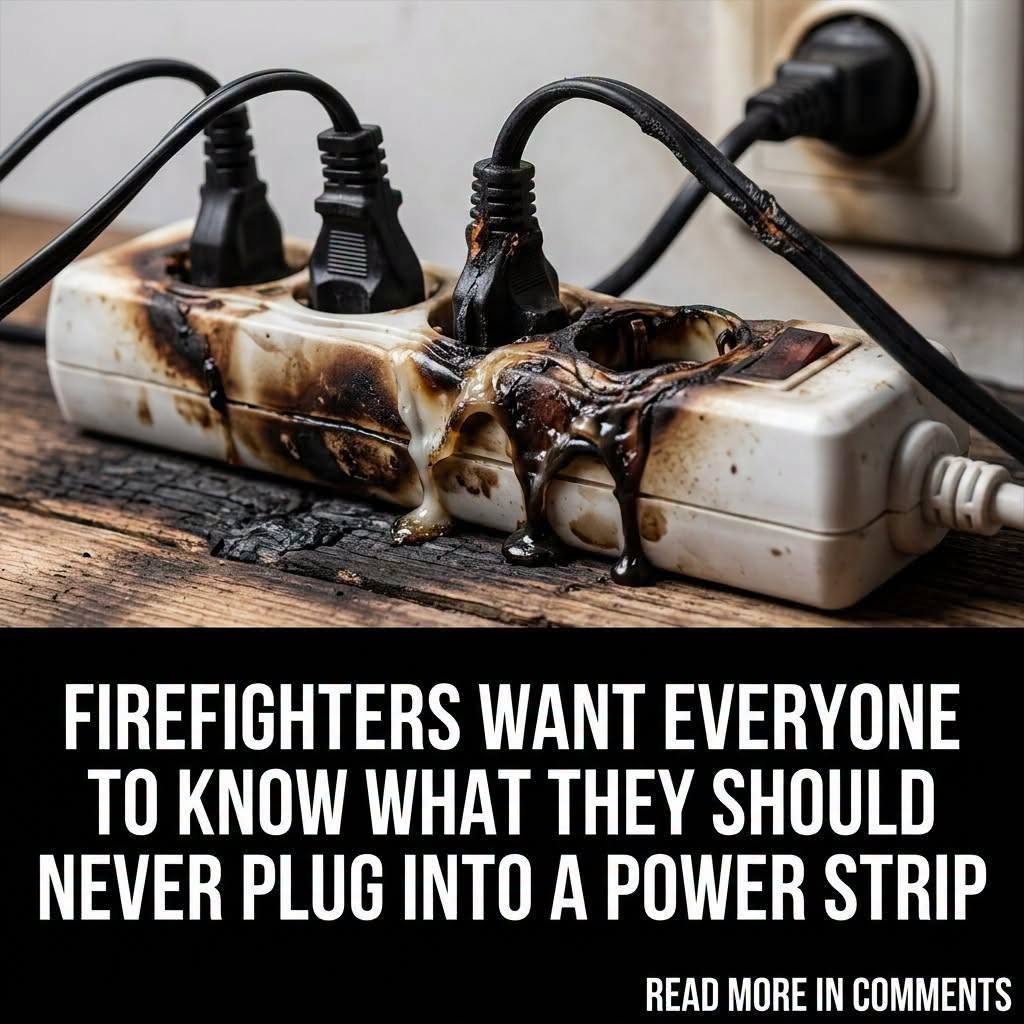
If the temperature becomes high enough, plastic insulation may soften or melt. Internal components can become damaged, and electrical arcing may occur.
Arcing happens when electrical current jumps across a gap between conductive surfaces. It can generate extremely high temperatures and may ignite nearby combustible materials.
Several factors can make this process more likely:
Overloading: Connecting appliances that collectively demand more power than the strip is rated to handle.
Poor-quality equipment: Using power strips without appropriate safety certification or reliable construction.
Damaged cables: Continuing to use cords with cracked insulation, exposed conductors, or crushed sections.
Loose connections: Plugging equipment into sockets that no longer hold plugs securely.
Poor ventilation: Covering power strips with rugs, furniture, clothing, or other materials that prevent heat from escaping.
Moisture exposure: Using electrical equipment in wet locations or allowing water to reach connections that are not designed for such conditions.
The danger is not limited to high-wattage appliances. Even relatively low-power devices can contribute to a hazardous situation if the power strip is damaged, poorly manufactured, or improperly installed.
Chapter 10: Warning Signs That Your Power Strip May Be Unsafe
Many electrical problems provide warning signs before a serious incident occurs.
