

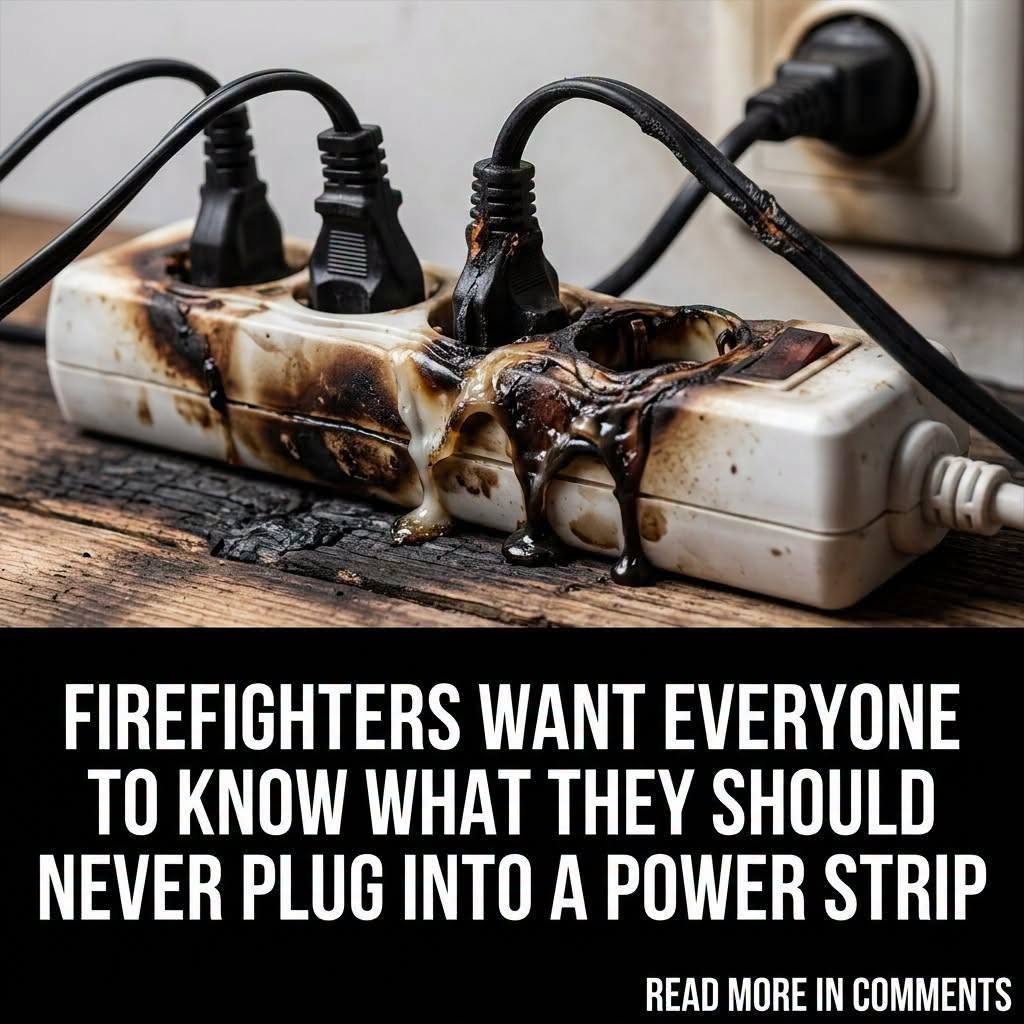
Learning to recognize these signs can help people stop using unsafe equipment before a small problem becomes a major emergency.
Here are some symptoms that should never be ignored.
1. The power strip feels unusually hot
A power strip may become slightly warm under certain operating conditions, but it should not become excessively hot during normal use.
If the housing, plug, or socket area feels unusually hot, disconnect the equipment safely if it is possible to do so without touching a damaged or dangerous component.
Do not continue using it until the cause has been identified.
2. A burning smell appears
A smell resembling melting plastic, burning rubber, or overheated electrical insulation may indicate that components are becoming dangerously hot.
Do not dismiss this smell as ordinary dust or a temporary appliance odor.
Stop using the affected equipment and arrange for inspection.
3. The power strip changes color
Brown marks, black spots, melted plastic, or visible deformation around sockets can indicate overheating or electrical damage.
A discolored power strip should be replaced rather than reused.
4. Sparks appear when connecting an appliance
A tiny brief spark can sometimes occur when plugging in certain electrical devices, particularly those with internal capacitors or switches.
However, repeated, large, or unusual sparks, crackling sounds, or visible damage are warning signs that require attention.
Do not continue using a connection that sparks abnormally.
5. The circuit breaker trips repeatedly
A circuit breaker is designed to interrupt electrical power when a circuit experiences certain unsafe conditions, including overloads or faults.
If the breaker repeatedly trips when appliances are operating, do not keep resetting it without investigating the cause.
The problem may involve an overloaded circuit, damaged equipment, a short circuit, or another electrical fault.
6. Plugs fit loosely
A plug that falls out easily or moves excessively inside a socket may indicate worn contacts.
Loose connections can generate heat and electrical arcing.
The outlet or power strip should be inspected and replaced as appropriate.
7. The cord is damaged
Cracked insulation, exposed wires, flattened sections, or burn marks mean the cord should no longer be used.
Never cover damaged wiring with tape as a permanent repair.
A damaged power strip should be replaced with a properly rated product.
Chapter 11: How to Choose a Safer Power Strip
Not all power strips are manufactured to the same standards.
A cheap product with poor internal construction may create risks even when used with relatively low-power devices.
When purchasing a power strip, consumers should pay attention to several important details.
Check the maximum current and power rating.
Look for the maximum amperage and voltage printed on the product or its documentation. Some products also display a maximum wattage rating.
The total load of connected devices must remain within the manufacturer's limits.
