

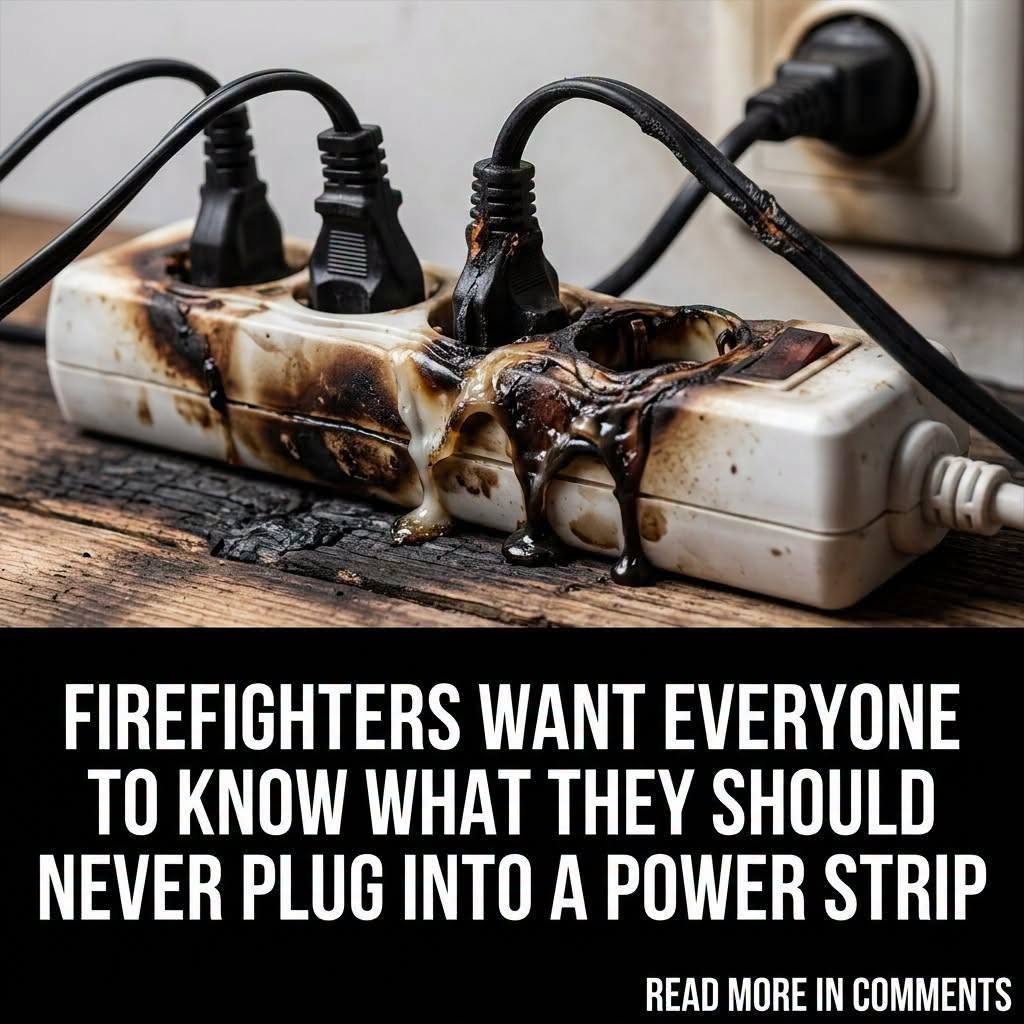
When these appliances are connected to the same power strip, the combined electrical load can become excessive.
Consider a simple example: an electric kettle rated at 2,000 watts and a coffee maker rated at 1,000 watts are connected to the same strip. Together, they demand approximately 3,000 watts when operating simultaneously.
Whether that load is safe depends on the voltage, current rating, power strip specifications, household circuit capacity, and other connected equipment.
A strip rated for a lower load may overheat even though every appliance appears to function normally.
It is particularly important to remember that electrical demand is not determined by the number of plugs alone. Two appliances can use more electricity than six small electronic accessories.
Safer approach:
- Plug high-wattage kettles and coffee makers directly into suitable wall outlets.
- Avoid operating several heating appliances simultaneously on the same electrical connection.
- Check the appliance's rated power and the outlet's electrical specifications.
- Keep cords away from water, hot surfaces, and areas where people may trip over them.
- Never use an electrical appliance with a damaged cable or exposed wiring.
Water and electricity are a particularly dangerous combination. Kitchen appliances should be positioned and connected carefully, with electrical outlets protected according to applicable local requirements.
