

- Follow the air conditioner's installation manual and electrical requirements.
- Use the properly rated wall outlet specified by the manufacturer.
- Have an electrician assess the circuit if the outlet becomes warm, the breaker trips repeatedly, or the electrical system appears inadequate.
- Never modify the plug or use an adapter to force an incompatible connection.
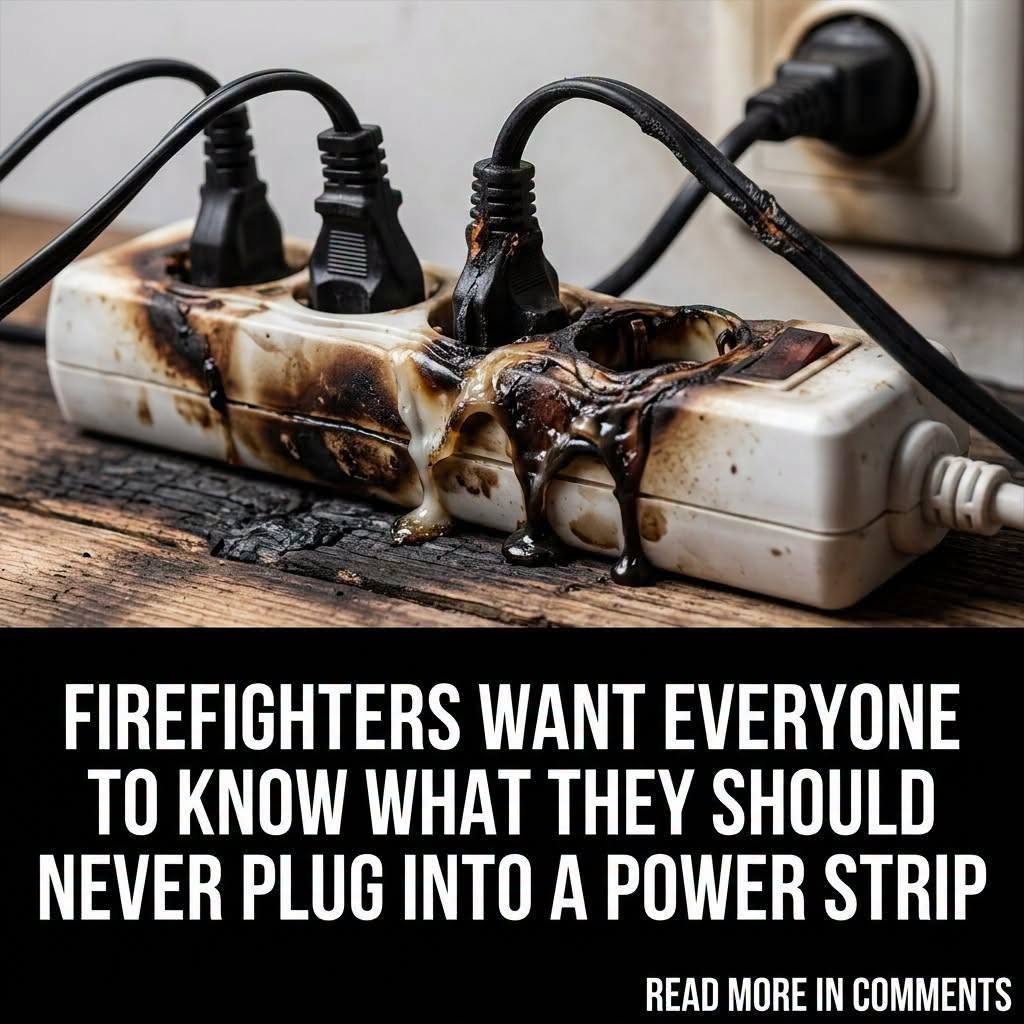
- Avoid running an air conditioner through an ordinary power strip.
If an air conditioner repeatedly trips a circuit breaker, do not simply replace the breaker with one having a higher rating. The breaker may be protecting wiring that cannot safely carry additional current. A qualified electrician should identify the actual cause.
Chapter 3: Refrigerators and Freezers – Appliances That Operate Around the Clock
Refrigerators and freezers are often overlooked when people think about electrical fire hazards.
Because these appliances operate quietly and continuously, many homeowners connect them to whatever outlet is most convenient. In some kitchens, that may be a power strip shared with other appliances.
This is not a good arrangement unless the manufacturer specifically approves the electrical connection and the equipment is properly rated.
Refrigerators contain compressors that cycle on and off throughout the day. When the compressor starts, the appliance may briefly draw more current than it uses during normal operation.
A power strip that is already carrying the load of other devices may have little room for additional demand. Over time, poor electrical contacts or excessive loading can cause overheating.
