

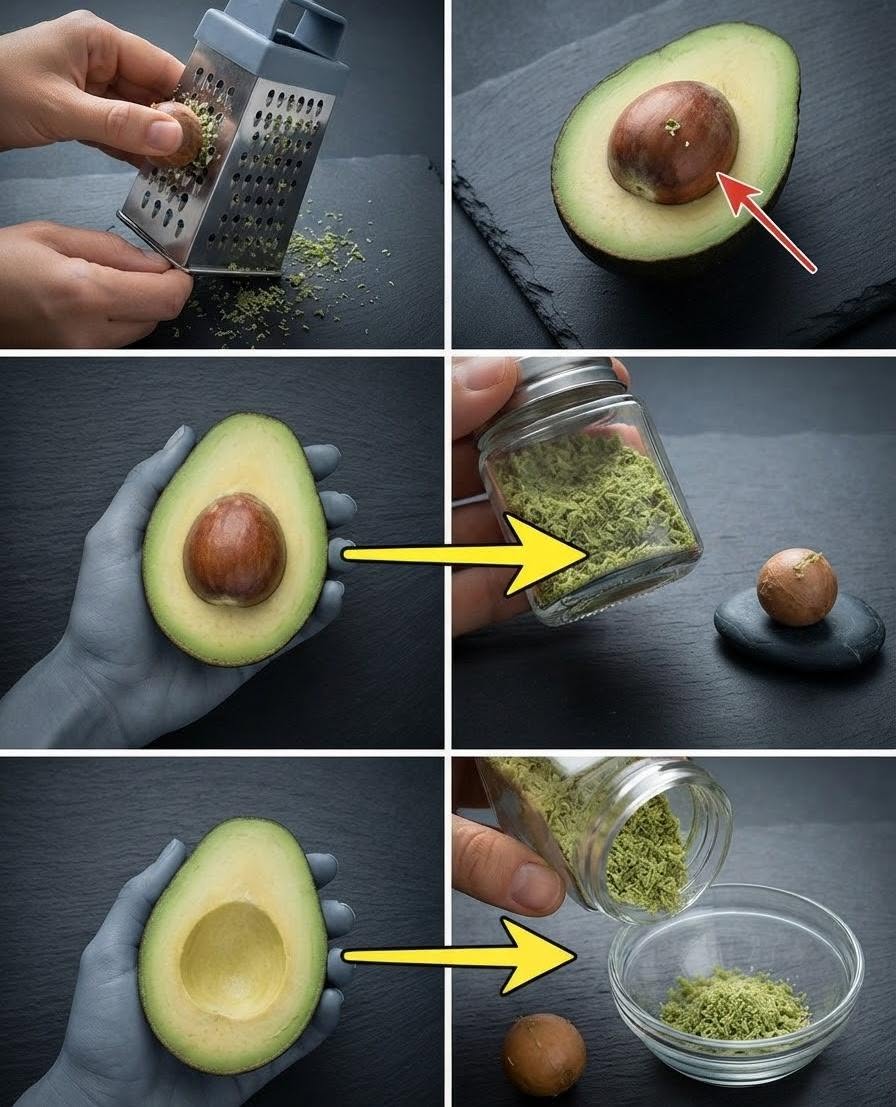
Every day, millions of kitchens around the globe witness the exact same culinary ritual. A ripe avocado is sliced in half with a chef’s knife, the two buttery halves are twisted apart, and the large, rounded pit nestled in the center is struck with a blade, pried loose, and tossed straight into the garbage bin. For generations, consumer culture has treated the avocado seed as nothing more than biological packaging—a hard, inconvenient obstacle standing between the eater and the luscious, creamy green flesh that has earned the avocado its status as a modern dietary staple.
Yet across traditional Mesoamerican cultures and within cutting-edge food science laboratories, this discarded wooden core tells an entirely different story. Emerging biochemical research reveals that up to seventy percent of the total antioxidant capacity of the entire avocado fruit (Persea americana) resides not in the pale green pulp, but concentrated directly inside the seed. Far from being useless kitchen refuse, the avocado pit represents a dense, chemically complex reservoir of protective polyphenols, bioactive tannins, resistant starches, and essential micro-minerals.
As viral lifestyle posts showcase home cooks grating, dehydrating, and storing avocado pit shavings in glass spice jars, global interest in this overlooked botanical powerhouse has surged. Uncovering the truth behind the avocado seed requires examining seven compelling reasons it is gaining recognition as a hidden superfood, while also addressing the essential safety parameters, extraction science, and preparation methods needed to unlock its real potential.
1. An Unrivaled Concentration of Protective Antioxidants
The primary biological role of any plant seed is the preservation and propagation of genetic life. To ensure that the delicate embryo inside survives harsh environmental conditions, fungal attacks, soil pathogens, and intense solar radiation, the parent plant fortifies the seed with its highest concentration of chemical defense compounds. In the case of the avocado, this evolutionary strategy produces an extraordinary concentration of phenolic antioxidants.
When food scientists evaluate the total antioxidant capacity of an avocado using assays such as Oxygen Radical Absorbance Capacity (ORAC) and DPPH radical scavenging tests, the seed consistently outperforms the edible flesh by a significant margin. The pit is saturated with:
-
Catechins and Epicatechins: The very same potent flavanols celebrated in ceremonial Japanese matcha and high-grade green tea.
-
Procyanidins (Condensed Tannins): Complex flavonoid polymers that give the freshly grated seed its astringent bite and distinctive pinkish-orange oxidation color when exposed to air.
-
Chlorogenic Acid: A dynamic polyphenol also found in unroasted green coffee beans that helps mitigate systemic cellular oxidation.
These circulating antioxidants neutralize reactive oxygen species (ROS) and free radicals before they can attack healthy cellular structures, damage delicate mitochondrial DNA, or trigger premature cell death. Incorporating polyphenol extracts derived from avocado seeds provides a level of cellular defense that rivals some of the most expensive commercial superfood powders on the market.
