

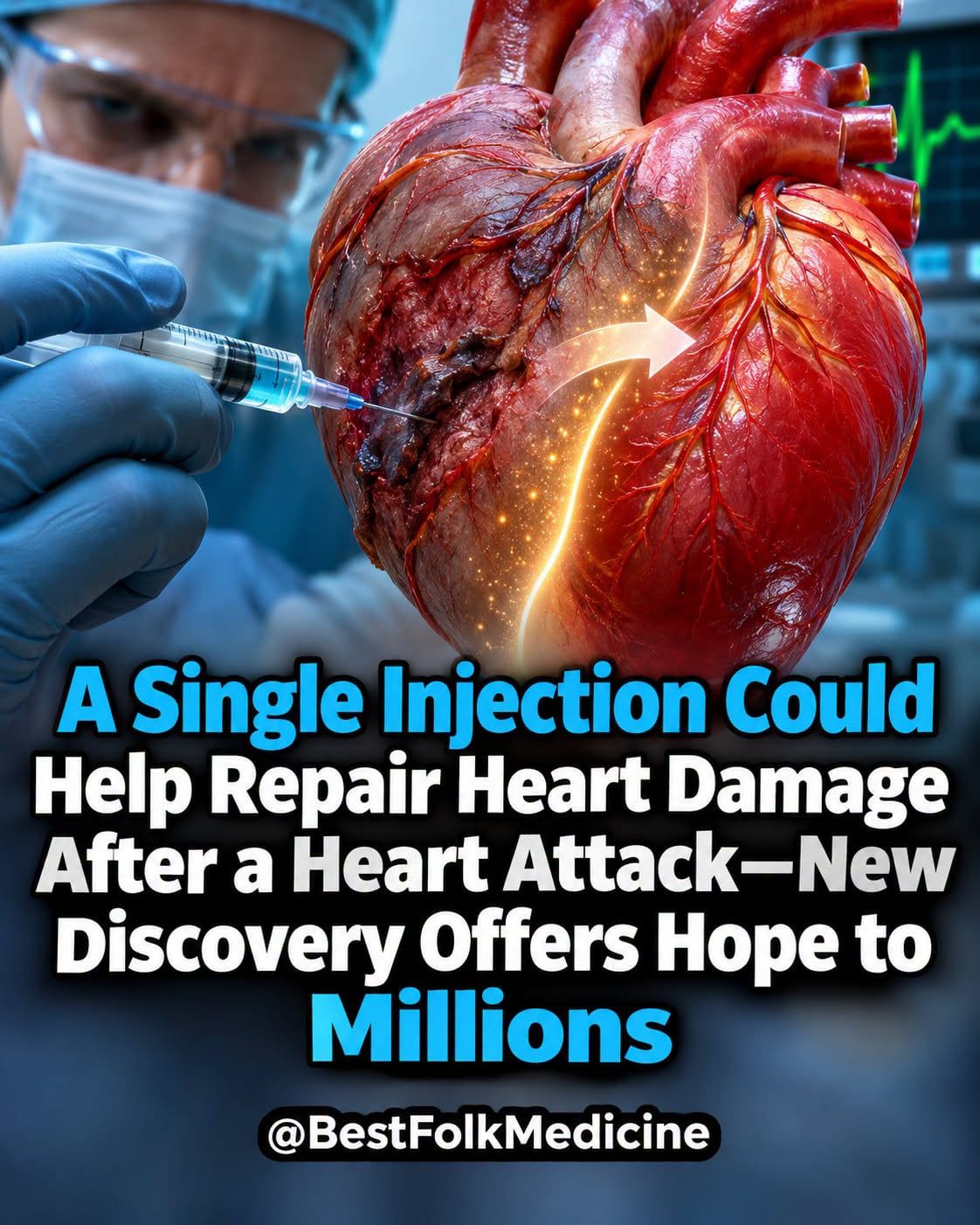
Researchers are increasingly interested in therapies that stimulate the body to manufacture specific protective molecules for a controlled period.
In cardiovascular medicine, this could potentially reduce the need for repeated treatments or invasive delivery procedures.
However, the complexity of the human body means every new application requires independent testing.
The current findings provide a foundation for further research, not a guarantee of clinical success.
Final Thoughts: Could One Injection Change Heart Attack Recovery?
Heart attacks remain a major cause of death and disability around the world.
Even when emergency treatment saves someone’s life, permanent damage to heart muscle can create lasting health challenges.
The experimental RNA injection developed by researchers from Columbia University and collaborating institutions offers an intriguing new approach.
By stimulating skeletal muscles to produce a natural heart-protective hormone, the therapy improved recovery-related measures and reduced scarring in animal studies.
Its effects lasted several weeks, and benefits were observed even when treatment was delayed.
But the next phase of research is crucial.
Scientists must determine whether the approach is safe and effective in people before it can become part of clinical care.
For now, the discovery offers genuine scientific promise without providing a proven cure.
The possibility is extraordinary: instead of only treating the damage left behind by a heart attack, future medicine may help the body protect and repair the injured heart more effectively.
Medical Disclaimer: This article is for educational and informational purposes only and does not replace professional medical advice, diagnosis, or treatment. The RNA therapy discussed is experimental and has not been established as safe or effective in humans. Do not discontinue prescribed cardiovascular medications or delay emergency medical care. Suspected heart attack symptoms require immediate emergency medical attention.
