
Your Favorite Sleeping Position May Reveal More About Your Habits Than You Think

Position 2: Lying Straight With the Arms Beside the Body
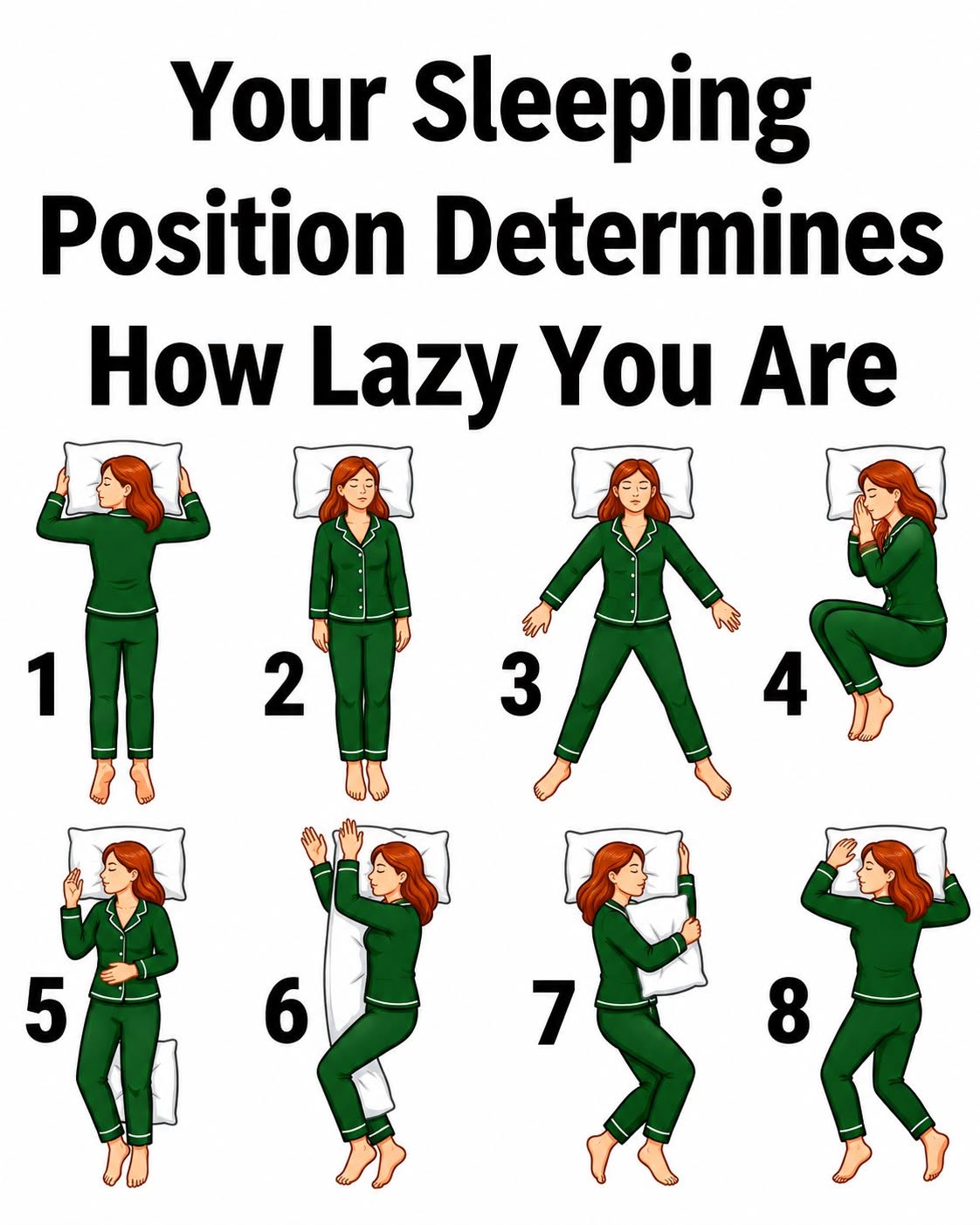
The second illustration shows a person lying flat on their back with the arms resting alongside the body and the legs relatively straight.
This is one of the simplest sleeping positions.
People who prefer it may enjoy the feeling of having their body fully supported by the mattress. It can be comfortable for individuals who do not like curling their legs or placing pressure on one side of the body.
The main advantage is that the body can remain relatively symmetrical. When the head, shoulders, pelvis, and legs are properly supported, this position may help reduce unnecessary twisting.
However, sleeping flat on the back is not ideal for everyone.
People who snore heavily or have obstructive sleep apnea may experience more airway obstruction in this position. Individuals with certain forms of acid reflux may also find that lying completely flat makes symptoms worse, especially after eating close to bedtime.
Lower-back discomfort is another possible issue.
Some people naturally have an increased curve in the lower spine. Depending on mattress firmness and body shape, lying flat with the legs extended may create tension in the lower back.
A small pillow beneath the knees can sometimes help reduce this tension by slightly changing the position of the pelvis and lower spine.
The pillow should not be so high that it causes discomfort elsewhere. The goal is simply to find a position that feels natural and supported.
Position 3: The Starfish Position
The third illustration shows someone sleeping on their back with the arms and legs spread outward.
This is commonly called the starfish position.
It gives the body a wide resting posture and may feel comfortable for people who dislike having their arms or legs pressed closely against their sides.
Some people naturally spread out because they feel warmer under blankets or prefer having more space around their bodies. Others move into this position after initially falling asleep in a different posture.
There is no scientific basis for claiming that people who sleep like starfish are necessarily confident, outgoing, or careless.
However, the position can have practical consequences.
Spreading the arms outward may increase pressure on the shoulder joints, especially when the arms are held above shoulder level. If someone has shoulder pain, inflammation, or a history of rotator cuff problems, the position may become uncomfortable.
The legs may also fall outward in a way that changes the alignment of the hips and lower back.
For people who experience discomfort, adjusting the position slightly may help. The arms can rest lower, and a pillow can be placed beneath the knees if that feels more supportive.
Another issue is space.
People who sleep in a starfish position may occupy more of the mattress, which can affect a partner's comfort. While this is not a medical concern, it can influence sleep quality for both people.
The important point is that a wide sleeping posture is not inherently unhealthy. It simply needs to be comfortable for the person using it.
