

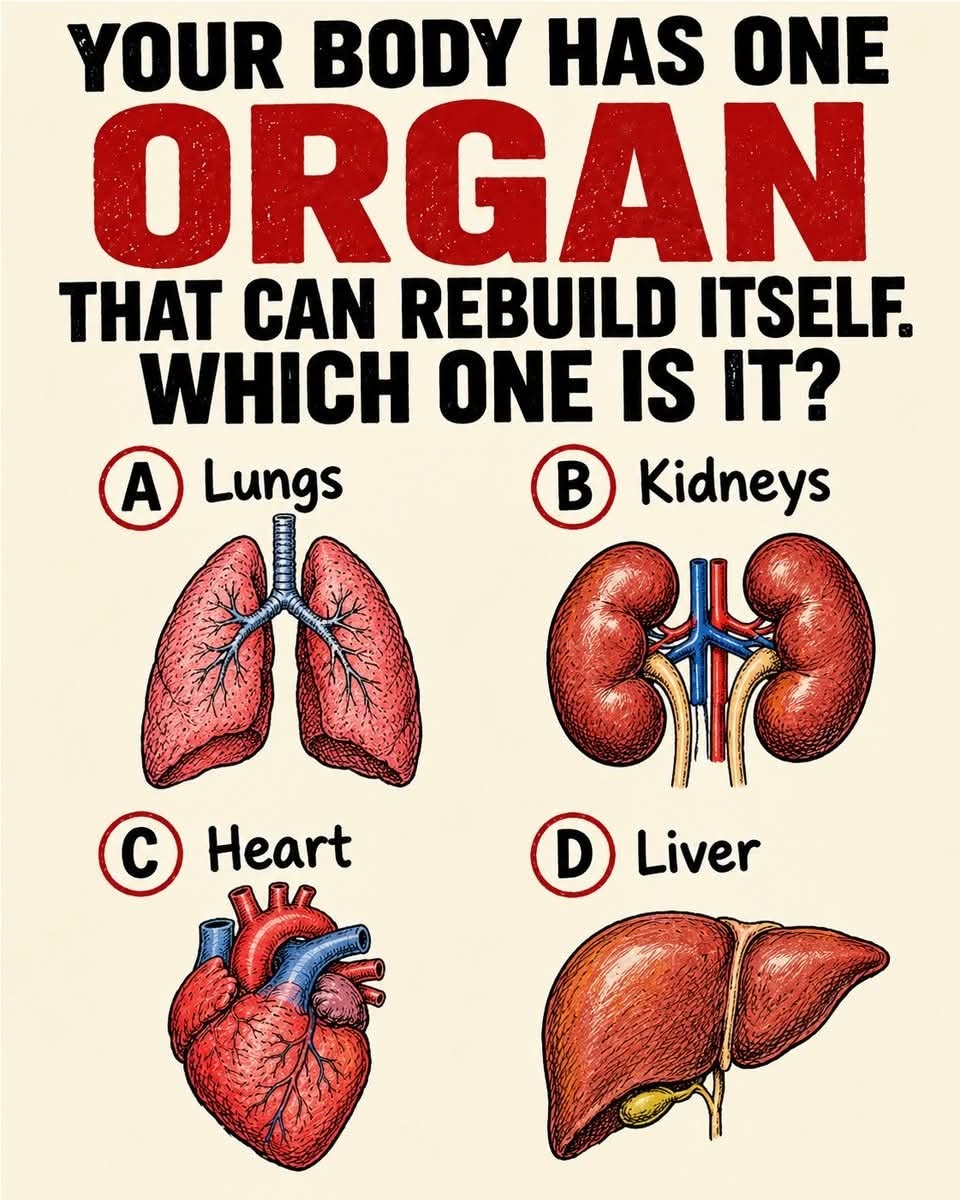
The Answer Is D: The Liver!
The liver can restore much of its original mass after a large portion has been removed, provided enough healthy tissue remains and the conditions are suitable.
For example, when a surgeon removes part of a person’s liver to treat certain diseases or to prepare it for transplantation, the remaining liver can increase in size over time. Liver cells, called hepatocytes, respond to signals in the body and begin multiplying to replace lost tissue.
Here is the fascinating part: the liver does not literally grow back as an exact copy of the missing piece. Instead, the remaining tissue grows and remodels itself until the liver can recover much of its necessary size and function.
This process is known as liver regeneration. It is one of the most remarkable examples of the body’s natural repair mechanisms.
However, regeneration has limits. The liver cannot always recover fully if it has severe, ongoing damage caused by conditions such as advanced cirrhosis. Its ability to regenerate depends on the health of the remaining tissue and other factors.
Why Is This Ability So Important?
The liver’s regenerative capacity helps it recover from certain injuries and makes some liver surgeries and living-donor liver transplants possible. In living-donor transplantation, a healthy person can donate a portion of their liver to someone who needs a transplant. Over time, the remaining liver in the donor and the transplanted portion in the recipient can grow and adapt.
