

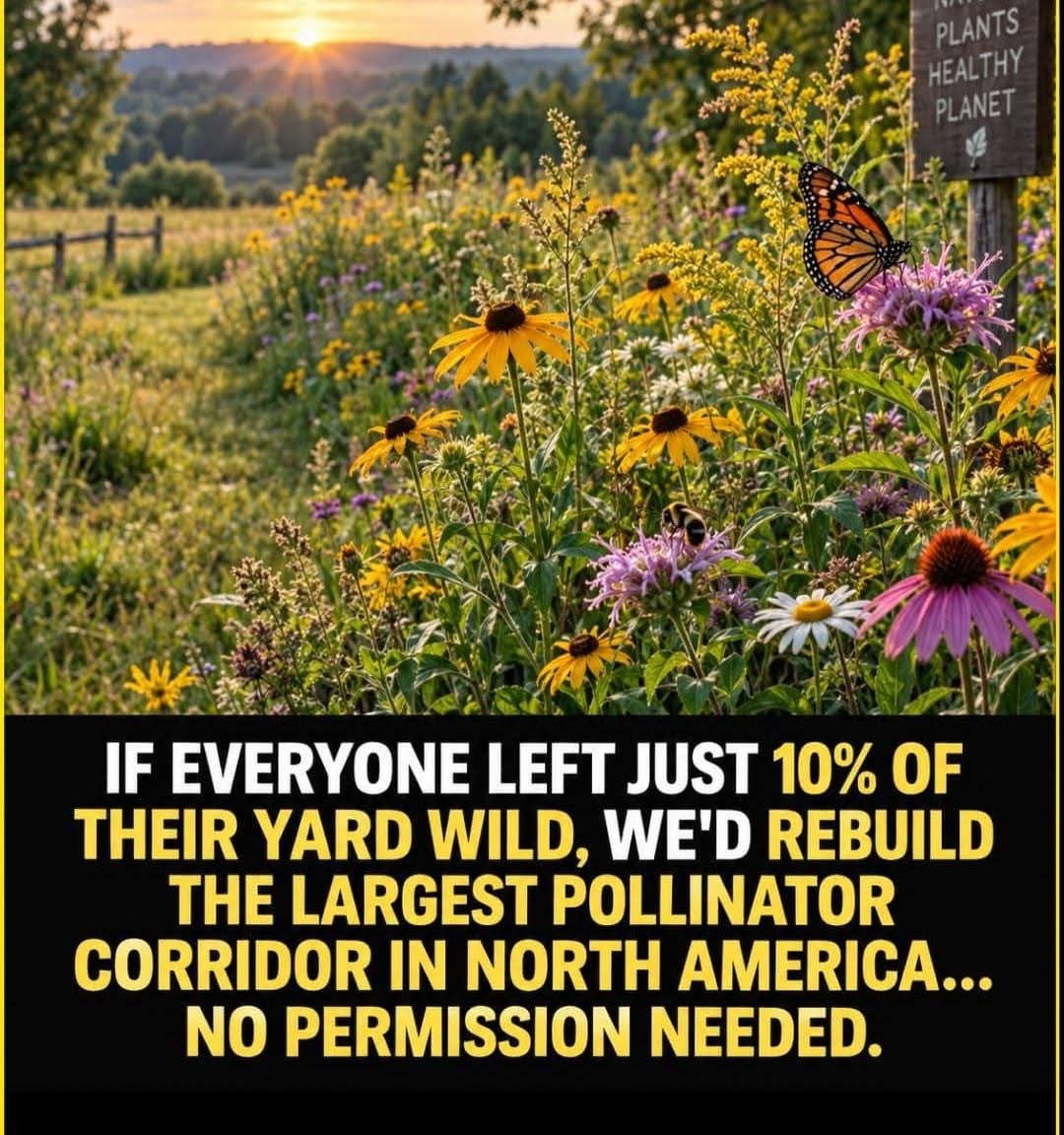
🏡 Small Gardens Can Connect
Here’s where the idea becomes especially interesting.
One isolated garden may be small.
But imagine hundreds of homes across a neighborhood each adding a little habitat.
One yard has native flowers.
The next has a flowering shrub.
Another has a small garden beneath a tree.
Someone else leaves part of their lawn unmowed.
Together, these spaces can create a more connected landscape with resources available in more locations.
Wildlife doesn’t necessarily recognize property boundaries.
A butterfly can move from one garden to another.
A bee can forage across multiple yards.
Birds can use trees and shrubs scattered throughout a neighborhood.
What looks like a collection of tiny gardens to us can function as a series of small habitat patches across the landscape.
🌱 You Can Start Small
You don’t need to spend a fortune.
Start with what you already have.
Try one of these simple projects:
Create a small native flower bed.
Choose several native species suited to your location.
Plant a flowering border.
A narrow strip along a fence can become a productive little garden.
Add native plants to containers.
Even renters or people with very small outdoor spaces can grow suitable flowering plants in pots.
Let one section of lawn grow.
If appropriate for your area, allow some flowering plants to remain rather than mowing everything immediately.
Plant a native shrub.
A single well-chosen shrub can provide flowers, foliage, shelter, and sometimes berries or seeds.
Leave some leaves.
Instead of removing every fallen leaf, allow some natural material to remain where it won’t create problems.
🌎 Think Local
The most important word in this entire idea is native.
A plant that supports wildlife in one part of the world may not provide the same benefits somewhere else.
Before buying seeds or plants, research what’s native to your region.
Look for plants that:
- Are naturally adapted to your climate
- Suit your soil and sunlight
- Provide flowers during different seasons
- Support local insects
- Don’t have invasive tendencies in your area
And remember that “native” isn’t simply a marketing label. Verify the plant’s status using reliable regional sources.
