

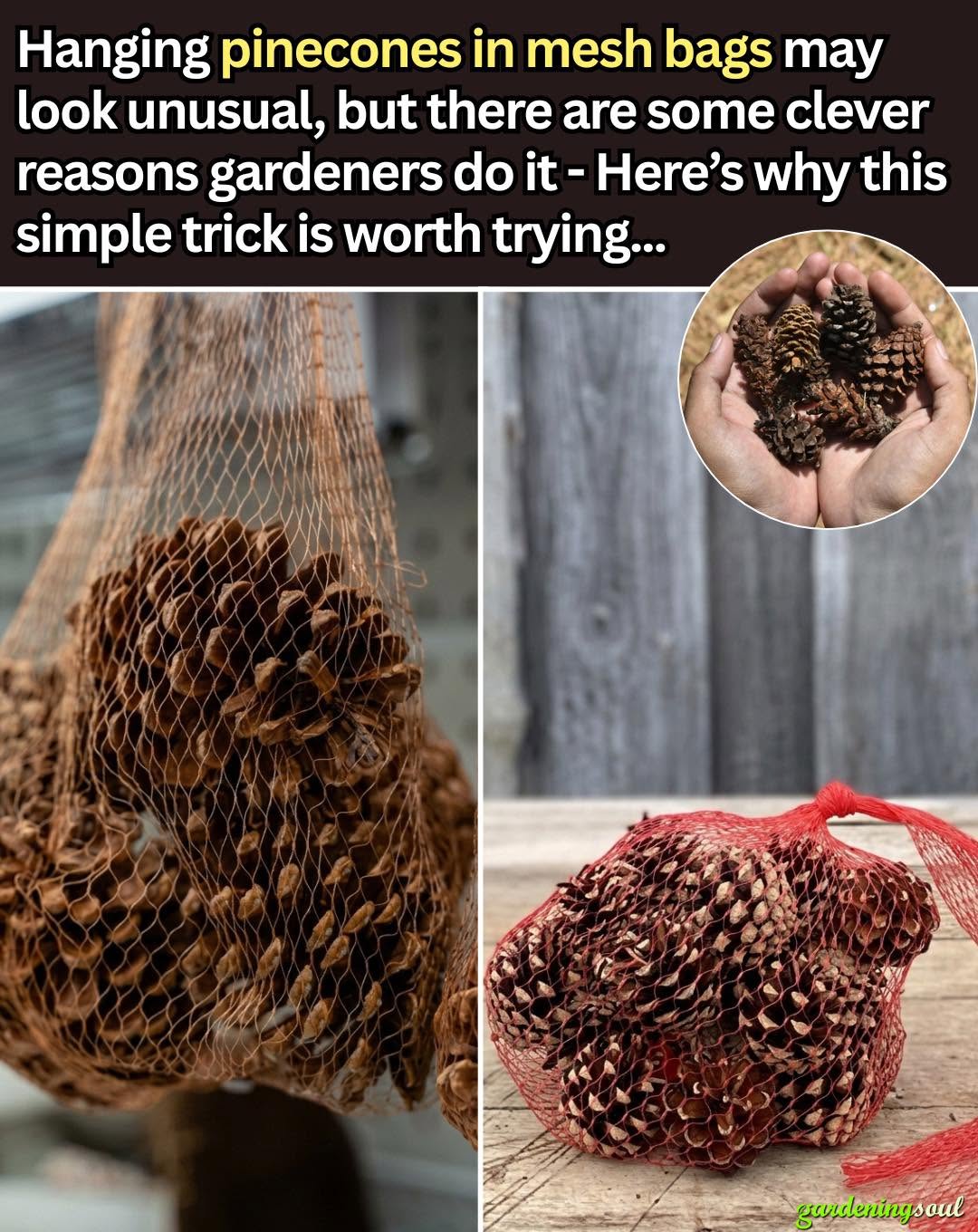
If you’ve ever walked through a seasoned gardener’s backyard and noticed pinecones hanging inside mesh bags, you might wonder why they’re there.
They aren’t decorations, bird toys, or craft projects. This simple trick is surprisingly practical – and the benefits are much bigger than most people realize.
Pinecones have been used in the garden for centuries, long before plastic tools, electronic sensors, or synthetic fertilizers existed.
They are natural, durable, eco-friendly, and they respond to environmental changes in ways that make them incredibly useful around plants.
Pinecones Are Nature’s Moisture Meters
The biggest reason gardeners hang pinecones in mesh bags is simple: pinecones open and close depending on humidity.
This makes them a natural indicator of:
- Soil dryness
- Air humidity
- Rain approaching
- Overwatering conditions
Why it works:
Pinecones are designed to protect seeds. When the air is moist, they close tightly to keep seeds dry. When the air is dry, they open wide to release seeds. Gardeners take advantage of this natural reaction.
What it tells you:
- Pinecone open → the air is dry → the garden may need watering soon
- Pinecone closed → high humidity → watering should be delayed
It’s an easy, zero-cost way to understand the microclimate around your plants without digital tools.
Why Mesh Bags?
Pinecones are hung inside mesh bags because:
- Air circulates freely around them
- They stay clean and dry
- They remain visible at eye level
- Moisture changes affect them quickly
- They are easy to move around the garden
Using a bag also prevents them from falling or being taken by birds.
Gardeners often hang one bag in each garden zone – vegetable beds, flower beds, fruit trees, and pots – because each area can have different humidity levels.
