


This is perhaps the most interesting explanation behind the traditional windowsill trick.
Citrus peels contain essential oils that have been studied for their potential insect-repelling and insecticidal properties.
Limonene, in particular, is used in certain commercial products designed to control insects such as ants, fleas and other household pests.
The strong citrus smell may also influence how certain insects respond to their surroundings.
This is why some people traditionally place orange or tangerine peels near:
- Windows and window frames.
- Doorways and entrances.
- Kitchen corners.
- Areas where ants have previously appeared.
- Places where small insects are occasionally noticed.
But does this really work?
There is an important scientific distinction between concentrated citrus oil and an ordinary piece of fruit peel.
According to an agricultural entomologist from the University of Georgia Cooperative Extension, discarded citrus peels generally do not release enough concentrated oil to provide reliable insect control. Their fragrance also fades as the volatile compounds evaporate. UGA Today+1
Therefore, tangerine peels may have some aromatic properties, but they should not replace proven pest-control methods.
3. They Can Be Used to Make Natural Household Cleaners
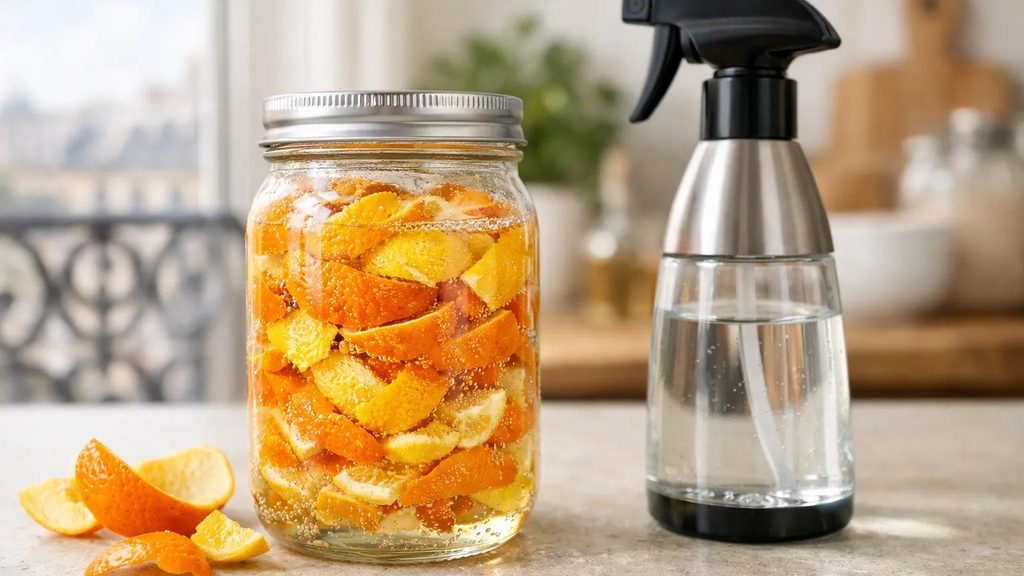
Another reason not to throw away citrus peels is that they can be reused to prepare simple homemade cleaning products.
Tangerine, orange and lemon peels contain aromatic oils that can contribute to the fragrance of homemade cleaners.
One popular method involves combining citrus peels with white vinegar.
How to prepare a citrus-infused cleaning solution:
- Collect fresh tangerine or orange peels.
- Place them inside a clean glass jar.
- Cover the peels completely with white vinegar.
- Close the jar and leave it in a cool place for approximately one to two weeks.
- Strain the liquid and transfer it into a clean spray bottle.
- Dilute with water if necessary, depending on the intended surface and product concentration.
The result is a fragrant, citrus-infused vinegar solution that can be useful for certain household cleaning tasks.
Important precautions:
- Never mix vinegar with bleach because this can release dangerous chlorine gas.
- Avoid using acidic vinegar cleaners on marble, natural stone, limestone or other acid-sensitive surfaces.
- Test the solution on a small, inconspicuous area first.
- Do not assume that a homemade citrus cleaner is a registered disinfectant.
4. Tangerine Peels Can Help Reduce Household Waste
There is another practical explanation for Grandma’s habit: she may simply dislike wasting something that can still be useful.
Most people eat tangerines, discard the peels and forget about them. However, citrus peels contain organic matter that can be reused rather than immediately thrown away.
Here are several interesting ways to give them a second life:
For composting: Tangerine peels can be added to a compost pile in moderate quantities. Cutting them into smaller pieces helps them break down. They should be mixed with other organic materials rather than added in large quantities on their own.
For homemade potpourri: Allow the peels to dry completely, then combine them with cinnamon sticks, cloves and dried flowers. This creates a pleasant natural fragrance for decorative bowls.
For cooking: Finely grated tangerine zest can add a wonderful aroma to cakes, biscuits, marinades and homemade desserts. Always wash the fruit thoroughly before using its zest.
For natural fragrance: Dried citrus peels can be placed in a breathable fabric sachet and stored in a wardrobe or drawer for a gentle fragrance.
The University of Georgia Cooperative Extension also highlights composting as a useful way to recycle citrus peels and return organic matter to the soil. UGA Today
5. Why Some People Place Them Near Windows Rather Than Somewhere Else
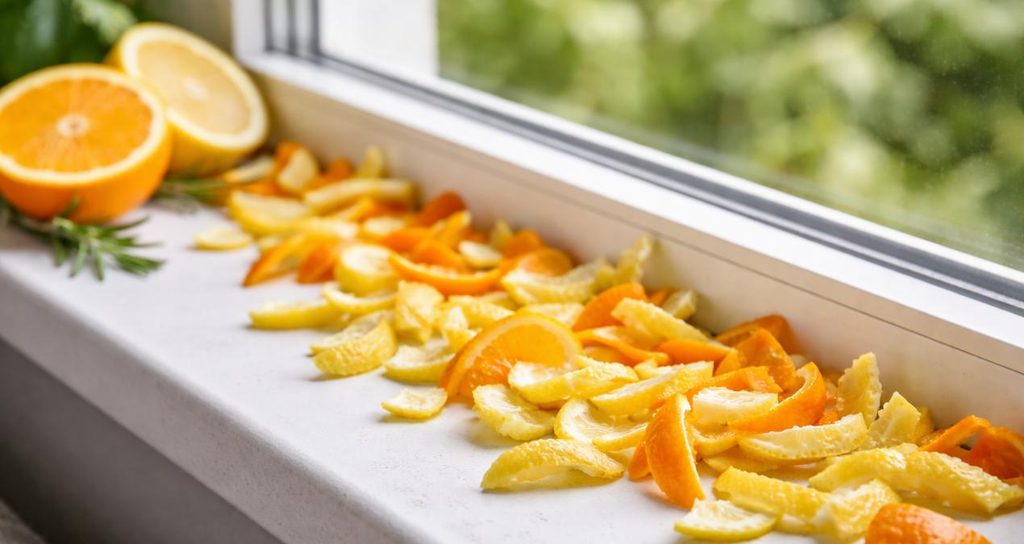
The location is not necessarily accidental.
