

Cleaner Etiquette For Homes, Rentals, And Hired Cleaners
This is where people get weirdly emotional, and I say that with affection. Some folks think toilet dumping is nasty. Others think bathtub dumping is worse. A lot of the online chatter around mop water is really about etiquette, not plumbing
If you are cleaning someone else’s home, ask where they prefer dirty water to go. A simple question solves it: Do you want mop water emptied in the toilet, utility sink, or somewhere else? That phrasing keeps it practical and avoids making anyone feel judged.
If you hire a cleaner, tell them your preference before the first cleaning. If you have old plumbing, a septic system, a slow tub drain, or a utility sink in the basement, say so. Good cleaners are not mind readers, and homeowners sometimes forget that their house quirks are not obvious. The toilet that needs a gentle handle jiggle is not standard operating knowledge.
For shared apartments, the same rule applies. Agree on one disposal spot and clean it afterward. If the toilet is the shared method, wipe splashes. If the tub is the only practical option, rinse and disinfect it right away. Nobody wants to discover floor grime during a shower.
A Practical Rule I Actually Follow
My rule is: utility sink first, toilet second, bathtub only if the water is light and I am willing to clean the tub right then. I never use the kitchen sink, and I do not dump mop water outside if there is cleaner in it.
Before I pour, I check for solids. After I pour, I rinse the bucket and wipe the disposal area. That tiny extra minute prevents smells, residue, and awkward little gray specks around the toilet base.
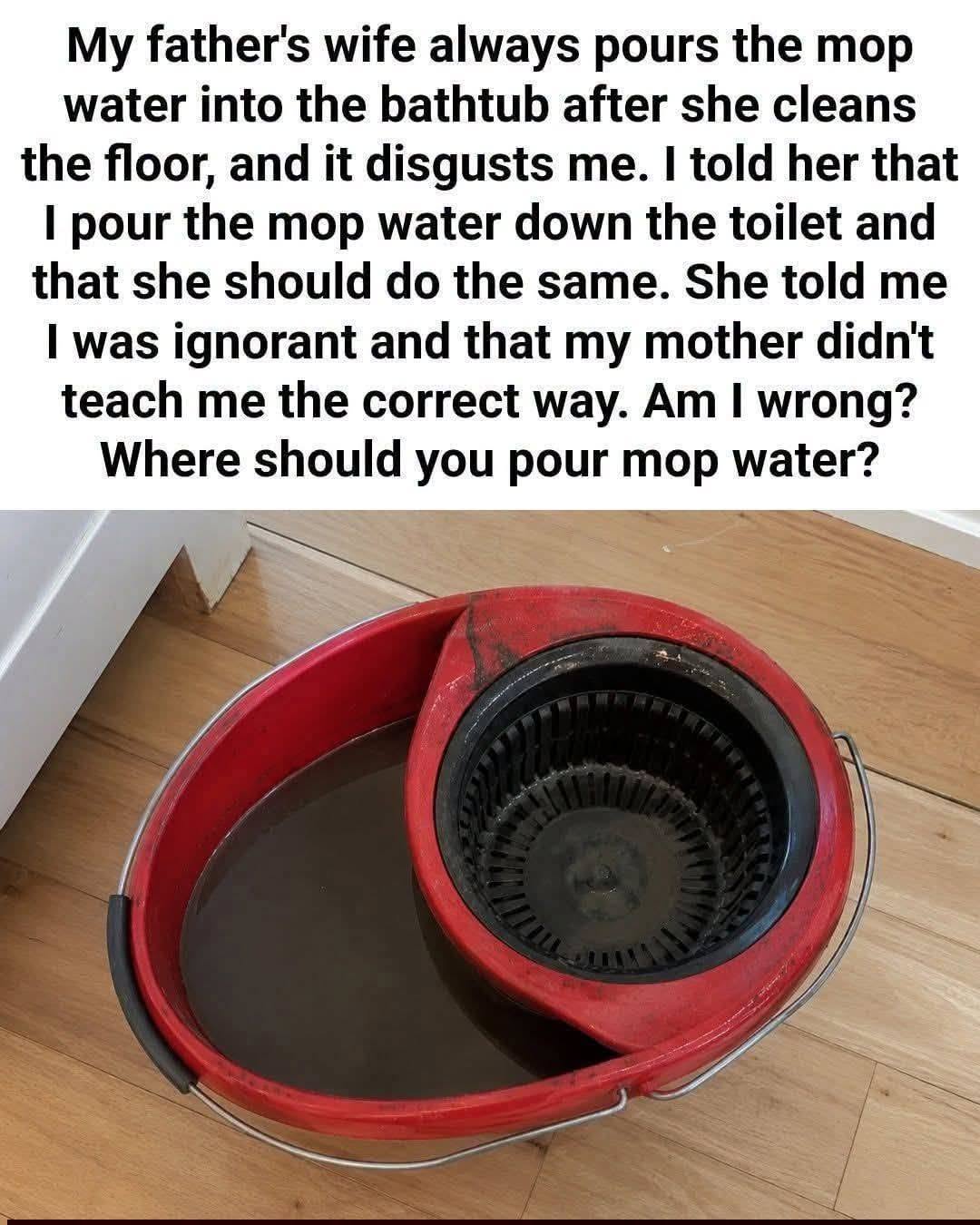
So if you are standing there with a bucket, choosing between the bathtub and the toilet, choose the toilet. Pour slowly, flush, wipe the splashes, and leave the tub for actual bathing, not the remains of whatever was living under the dining table chair legs.
