
The Vintage Hand-Cranked Egg Beater: A Nostalgic Kitchen Tool That Generations Grew Up With


Early models varied in appearance and construction. Some featured wooden handles, while others were made primarily of metal, with gears designed to transfer the turning motion of a crank into the rapid rotation of wire beaters.
By the early twentieth century, hand-cranked egg beaters had become familiar kitchen tools in many households. They were affordable, relatively simple to maintain, and did not require electricity.
Before electric mixers became widely accessible, these tools offered a practical way to mix ingredients more efficiently than using a fork or an ordinary whisk.
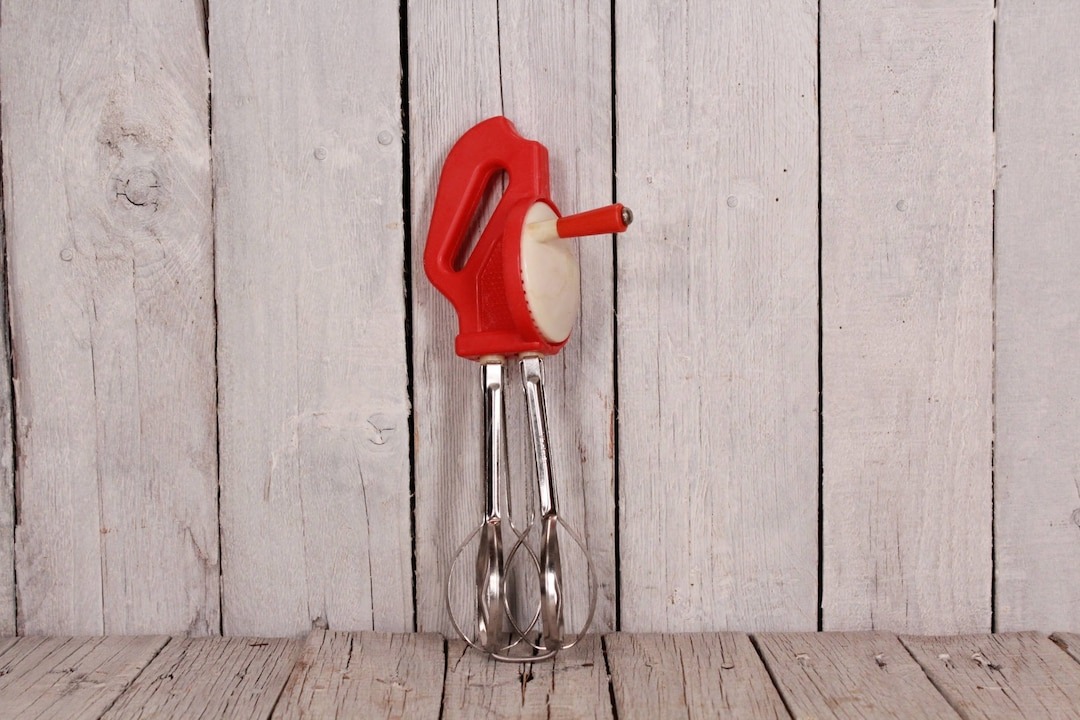
The hand-cranked egg beater relied on a straightforward mechanical design.
When the user turned the handle, a set of gears transferred the motion to the beaters. Many models used two beaters that rotated in opposite directions, helping mix ingredients and incorporate air into the mixture.
Although the cook had to provide the power manually, the gears made the process more efficient and comfortable than beating everything by hand with a simple utensil.
Families used these beaters for a wide range of everyday recipes, including:
The design was practical, compact, and easy to store. It could be used almost anywhere, making it particularly valuable in kitchens without reliable access to electricity.
For many families, the hand-cranked egg beater was more than a convenient cooking tool. It was part of the experience of learning how to prepare food at home.
Children often helped their parents or grandparents in the kitchen by turning the crank while someone else measured flour, cracked eggs, or prepared the next ingredient.
