

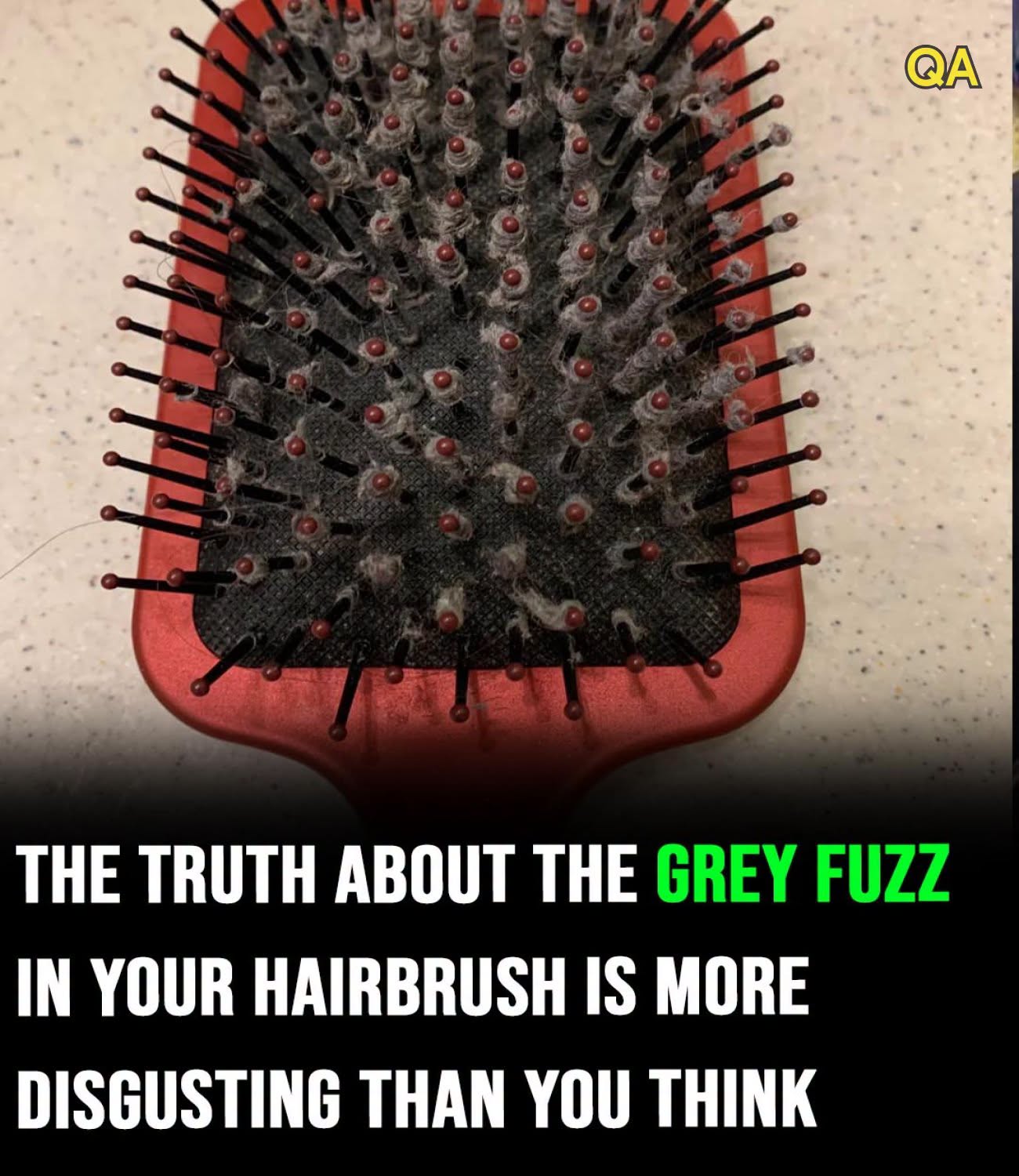
Have you ever glanced at your hairbrush and wondered about the mysterious gray fuzz that seems to accumulate between the bristles? Many people are quick to assume it’s harmless dust or generic lint. However, the actual composition is far more complex and can even be a cause for concern regarding scalp health and hair hygiene. In this in-depth article, we explore what this fuzz is made of, how it forms, what risks it may carry, and best practices for maintaining a clean hairbrush according to the latest expert and scientific recommendations.
Understanding the Composition of Hairbrush Fuzz
The grayish fuzz that builds up on your hairbrush is a mix of several organic and inorganic materials. According to celebrity hairstylist Dean Banowetz, as cited in interviews and health publications, the accumulation is a blend mainly of:
- Shed hair strands: Natural hair loss is a daily occurrence. The American Academy of Dermatology notes that an individual typically sheds between 50 to 100 hairs per day.
- Dead skin cells: Your scalp, just like the rest of your skin, constantly renews itself. Microscopic flakes combine with hair strands on the brush.
- Scalp oils (sebum): Oils secreted by sebaceous glands help keep your hair and scalp moisturized but also contribute to residue.
- Dust and environmental particles: Outdoor pollutants, household dust, and microscopic debris in the air all cling to moist or oily surfaces and settle on brushes.
- Residual haircare products: Leftover bits of gels, mousses, pomades, dry shampoos, sprays, and leave-in conditioners adhere to both your hair and the brush, creating a sticky base that binds the other debris.
Dermatologist Dr. Anna Chacon explains that every time you use a hairbrush, not only do you shed some hair, but also microscopic particles of dead skin, all of which get trapped among the bristles. Over time, repeated use and application of styling products allow this mixture to solidify and become visible as gray fuzz.
