

Do not wash store-bought eggs with soap or household cleaning products. Follow food safety recommendations appropriate to the eggs you purchase.
Can I eat eggs with a slightly dirty shell?
Visible dirt can indicate contamination. For commercially packaged eggs, choose clean, intact eggs. For farm eggs, follow appropriate local guidance for cleaning and handling.
Is it safe to eat runny eggs?
Runny eggs carry more risk than fully cooked eggs. Using pasteurized eggs can reduce risk when preparing dishes that are not fully cooked.
Why do some countries refrigerate eggs while others don’t?
Different production, washing, disease-control, and distribution practices influence national storage recommendations.
Can I wash eggs immediately before storing them?
For commercially washed eggs, no additional washing is needed. For unprocessed farm eggs, follow local guidance rather than applying supermarket egg-handling rules universally.
Final Thoughts: The Small Detail That Changes How You Should Handle Eggs
An egg may look simple, but its shell is part of a remarkable natural protective system.
The thin outer cuticle helps limit the movement of moisture and microorganisms through the shell.
Improper washing can damage that protection.
At the same time, commercially washed eggs are processed using controlled methods and require appropriate storage and handling.
This is why the advice differs depending on where the eggs come from.
For most people buying eggs at a U.S. supermarket, the safest routine is to keep them refrigerated, avoid washing them again, prevent cross-contamination, and cook them properly.
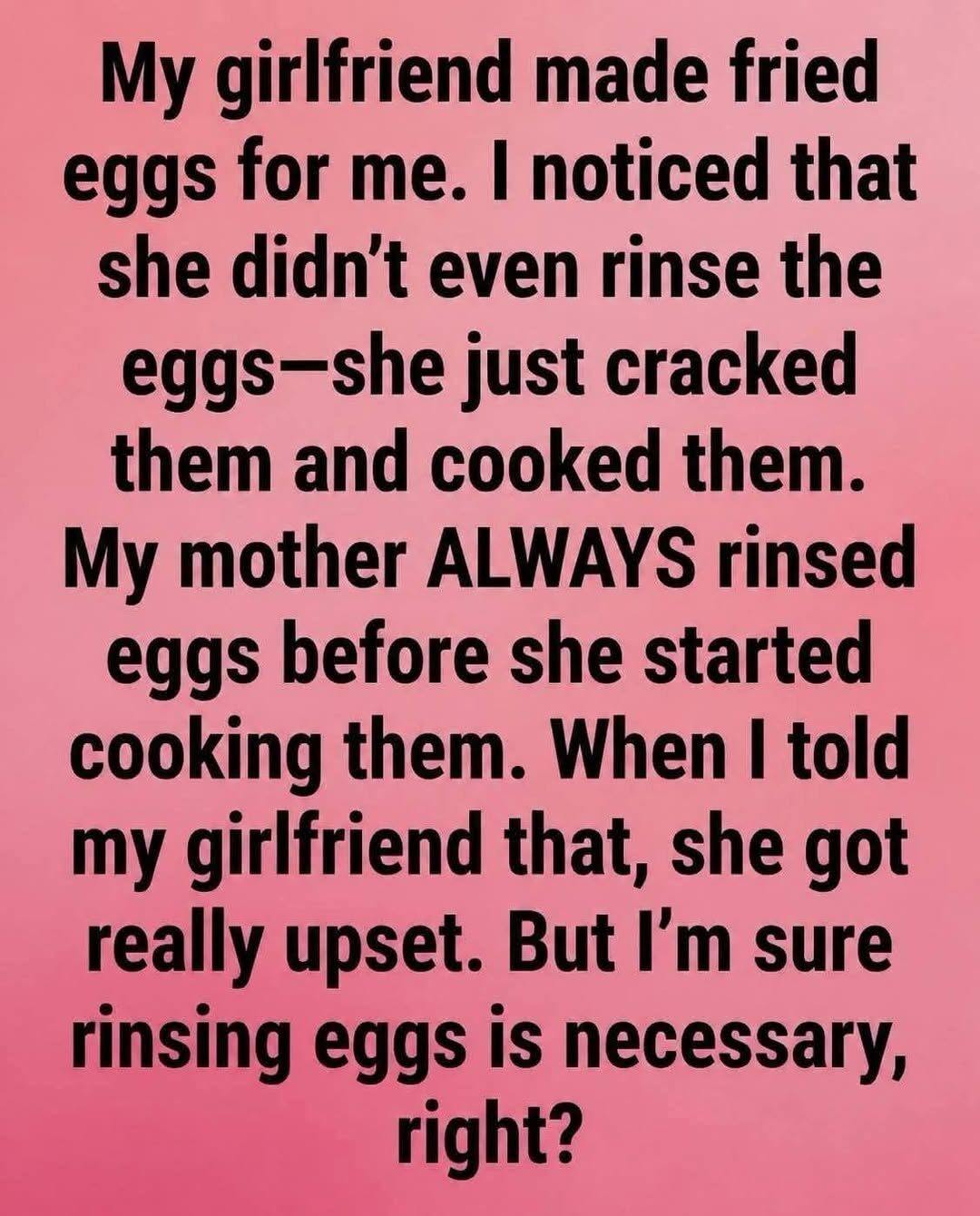
And if someone in your family has always rinsed eggs before breakfast, there’s no reason to turn the disagreement into a personal criticism.
Kitchen traditions can be meaningful, but they aren’t always the same as modern food safety recommendations.
Sometimes the most surprising kitchen discovery is that the step you’ve followed your entire life may not be necessary at all.
The next time you crack an egg into a frying pan, remember that food safety isn’t about how many times you wash something. It’s about understanding the food, handling it correctly, and protecting everyone at the table.
