

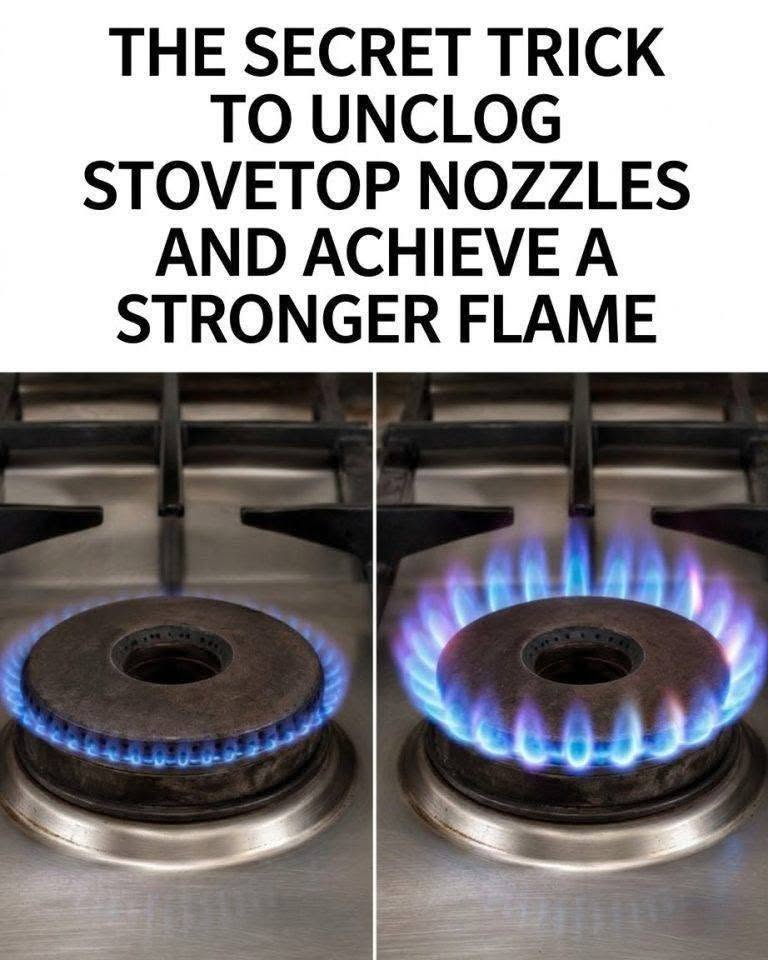
Have you noticed that your gas stove burner produces a weak, uneven, or yellow flame? Before assuming that your appliance is broken, take a closer look at the burner itself.
A simple cleaning procedure may help restore normal performance. Over time, grease, food particles, and carbon deposits can accumulate around the tiny openings where gas escapes. When these openings become blocked, the flame may become uneven or weaker than usual.
Some viral posts describe this as a secret trick that creates a powerful blue flame instantly. The truth is less dramatic: cleaning clogged burner ports can restore normal gas flow, but it cannot magically increase your stove’s designed flame strength.
Here’s what you should know.
1. Why Does a Gas Stove Produce a Weak or Yellow Flame?
Gas burners contain small openings called burner ports. These openings distribute gas around the burner so it can mix with air and burn properly.
During everyday cooking, several things can interfere with this process:
- Grease splashes from frying and cooking.
- Food particles fall onto the burner.
- Cleaning products leave residue.
- Moisture causes corrosion or deposits.
- Burner caps become incorrectly positioned.
When the ports become obstructed, the flame may appear uneven, weak, or yellow.
A properly functioning natural-gas or LPG burner generally produces a stable blue flame, although brief orange or yellow tips can sometimes occur depending on the appliance and conditions.
2. What Does a Blue Flame Actually Mean?
A blue flame generally indicates that the gas is burning with relatively good combustion.
A weak or irregular flame may suggest that the burner needs cleaning or that another component requires attention.
However, flame color alone cannot confirm that an appliance is safe. Persistent yellow flames, soot, unusual odors, or unstable combustion may indicate an air-to-fuel problem or another fault.
If these symptoms continue after routine cleaning, stop using the burner and contact a qualified gas technician.
