

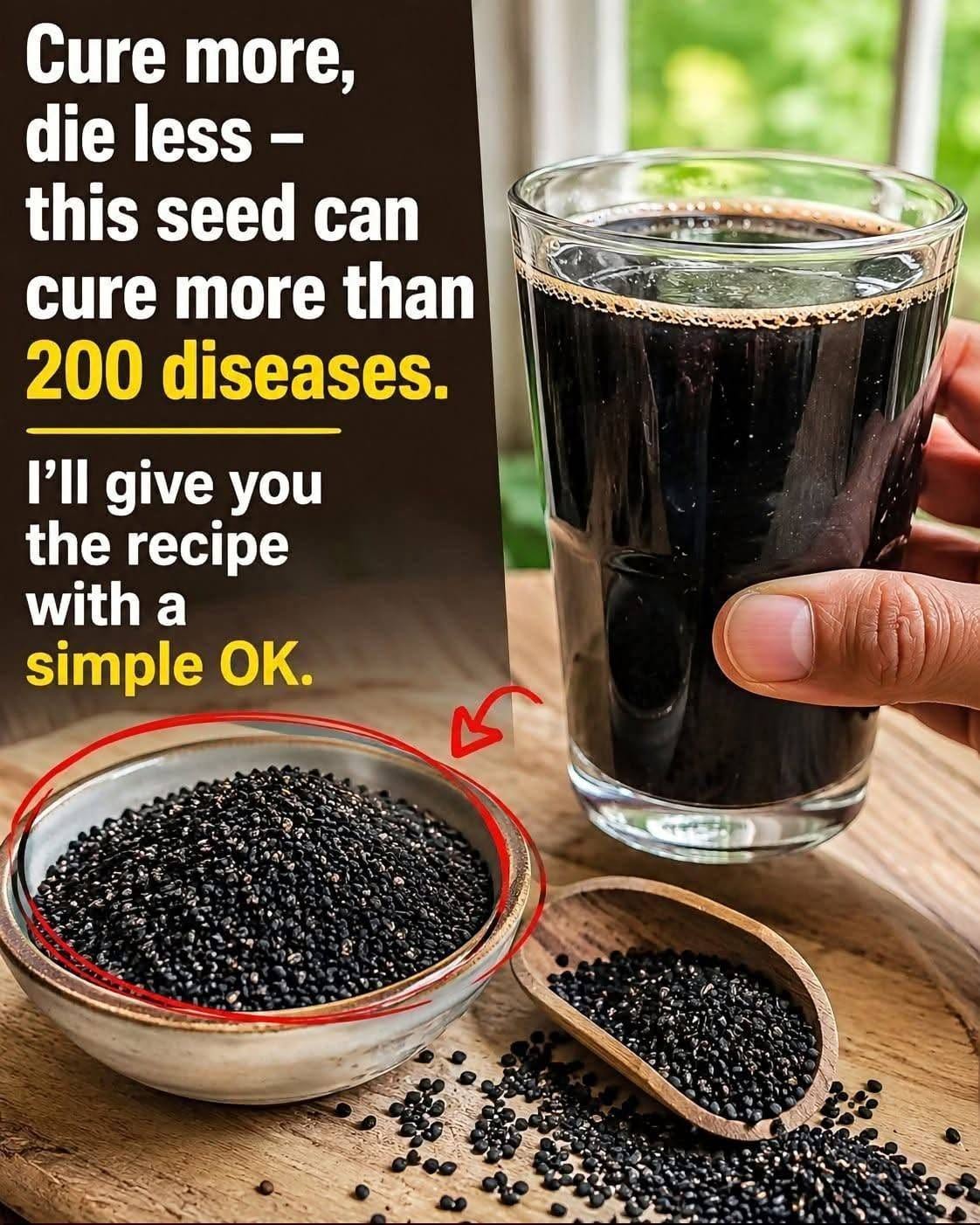
Have you ever seen a post claiming that one tiny seed can cure more than 200 diseases? These remarkable claims often spread quickly online, especially when the seed is inexpensive, natural, and easy to prepare at home.
Seeds can certainly be nutritious. Many provide fiber, healthy fats, minerals, antioxidants, and other compounds that support overall health. However, no seed has been scientifically proven to cure more than 200 diseases.
Before trying a viral remedy, it is important to understand what the seed may actually do, how to prepare it safely, and which claims are unsupported.
1. Which Seed Are People Talking About?
The headline does not identify the seed, so it would be misleading to assume that it refers to a particular ingredient. Popular health posts often promote black seed (Nigella sativa), flaxseed, chia seeds, fenugreek, or other traditional remedies.
Each has different nutritional properties and potential risks. Identifying the seed is essential before recommending a recipe or discussing its benefits.
2. Why Seeds Can Be Good for Your Health
Many edible seeds can contribute valuable nutrients to a balanced diet.
Fiber for digestive health: Chia and flaxseeds provide fiber that can support regular bowel movements when consumed with sufficient fluid.
Healthy fats: Some seeds contain unsaturated fats that can contribute to a heart-healthy eating pattern.
Plant compounds: Seeds contain various natural compounds that researchers are investigating for their antioxidant and other biological effects.
Minerals and nutrients: Depending on the type, seeds can provide magnesium, iron, zinc, protein, and other nutrients.
These benefits are real reasons to include suitable seeds in meals. They do not mean that seeds can replace medical treatment or cure every condition.
