

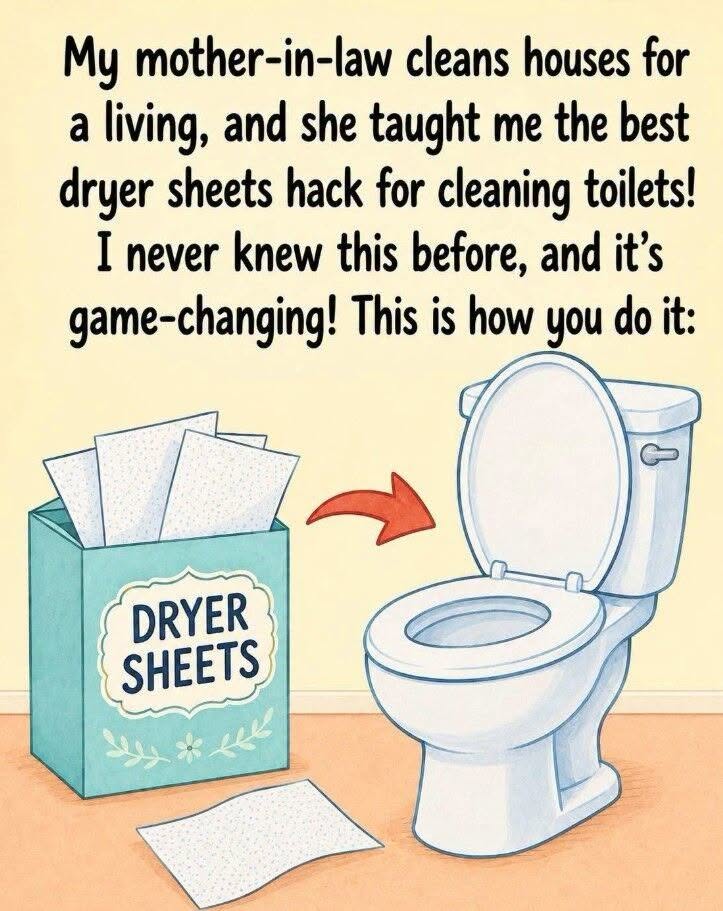
In the endless quest for a cleaner home with less effort, viral cleaning hacks are always a hot topic. Recently, a social media post captured the attention of homeowners everywhere. It featured a confession: “My mother-in-law cleans houses for a living, and she taught me the best dryer sheets hack for cleaning toilets! I never knew this before, and it’s game-changing!”
The premise is simple: instead of using traditional spray cleaners and paper towels, you use a standard, everyday fabric softener sheet to wipe down your toilet. According to the post and the professional house cleaner, this method makes the porcelain shine, repels future dirt, and leaves the bathroom smelling fresh.
But is this hack actually effective, or is it just another internet myth? The truth lies somewhere in the middle. The dryer sheet method is a genuinely useful trick for maintaining the cleanliness of your toilet and reducing the frequency of heavy scrubbing. However, it is not a magical, all-in-one solution, and it has important limitations—especially when it comes to bathroom hygiene.
Understanding the science behind why dryer sheets work on porcelain, how to use them properly, and the crucial safety cautions you need to know will help you decide if this game-changing hack deserves a permanent spot in your cleaning routine.
The Science Behind the Dryer Sheet Trick
To understand why a fabric softener sheet works on a toilet, you have to look at what a dryer sheet actually is. Dryer sheets are not just pieces of paper; they are woven with a specific cocktail of chemicals designed to alter the surface of fabrics.
1. The Power of Fabric Softening Agents
Most dryer sheets are coated with a class of chemical compounds called quaternary ammonium salts. These are the active ingredients in fabric softeners. When you wipe a dryer sheet over a hard surface like a porcelain toilet tank or lid, these salts leave behind a microscopic, slick layer.
This lubricating layer makes the surface incredibly smooth. Because the surface is so smooth, dirt, dust, hard water minerals, and grime have a much harder time adhering to it. Instead of sticking to the porcelain, future dust and debris are repelled. This acts as a temporary, invisible shield, making subsequent cleanings much easier and faster.
