

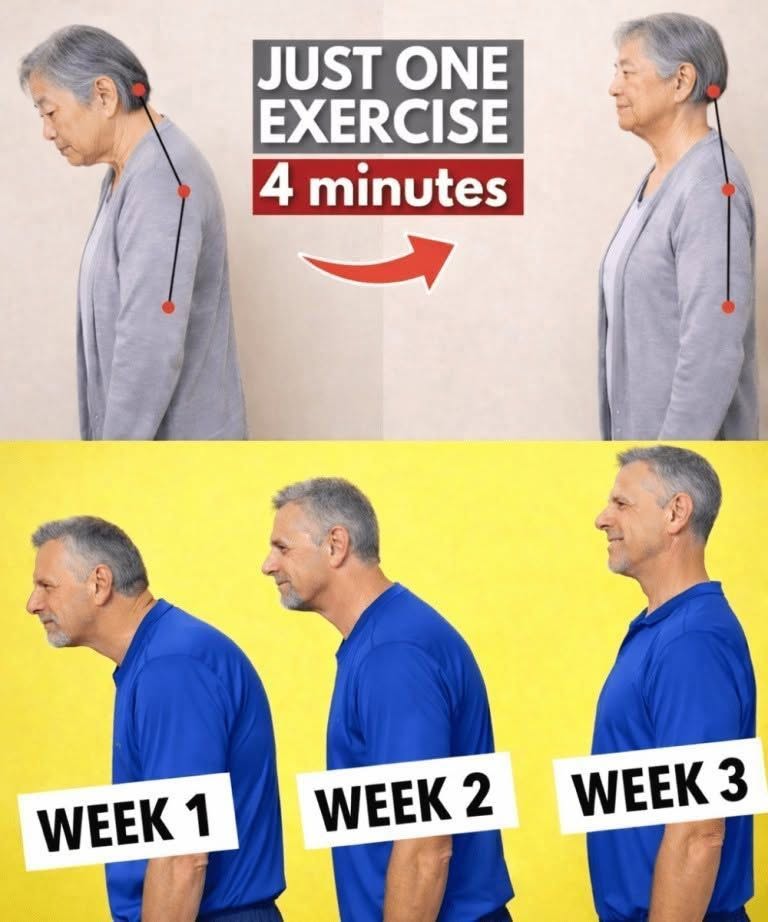
Tight chest muscles can contribute to rounded shoulders and make upright positioning more difficult.
How to perform:
- Stand near a doorway.
- Place your forearms gently against the doorframe.
- Keep your elbows around shoulder height or slightly lower.
- Slowly move your chest forward until you feel a gentle stretch.
- Hold for 15–20 seconds.
- Relax and repeat two or three times.
Benefits:
- Improves chest flexibility.
- Reduces tightness around the shoulders.
- Encourages a more comfortable upright position.
- Helps improve upper-body mobility.
Never push into pain or force your shoulders backward.
Exercise 4: Wall Posture Practice – 1 Minute
This final movement helps you become more aware of your natural standing alignment.
How to perform:
- Stand with your back against a wall.
- Position your feet slightly away from the wall.
- Allow your upper back and shoulders to rest comfortably against it.
- Keep your chin gently tucked.
- Look straight ahead.
- Breathe normally and maintain this comfortable position for 20–30 seconds.
- Relax and repeat.
Your head does not need to touch the wall if doing so causes discomfort. Never force your neck backward.
Benefits:
- Improves postural awareness.
- Encourages a more balanced standing position.
- Helps coordinate your neck, shoulders, and upper back.
How Often Should You Perform These Exercises?
For beginners, start with one four-minute session daily.
A simple weekly schedule can help you build consistency:
Week 1: Focus on learning the movements and performing them comfortably.
Week 2: Continue the routine daily, paying attention to your head and shoulder position throughout the day.
Week 3: Gradually improve your control and movement quality without forcing your neck.
Week 4: Continue the routine and evaluate whether your neck stiffness, shoulder tension, or postural awareness has improved.
Remember that everyone’s body responds differently. Some people notice improvements in comfort relatively quickly, while others need several weeks of consistent practice.
