

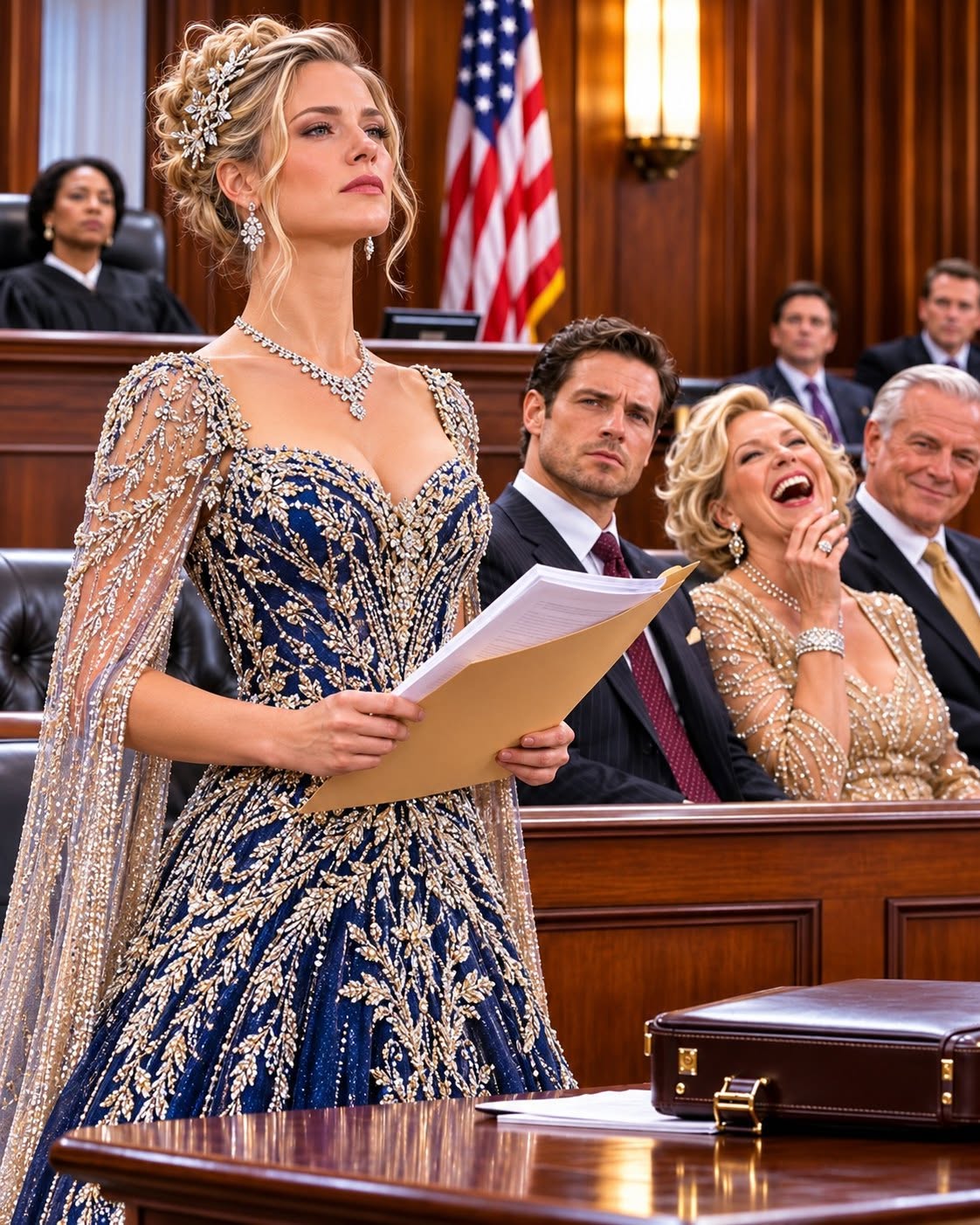
“If you need the records, I’ll help you get them.”
“Thank you.”
“Whatever they show, I don’t want you to think you were never part of this family.”
The words met a place in me I had tried to keep untouched.
I had once believed belonging was something I could build through patience, small gestures, and the years of ordinary work that made a home feel shared.
Now I was not sure whether I had been a part of the family, or only useful to it.
“I appreciate that, Frank,” I said. “But belonging isn’t something you can settle by saying the right thing after the fact.”
“No,” he said. “I suppose it isn’t.”
When the call ended, I stood and walked to the window.
Across the street, a neighbor carried groceries inside, pausing to shift the bags against one hip.
The ordinary movement held me for a few seconds.
My phone buzzed with a message from Andrew.
I’m sending the statements through Calder tomorrow.
I typed, The court ordered us to provide records, not just the ones you feel ready to send.
His reply came quickly.
I understand.
I wanted to believe him.
Then another message appeared.
I didn’t want you to think I was taking from you.
I read it, then set the phone down without responding.
That evening, I gathered the statements I had found and made a clear copy of each page.
I labeled the dates without adding conclusions.
The account had not belonged to me alone, but the records did not tell me what I had first feared.
They showed regular care payments, and they showed that Andrew had not told me about them.
They did not show whether the settlement had been drafted to conceal the transfers, to protect his parents, or to keep the family from facing a difficult conversation.
I could not make the numbers answer questions they were never meant to answer.
The next morning, Calder’s office sent a short email confirming that Andrew would provide the account records through the proper process.
There was no apology in the message, but there was no objection to the court’s order either.
I spent the rest of the morning preparing my own files.
When I opened the folder marked Medical, a note slipped from between two statements.
It was a printed message from Ruth, dated the week Frank returned home after surgery.
Thank you for helping us keep the appointments straight, she had written.
Andrew says the records are in good hands.
I stared at the line.
The words were warm in a way I had forgotten.
I remembered the afternoon when Ruth had sat at our kitchen table, anxious about Frank’s medication schedule, while I called the clinic and wrote down the next appointment.
She had squeezed my hand before leaving.
At the time, I thought it was gratitude.
Perhaps it had been.
Perhaps gratitude had lived beside fear and pride, all of them hidden beneath the family’s insistence that everything was under control.
The doorbell rang just after noon.
Ruth stood on the porch with a canvas shopping bag in one hand.
“I brought back the appointment book,” she said. “I found it in a box.”
I recognized the book before she handed it to me.
It was the one I had used to keep track of Frank’s appointments, prescriptions, and follow-up calls.
Ruth stepped inside only after I moved aside.
She placed the book on the dining table beside my binders.
“I thought you might want it,” she said.
“Why didn’t Andrew bring it?”
“He doesn’t know I found it.”
I looked at her.
She seemed to hear how that sounded and quickly added, “I didn’t hide it from him. I found it in the cabinet while looking for Frank’s insurance papers.”
“What did you find?”
“A letter from the care provider. It explains the payments.”
My attention sharpened.
“What does it say?”
“That they made an arrangement with Andrew for monthly billing. He paid from the account he uses for his work expenses.”
“Was it a loan?”
“I don’t know.”
“Did they send statements?”
“Not to me.”
She rubbed one thumb over the handle of the shopping bag.
“Andrew dealt with it.”
I opened the appointment book.
A receipt had been tucked into the back pocket, folded into quarters.
It was for a payment to the same care provider, dated two years earlier.
The amount matched one of the transfers in my binder.
I looked at Ruth.
“Why bring this to me?”
“Because you were the one who kept the records.”
The answer was quiet, almost reluctant.
I waited for her to say more.
She sat down, though I had not invited her to.
“For years, I told myself you didn’t understand what Andrew had to carry,” she said. “I thought his silence was a way of protecting us.”
“And what do you think now?”
“I think he should have trusted you enough to let you decide what you could carry.”
I looked at her face, searching for a hidden plea that would ask me to make everything easier.
I did not find one.
I found shame, though she seemed uncomfortable having it seen.
“I don’t know what happens next,” I said.
“Neither do I.”
“Andrew has to tell the court the truth.”
“Yes.”
“And he has to stop asking me to keep things quiet.”
“Yes.”
The simple agreement surprised us both.
Ruth glanced at the folders, then at the appointment book.
“May I ask you something?”
“You can ask.”
“Did you ever think we were grateful for what you did?”
I considered the years in which she had called me helpful, dependable, and sensible, words that often seemed to praise me for not asking for anything.
“I thought you were grateful for the work,” I said. “I wasn’t always sure you were grateful for me.”
Ruth lowered her eyes.
“I’m sorry.”
It was not a complete apology, but it was the first one she had offered without explaining herself afterward.
I did not tell her it was all right.
It wasn’t.
I did not tell her it was unforgivable either.
“That matters,” I said.
She nodded once.
Then her gaze fell on the old appointment book.
“Frank told you he was sorry?”
“He did.”
“He’s ashamed he couldn’t manage more of this himself.”
“He doesn’t have to be ashamed of needing care.”
“No,” Ruth said. “I suppose none of us do.”
We sat for a moment with the years between us, not repaired but visible.
When she left, she took the empty shopping bag and left the appointment book behind.
I returned to the table and turned through its pages.
The dates in my handwriting stretched from one year into the next.
Beside several appointments, Andrew had added short notes in his own hand.
Call provider.
Ask about balance.
Use separate account.
The final note was dated only a few weeks before he brought me the divorce papers.
Beside it, in letters pressed hard into the paper, he had written: Don’t tell Mara until it’s settled.
I read the words twice.
Then I reached for my phone and took a photograph.
The message did not explain whether Andrew had meant the care bill, the account, or the proposed agreement.
It did show that the silence had been deliberate before the divorce papers ever appeared on my breakfast table.
I turned to the next page, where the appointment book had been folded back.
A second note had been written beneath the provider’s telephone number.
This one was not in Andrew’s handwriting.
It was Ruth’s.
Mara must not be involved.
I stood very still, the page open beneath my hand, and realized the secrets in that house had not begun with the forged signature.
