

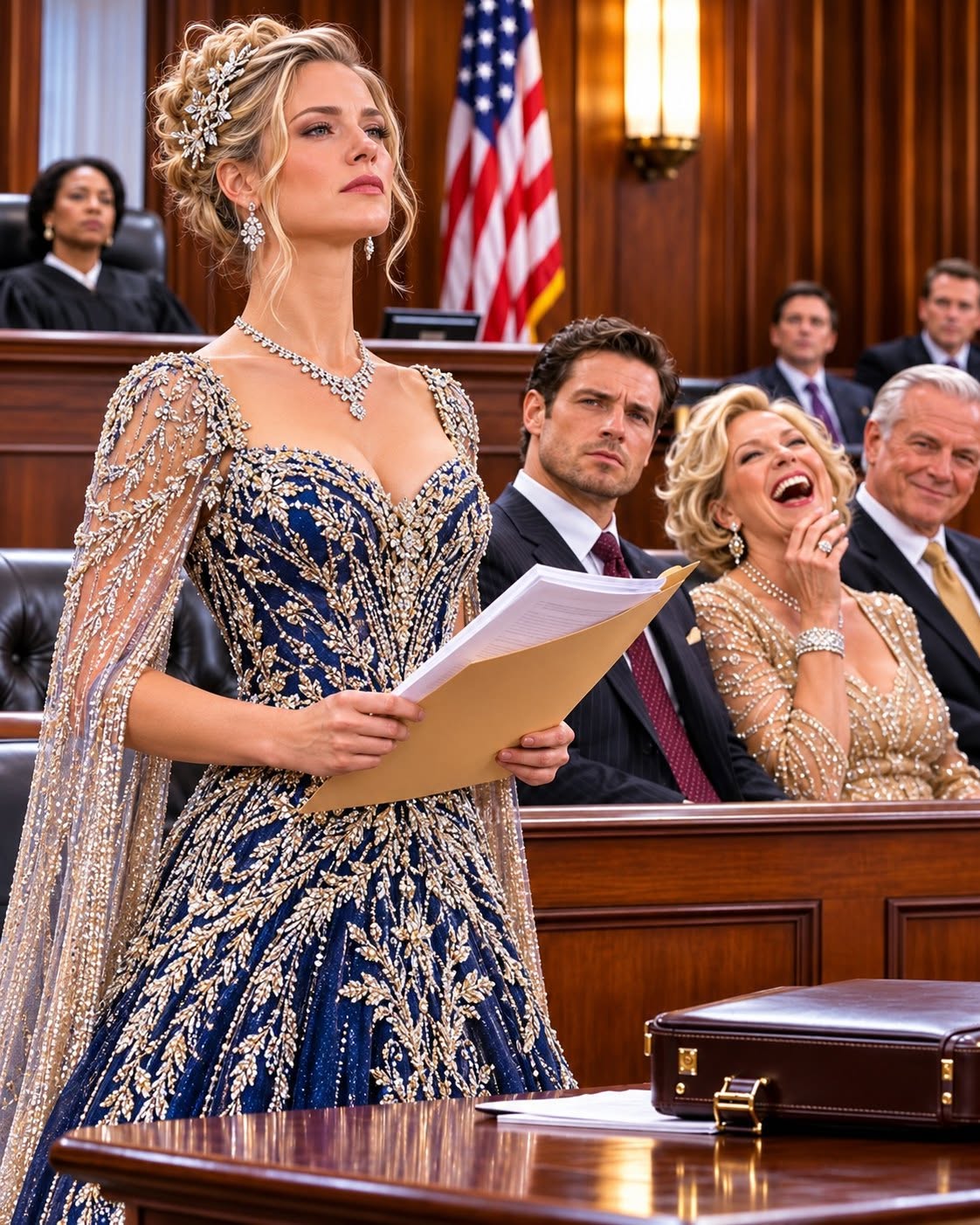
“But I’m grateful you gave us a chance to correct it.”
“I gave the truth a chance to be corrected,” I said. “That isn’t the same as giving the marriage another chance.”
“I understand.”
He looked tired, but no longer as if tiredness itself could excuse him.
“Mom and Dad know about the accounts,” he said. “I told them everything.”
“How did it go?”
“Dad was angry I hadn’t told him how much the care cost. Mom was angry with me for telling him so late, then angry with herself for asking me to keep it quiet.”
“And you?”
“I was embarrassed.”
He gave a small, rueful smile.
“I wanted to tell them that it had all been for the house, or the care, or some other reason that made the choices sound better.”
“What did you tell them?”
“That I had been afraid, and I made decisions for everyone without asking them.”
I watched him say it, looking for the familiar turn toward self-defense.
It did not come.
“Frank asked whether you were all right,” Andrew added. “He said you’d carried enough of this family’s details for long enough.”
“That sounds like Frank.”
“He also said he was sorry he laughed in court.”
“He already apologized.”
“He wanted me to tell you again.”
“I heard him the first time.”
Andrew nodded.
A silence opened between us, no longer a trap we had to fill.
“I hope you find work you love,” he said.
“So do I.”
“I should have supported you when you talked about returning to law.”
I had mentioned it only once during our marriage, in the early years, saying that perhaps someday I might take on a few cases.
Andrew had said the timing was bad, then the house needed attention, then his parents needed help.
Eventually, I had stopped bringing it up.
“You should have,” I said.
“I’m sorry.”
“I believe you’re sorry.”
The answer was not forgiveness, but it was more than nothing.
He looked toward the courthouse doors.
“I’ll sign whatever additional acknowledgment the court needs.”
“You already signed it.”
“I’ll do it again if they ask.”
“I know.”
We parted at the base of the steps.
He walked toward the parking lot, where Frank and Ruth were waiting.
Ruth looked back once.
She did not wave or call out.
She simply held my gaze and gave a small, respectful nod.
I returned it.
That was all I could offer that day.
A month later, Ruth asked whether I would meet her for coffee.
I considered the invitation before answering.
I did not want the meeting to become a request for reassurance or a way to hurry forgiveness along.
So I wrote back that I would meet her for half an hour, and that I was not ready to discuss anything beyond what each of us wanted to say.
She replied, I understand. Thank you for telling me clearly.
We chose a quiet café near the courthouse.
Ruth arrived early and had not ordered for me.
That small detail told me she had listened.
She waited while I chose my own tea, then placed both hands around her cup.
“I’ve practiced what I want to say,” she admitted.
“Did it help?”
